- Views: 3K
- Replies: 5
India’s strategic ambition to produce a world-class fighter jet engine domestically is poised for a decisive leap forward.
The long-anticipated co-development agreement between the Defence Research and Development Organisation (DRDO) and French aerospace giant Safran has entered the final stage of government clearance.
The proposal is now before the Cabinet Committee on Security (CCS), led by Prime Minister Narendra Modi, marking the last hurdle before the commencement of a project vital to the Advanced Medium Combat Aircraft (AMCA) programme.
Final Political Clearance Awaited
The project, estimated to be worth over ₹30,000 crore, has successfully navigated the bureaucratic labyrinth of New Delhi.Following a high-level review chaired by Defence Minister Rajnath Singh, the Ministry of Defence granted its initial clearance.
Subsequently, the proposal received endorsements from the National Security Council—which has monitored the programme since its inception—and the Finance Ministry’s Expenditure Department.
With all inter-ministerial approvals in place, the file now rests with the CCS, the nation’s highest decision-making authority on strategic affairs, comprising the Prime Minister, National Security Advisor, and key cabinet ministers.
A Strategic Partnership with France
This deal represents a significant victory for the "Atmanirbhar Bharat" initiative in the defence sector.After a rigorous selection process that evaluated proposals from global heavyweights—including General Electric (USA) and Rolls-Royce (UK)—Safran was selected as the preferred partner.
While Russia also showed initial interest, the French proposal was deemed superior due to its strategic depth.
Unlike standard off-the-shelf purchases, Safran has committed to a complete transfer of technology, joint ownership of intellectual property rights (IPR), and the establishment of a full manufacturing ecosystem within India.
Bridging the Technology Gap
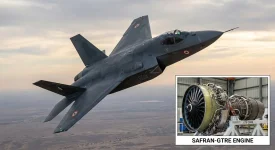
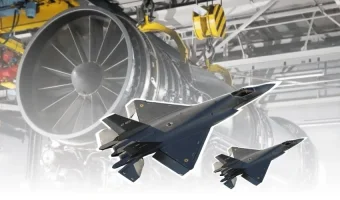
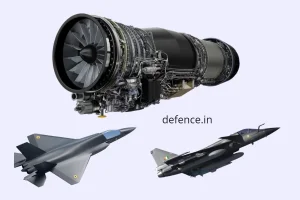
For decades, the Indian Air Force has depended on imported engines from Russia, the United States, and France to power its combat fleet. This reliance has often been cited as a vulnerability in national security.The collaboration between Safran and DRDO’s Gas Turbine Research Establishment (GTRE) aims to permanently resolve this by developing a high-thrust turbofan engine capable of generating approximately 110-120 kilonewtons (kN) of thrust.
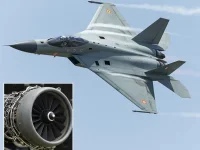
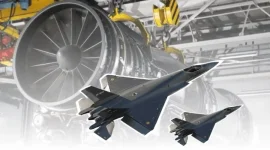
This new engine is specifically designed for the AMCA Mark-2, the stealthier and more potent variant of India's upcoming fifth-generation fighter.
While the initial AMCA Mark-1 jets will be powered by American GE F414 engines, the Mark-2 will fly with this newly developed indigenous propulsion system, offering superior supercruise capabilities (sustained supersonic flight without afterburners).
Technical Capabilities and Future Outlook
Once the CCS gives the green light, Indian and French engineers will begin the complex work of designing and certifying the engine.The programme focuses on mastering critical technologies that have historically been denied to India, such as single-crystal turbine blade casting, high-temperature ceramic matrix composites, and advanced digital engine control systems.
Success in this venture will place India in an elite club of nations—currently comprising only the US, Russia, France, and the UK—that possess the end-to-end capacity to design and build high-performance jet engines.
Beyond the AMCA, the technology developed under this pact will likely serve as the foundation for future unmanned combat aerial vehicles (UCAVs) and next-generation naval fighters, securing Indian air power well into the post-2035 era.