- Views: 2K
- Replies: 7
As European nations accelerate their pursuit of sixth-generation combat aircraft, a critical debate is unfolding within India's strategic community.
While the allure of cutting-edge technology is undeniable, the central question for New Delhi is less about capability and more about financial viability, return on investment, and the potential opportunity costs.
With the Franco-German Future Combat Air System (FCAS) estimated to cost between $108 billion and $130 billion, and the UK-led Global Combat Air Programme (GCAP) projected in the range of $65 billion to $76 billion, any decision to join these initiatives requires a pragmatic economic analysis rather than mere ambition.
The Tale of Two Expensive Programmes
On the surface, both projects appear similarly costly, yet their structural and financial drivers differ significantly.The FCAS, spearheaded by France (Dassault Aviation), Germany (Airbus), and Spain (Indra), is a politically intricate undertaking. It aims to develop a 'system of systems' comprising a manned Next Generation Fighter (NGF), remote carrier drones, and a 'combat cloud' network.
However, the programme has faced persistent friction between industrial partners over leadership and workshare, potentially driving up costs.
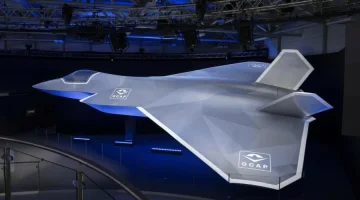
In contrast, the GCAP—formerly known as Tempest—brings together the United Kingdom, Japan, and Italy.
This consortium has adopted a model that prioritises industrial pragmatism and export potential. Recent reports indicate that partner nations like Italy have already had to revise their financial commitments upward, with Rome's development share alone tripling to nearly €18.6 billion ($20 billion).
For India, understanding these distinctions is vital, as they dictate the cost of entry and the quality of industrial participation.
The High Price of admission
If India aims for a meaningful partnership rather than a token observer role, it must be prepared to shoulder a substantial financial burden.Typically, securing a seat at the high table—granting access to core design authority and sensitive technology—requires a contribution of 10 to 20 per cent of the total programme cost.
For the FCAS, a 10 per cent stake would necessitate an investment of approximately $11 billion to $13 billion spread over two decades. Increasing this share to 15 per cent could push the commitment to nearly $19 billion.
The GCAP, while relatively less expensive, still presents a formidable barrier. A 10 per cent share would likely demand $6.5 billion to $7.5 billion, rising to over $10 billion for a 15 per cent stake.
Crucially, these are not one-off payments. They represent sustained annual capital outflows for 15 to 20 years, funding everything from digital prototyping to flight certification.
Such expenditure would directly compete for resources with India's existing priorities, including the indigenous Advanced Medium Combat Aircraft (AMCA), aero-engine development, and naval modernisation.
Workshare and Industrial Sovereignty
Cost is only one aspect of the equation; the industrial return on investment is equally critical.In the case of FCAS, the rigid industrial structure—defined by the delicate balance between Dassault and Airbus—leaves little room for a new partner to take a leadership role.
A late entry by India would likely restrict its domestic industry to manufacturing subsystems, such as structural components or sensors, rather than leading the design of the core aircraft.
The GCAP consortium appears to offer more flexibility. The UK and Japan have shown a greater willingness to distribute development responsibilities, particularly in areas like software, sensor fusion, and artificial intelligence.
If India were to join, it could potentially negotiate a higher-value workload, including avionics, 'loyal wingman' drone development, and propulsion integration, provided it can leverage its own engine development roadmap.
The Fleet Size Imperative
Recovering such a massive investment hinges on the scale of production. Research and development (R&D) costs are typically amortised across the total number of aircraft produced for domestic use and export.To justify a $10 billion investment in a sixth-generation project, India would likely need to procure a fleet of 120 to 150 aircraft.
If the procurement falls below 100 units, the per-unit cost would skyrocket.
For FCAS, where the core partners’ combined requirement may only be 300 to 400 jets, India would need to commit to a significant order to make the economics work.
The GCAP, designed with a stronger eye on the export market, might allow India to offset some costs through third-party sales, potentially lowering the domestic requirement to between 100 and 130 jets.
The AMCA Comparison
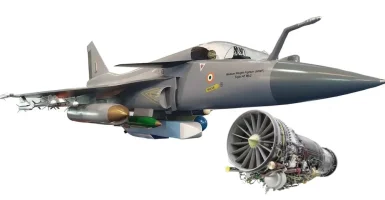
Perhaps the most difficult comparison is with India's own AMCA programme.The government officially approved the development of the AMCA in March 2024 with a budget of roughly ₹15,000 crore ($1.8 billion) for the initial phase—a fraction of the cost of a minority stake in a European sixth-generation project.
The AMCA promises complete strategic autonomy, allowing India to control upgrades, integrate indigenous weapons, and scale production without seeking approval from foreign partners. diverting funds and technical talent to a sixth-generation international project before the AMCA has matured could be strategically imprudent.
Conclusion
Strategically, India’s participation in a sixth-generation fighter programme is viable only under strict conditions: the entry cost must be contained below $10 billion, and the partnership must guarantee transfer of core technologies rather than just manufacturing blueprints.While GCAP appears more aligned with these metrics than FCAS, it still demands a commitment to a large fleet size that may not fit India's immediate force structure.
A more pragmatic approach for New Delhi may be to pursue structured technology partnerships or observer status while prioritising the successful fielding of the AMCA.
Committing to a full sixth-generation partnership is a step best taken once India has secured its own fifth-generation capabilities and has a clearer vision of the aerial warfare landscape of the 2040s.