- Views: 4K
- Replies: 8
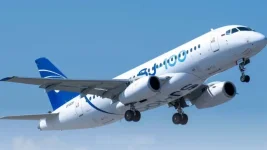
A Sukhoi SJ-100-95B "Superjet" has been observed at the Zhukovsky airfield near Moscow sporting a unique livery that includes the branding of Hindustan Aeronautics Limited (HAL) and the Indian national flag.
This distinct visual update indicates that the aircraft is being prepared for a static display at the upcoming Wings India 2026 exhibition in Hyderabad.
The sighting has generated significant interest within the aviation community, interpreted as a clear signal of Russia’s renewed intent to engage with the Indian civil aviation market amidst a global shift in supply chains and industrial partnerships.
The aircraft in question is the latest evolution of the Superjet family, designated as the SJ-100. This variant has been extensively re-engineered under the SJ-100 programme to minimize dependence on Western technology.
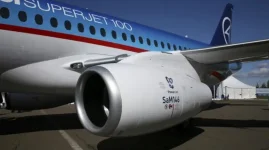
In line with Russia's import-substitution initiatives, the SJ-100-95B is equipped with domestically manufactured systems, including the new Aviadvigatel PD-8 engines and upgraded avionics, aiming to create a production and maintenance ecosystem resilient to external sanctions.
The decision to display this aircraft at Zhukovsky in HAL colours suggests a calculated diplomatic and commercial strategy to capture the attention of Indian aerospace decision-makers prior to the Hyderabad airshow.
Wings India 2026, scheduled to be held from January 28 to 31 at Begumpet Airport, is organised by the Ministry of Civil Aviation and the Federation of Indian Chambers of Commerce and Industry (FICCI). It has established itself as a premier venue for global manufacturers to demonstrate their commitment to the region.
By showcasing the SJ-100 with Indian markings, Russian stakeholders appear keen to insert the aircraft into India's evolving civil aviation narrative, specifically targeting discussions on fleet diversification, regional connectivity, and potential industrial collaboration.
The prominent inclusion of the HAL logo carries substantial symbolic weight.
Although HAL is predominantly known for its work in the defence sector—managing strategic programmes like the Tejas LCA and Su-30MKI—it possesses a deep history in licensed production, systems integration, and maintenance, repair, and overhaul (MRO).
This visual association implies that future discussions could explore a role for Indian industry in the Superjet programme, potentially covering MRO services or the manufacturing of components, should the aircraft be considered for Indian operations.
Technically, the SJ-100-95B is configured as a regional jet with a capacity of approximately 95 passengers, a segment that corresponds well with the requirements of India's UDAN (Ude Desh ka Aam Nagrik) regional connectivity scheme.
Nevertheless, any potential adoption by Indian operators would rely heavily on proven reliability, competitive lifecycle costs, and a clear path to certification that satisfies both Indian and international regulatory standards.
Consequently, the aircraft’s presence at Wings India 2026 serves primarily as a marketing initiative and a confidence-building measure rather than a sign of an immediate procurement deal.
Selecting Zhukovsky—Russia’s central hub for aerospace testing and development—as the location for this reveal underscores the aircraft’s status as a developmental demonstrator.
This setting allows the programme to showcase its progress in localisation and readiness while utilising the platform of a major international airshow to engage simultaneously with airlines, lessors, and policymakers.