- Views: 8K
- Replies: 51
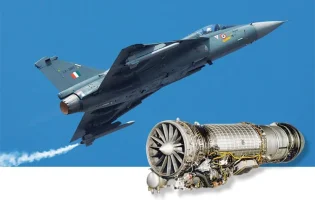
India’s ambition to become a significant exporter of fighter aircraft has received a substantial boost following a firm commitment from US aerospace major General Electric (GE).
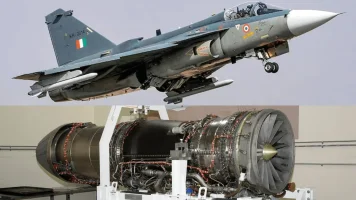
The company is set to supply 20 F404-IN20 engines annually starting from the 2026–27 financial year, with an initial batch of five engines scheduled for delivery before the end of March 2026.
This stabilisation of the supply chain addresses the primary bottleneck that had previously hampered both the induction of the jets into the Indian Air Force (IAF) and marketing efforts abroad.
Breaking the Supply Chain Gridlock
The export campaign for the Tejas Mk1A—an advanced 4.5-generation light combat aircraft—had effectively been paused due to persistent delays in engine procurement.These delays caused a knock-on effect, stalling the production schedule for the 83 jets ordered by the IAF in a ₹48,000 crore deal signed in 2021.
With the supply constraints now easing, Hindustan Aeronautics Limited (HAL) and the Ministry of Defence are preparing to reinvigorate their international sales strategy.
According to defence officials, the arrival of new engines will allow HAL to resume deliveries to the IAF by March 2026. The state-run manufacturer expects to hand over five jets by July of the same year.
This resumption of strict delivery timelines is crucial for restoring confidence in the production line, a key factor for potential international clients who prioritise reliability alongside performance.
A Vote of Confidence: The 97-Jet Order
Bolstering the programme's credibility is the recent government approval for an additional 97 Tejas Mk1A fighters, a deal valued at approximately ₹62,370 crore ($7.5 billion).This follow-on order is widely viewed within the defence establishment as a formal endorsement of the platform's maturity.
Unlike earlier iterations, this new batch will feature significantly higher indigenous content, including the locally developed Uttam Active Electronically Scanned Array (AESA) radar, which replaces the Israeli ELM-2052 used in earlier batches.
The aircraft will also incorporate an advanced electronic warfare (EW) suite known as 'Swayam Raksha Kavach', updated mission computers, and seamless integration with indigenous weapons such as the Astra beyond-visual-range air-to-air missile.
Ramping Up Production
The resolution of the engine shortage has paved the way for higher production rates.HAL has operationalised a third production line at its Nashik facility to complement its two existing lines in Bengaluru. With GE planning to increase deliveries to 24 engines annually from FY2027–28, HAL aims to scale its output to match this figure.
This expanded capacity is strategically vital. It ensures that HAL can allocate dedicated production slots for export orders without cannibalising the delivery schedule promised to the IAF.
Targeting the Global Market
With production stability assured, India is eyeing markets in Southeast Asia, Africa, and Latin America. Many air forces in these regions are looking to retire ageing fleets of Cold War-era jets, such as the MiG-21, Northrop F-5, and Chinese F-7.The Tejas Mk1A presents itself as a modern, cost-effective replacement that offers supersonic performance and low maintenance costs.
The aircraft’s value proposition includes a glass cockpit, AESA radar capabilities, and a potent strike package, making it an attractive option for nations seeking credible air defence without the high acquisition and operating costs associated with heavyweight twin-engine fighters.
Countries such as the Philippines and Egypt have previously shown interest in the platform, and the renewed supply certainty may help advance these discussions.
With the engine pipeline secure and the domestic order book swelling to over 180 Mk1A jets, the Tejas programme is poised to transition from a developmental success to a viable contender in the global defence market.