Tejas Mk1A Export Prospects Brighten as GE Commits to Supply 20 F404 Engines Annually Starting FY 2026

Tejas Mk1A Export Prospects Brighten as GE Commits to Supply 20 F404 Engines Annually Starting FY 2026


India’s ambition to become a significant exporter of fighter aircraft has received a substantial boost following a firm commitment from US aerospace major General Electric (GE).

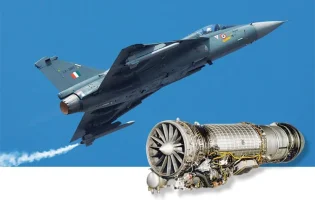
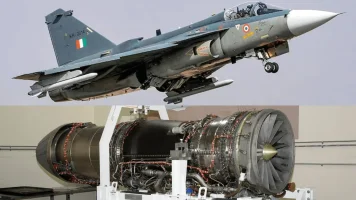
The company is set to supply 20 F404-IN20 engines annually starting from the 2026–27 financial year, with an initial batch of five engines scheduled for delivery before the end of March 2026.

This stabilisation of the supply chain addresses the primary bottleneck that had previously hampered both the induction of the jets into the Indian Air Force (IAF) and marketing efforts abroad.

Breaking the Supply Chain Gridlock​

The export campaign for the Tejas Mk1A—an advanced 4.5-generation light combat aircraft—had effectively been paused due to persistent delays in engine procurement.

These delays caused a knock-on effect, stalling the production schedule for the 83 jets ordered by the IAF in a ₹48,000 crore deal signed in 2021.

With the supply constraints now easing, Hindustan Aeronautics Limited (HAL) and the Ministry of Defence are preparing to reinvigorate their international sales strategy.

According to defence officials, the arrival of new engines will allow HAL to resume deliveries to the IAF by March 2026. The state-run manufacturer expects to hand over five jets by July of the same year.

This resumption of strict delivery timelines is crucial for restoring confidence in the production line, a key factor for potential international clients who prioritise reliability alongside performance.

A Vote of Confidence: The 97-Jet Order​

Bolstering the programme's credibility is the recent government approval for an additional 97 Tejas Mk1A fighters, a deal valued at approximately ₹62,370 crore ($7.5 billion).

This follow-on order is widely viewed within the defence establishment as a formal endorsement of the platform's maturity.

Unlike earlier iterations, this new batch will feature significantly higher indigenous content, including the locally developed Uttam Active Electronically Scanned Array (AESA) radar, which replaces the Israeli ELM-2052 used in earlier batches.

The aircraft will also incorporate an advanced electronic warfare (EW) suite known as 'Swayam Raksha Kavach', updated mission computers, and seamless integration with indigenous weapons such as the Astra beyond-visual-range air-to-air missile.

Ramping Up Production​

The resolution of the engine shortage has paved the way for higher production rates.

HAL has operationalised a third production line at its Nashik facility to complement its two existing lines in Bengaluru. With GE planning to increase deliveries to 24 engines annually from FY2027–28, HAL aims to scale its output to match this figure.

This expanded capacity is strategically vital. It ensures that HAL can allocate dedicated production slots for export orders without cannibalising the delivery schedule promised to the IAF.

Targeting the Global Market​

With production stability assured, India is eyeing markets in Southeast Asia, Africa, and Latin America. Many air forces in these regions are looking to retire ageing fleets of Cold War-era jets, such as the MiG-21, Northrop F-5, and Chinese F-7.

The Tejas Mk1A presents itself as a modern, cost-effective replacement that offers supersonic performance and low maintenance costs.

The aircraft’s value proposition includes a glass cockpit, AESA radar capabilities, and a potent strike package, making it an attractive option for nations seeking credible air defence without the high acquisition and operating costs associated with heavyweight twin-engine fighters.

Countries such as the Philippines and Egypt have previously shown interest in the platform, and the renewed supply certainty may help advance these discussions.

With the engine pipeline secure and the domestic order book swelling to over 180 Mk1A jets, the Tejas programme is poised to transition from a developmental success to a viable contender in the global defence market.
 
Stop blaming GE. They are a public company. Only motive is profit and their shareholders. India ordered an engine no longer in production. Its probably cheaper. More money for the babus. Probably MOD stupidity and rigidity. Trump would sell his mother for a buck. He wants India to buy more military hardware, it's the only thing that sells. Industrial Military Complex. It controls the US, and ofcourse the Jews.
 
Pardon my language...but what the duck is HAL doing.
Earlier they committed the delivery in 2024, then they gave an excuse of Engine and pushed it to 2025, then they confirmed the handover of 5 jets by March 26 and now it has moved to July.

I wish, I get a job in HAL, to do nothing but just much all the free snacks, coffee and food. Absolutely shameful.

Time to fire all these HAL employee immediately, with no pension whatsoever. Let them fight the jobs in pvt sector...where they will be more accountable for their responsibilities.
You are 150% correct. I would like to add that the first of the new engines was delivered during March 2025. So the whole story of engines being the main cause for delay is just cooked up and lapped up by most 'defence experts'.
 
Stop blaming GE. They are a public company. Only motive is profit and their shareholders. India ordered an engine no longer in production. Its probably cheaper. More money for the babus. Probably MOD stupidity and rigidity. Trump would sell his mother for a buck. He wants India to buy more military hardware, it's the only thing that sells. Industrial Military Complex. It controls the US, and ofcourse the Jews.
The first of the new engines was delivered by GE during March 2025 or nearly 11 months ago. So the whole story of engines being the main cause for delay is just cooked up and lapped up by most 'defence experts'.
 
How many engines of MiG-21 do we have now, after retiring those aircrafts... Can't we reuse them?
Engine is not the issue. The first of the new engines was delivered by GE during March 2025 or nearly 11 months ago. So the whole story of engines being the main cause for delay is just cooked up and lapped up by most 'defence experts'.
 
GE will not supply Engines. USA will ensure that. India should immediately try to secure able alternatives.
The first of the new engines was delivered by GE during March 2025 or nearly 11 months ago. So the whole story of engines being the main cause for delay is just cooked up and lapped up by most 'defence experts'. So far about 7 engines have been delivered but not one Mk1A delivered.
 
I am not an Indian citizen but an Indian diaspora. Though I don't live in India I am well aware of the lackadaisical attitude in HAL, the corruption level in bureaucracy and the Indian politicians mentality. For India to become a economic powerhouse like china the mindset of politicians in the ruling government needs to change their mindset to think progressively and out of the box. Protecting local industries and produce is one thing but the government should allow foreign investment to do business without the burden of notorious red tape and under the table rewards to initiate business operation. But the case of long delays in F404 engines I am not sure if you are correct but based on my reading several "Indian articles" I am with the impression that the GE delays are due to global supply chain disruption bcoz several suppliers has ceased operation, which makes sense to me. It doesn't mean that if GE is a public listed company they are not vulnerable to unexpected disruptions. I am not sure about other countries but in my country it's flooded with chinese made products from electronic to non electronic items. I am shocked to find spare parts for Volkswagen Beetles. But of course they are mostly poor quality products. There are about ten popular chinese brand automobiles doing fairly well. Take the case of chinese fighter aircrafts and bombers some with stealth coating. The quality of their military products are not proven and tested but they are perfecting it with new advanced technologies. Almost all of the fighter and bomber aircraft technologies are stolen from the western countries using several dirty tactics. The chinese are obsessed with world supremacy in military power so they will not hesitate to resort to get anything by hook or crook. In India military contractors and the government officials take several years to make smart choice decisions. I believe India has great potentials to produce highly competitive military products if there is effective and efficient management system in place.
The first of the new engines was delivered by GE during March 2025 or nearly 11 months ago. So the whole story of engines being the main cause for delay is just cooked up and lapped up by most 'defence experts'.
 
How many engines of MiG-21 do we have now, after retiring those aircrafts... Can't we reuse them?
No, they are of different dimensions.
Consider it as screws of varied length and depth, their purpose is same, to tighten the frame, but one size wont fit all.

Kaveri 1.0 could have fitted in Tejas mk1a. But thats a topic of discussion for another day
 

Forum statistics

Threads
6,198
Messages
62,257
Members
4,870
Latest member
Yuvraj Aaditya
Back
Top