- Views: 2K
- Replies: 1
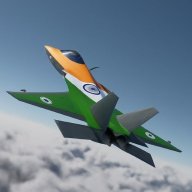
The schedule for the maiden flight of India’s indigenous Tejas Mk2 fighter jet has become a subject of intense speculation following conflicting updates from top defence officials.
While earlier projections suggested the aircraft would fly by mid-2026, recent statements from Hindustan Aeronautics Limited (HAL) indicate that the milestone may slip to early 2027, leaving observers questioning the precise status of the critical programme.
Conflicting Timelines from Top Officials
The confusion stems from a divergence in the dates provided by the Defence Research and Development Organisation (DRDO) and the manufacturer, HAL.Earlier this month, DRDO Chairman Dr Samir V. Kamat stated that the medium-weight fighter was on track for a first flight between June and July 2026.
This timeline appeared to be supported by Group Captain V. N. Jha (Retd), a former DRDO Joint Director, who told News One that the aircraft had already been rolled out and was undergoing internal trials—a significant step forward that implied imminent readiness.
However, on January 28, 2026, HAL Chairman Dr D. K. Sunil presented a more conservative outlook.
Speaking to the press, he clarified that the Tejas Mk2 remains in the prototyping phase, with major structural components like the fuselage still being assembled.
He projected that the first flight would likely occur in the first quarter of 2027.
This stands in contrast to Dr Sunil’s own remarks from September 2025, where he had noted that the centre fuselage was complete and wings were in development, targeting a flight test for early 2026.
The shift from a 2026 target to 2027 has sparked concerns regarding potential delays in the programme.
Interpreting the Discrepancy: Rollout vs. Flight Readiness
Experts suggest that the contradictory signals are likely due to differences in terminology rather than a fundamental failure in the programme.When defence officials refer to a "rollout," they often mean the completion of the structural airframe, which allows for initial ground checks.
This is distinct from a "flight-ready" aircraft, which requires fully integrated avionics and propulsion systems.
It appears that while a structural prototype may be ready for internal assessments, the flight-worthy prototype is still under construction.
In complex aerospace projects, different modules—such as the wings and fuselage—are often built in parallel at separate facilities.
HAL’s timeline reflects the reality that once these parts are mated, the aircraft must undergo a rigorous integration phase.
This period, often lasting 16 to 18 months, involves installing kilometres of wiring, validating flight control software, and conducting extensive engine ground runs before the jet is cleared for takeoff.
Technical Leaps Add to Complexity
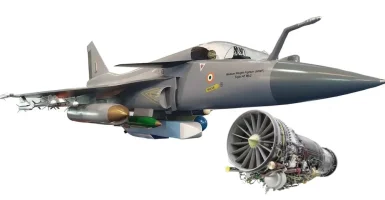
The Tejas Mk2 represents a significant technological leap over its predecessor, the Tejas Mk1A, which contributes to the extended testing phase.Unlike the lighter Mk1A, the Mk2 is a medium-weight fighter powered by the General Electric F414-INS6 engine, capable of generating 98 kN of thrust compared to the 84 kN of the older engine.
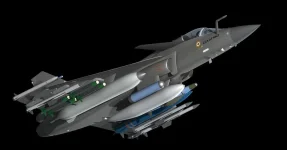
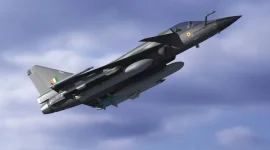
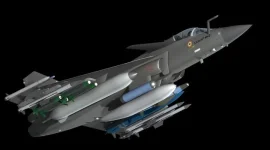
Furthermore, the Mk2 features a redesigned airframe with close-coupled canards—small wings near the nose—that improve agility and payload capacity.
The aircraft is designed to carry up to 6.5 tonnes of weapons (nearly double the capacity of the Mk1) and will feature the indigenous Uttam Active Electronically Scanned Array (AESA) radar.
Integrating these advanced systems into a larger, heavier airframe requires a cautious approach to certification, explaining the shift from optimistic design targets to more conservative safety schedules.
Conclusion
While the mixed messages from DRDO and HAL have created uncertainty, they confirm that the Tejas Mk2 has moved beyond the drawing board and into the physical production and testing phase.The divergence in dates likely reflects the difference between design maturity (DRDO's focus) and production certification (HAL's priority).
Currently, the most realistic window for the Tejas Mk2's first flight appears to be between late 2026 and early 2027.
For the Indian Air Force, which intends to make the Mk2 the backbone of its future fleet, the focus remains on ensuring that the complex integration of its new engine and avionics is flawless, even if it means a slight adjustment to the schedule.