- Views: 1K
- Replies: 1
In a major development for the Indian Air Force (IAF), the United Kingdom's Ministry of Defence (MoD) has announced the successful transfer of nine decommissioned SEPECAT Jaguar aircraft to India.
This move will play a vital role in maintaining the operational readiness of India's veteran strike fleet.
Furthermore, official parliamentary records indicate that the UK still possesses 42 retired Jaguar airframes, leaving the door open for additional technical support to India in the coming years.
The details were shared on 3 July 2026 by Luke Pollard, the UK's Minister for Defence Readiness and Industry.
This information was provided in a formal response to an inquiry raised by Ben Obese-Jecty, the Conservative Member of Parliament for Huntingdon, who requested a detailed inventory of the Jaguar jets currently held by the British government.
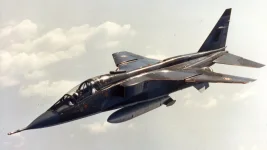
The official statement outlined that the nine jets delivered to India include five GR1 strike fighters and four T2 twin-seat training models.
This confirms earlier speculation from June 2026, when several wrapped Jaguars and a substantial cache of spare components were seen at a British dock, preparing for their maritime journey to the Indian subcontinent.
This latest acquisition highlights India's ongoing struggle to support the only active Jaguar fleet remaining in the world today.
Since the original manufacturing facilities closed down many years ago, sourcing retired jets from foreign nations has become the most practical strategy to secure the necessary parts to keep the Indian aircraft flying.
Addressing the remaining UK inventory, the parliamentary disclosure noted that 42 Jaguars are still kept by the British MoD. Among these are 13 GR1 models. However, the UK no longer has any T2 variants after sending its final four to India.
The rest of the stockpile likely consists of the more modern GR3 strike aircraft and T4 trainers. A precise count of these later models was not shared, as the original question from MP Obese-Jecty focused exclusively on the older GR1 and T2 versions.
A significant portion of this British stockpile is housed at RAF Cosford, serving as hands-on training platforms for military engineering students. While these grounded jets cannot take to the skies, their structures are largely intact. This makes them an exceptional resource for salvaging crucial components needed by active operators like India.
The history of the SEPECAT Jaguar dates back to a pioneering European joint venture between the British Aircraft Corporation and France's Breguet Aviation. Introduced into the Royal Air Force in 1974, the jet was primarily designed for low-altitude attack missions and tactical reconnaissance.
Over its long service life with the RAF, the Jaguar saw extensive combat action. It flew missions during the 1991 Gulf War, as well as operations over the Balkans and Iraq. Eventually, due to financial constraints and shifting defence priorities, the UK retired its entire active fleet in 2007.
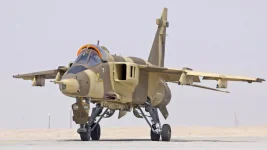
Today, India holds the unique distinction of being the only nation still deploying the Jaguar for frontline combat duties.
Inducted by the IAF in 1979 and famously named the 'Shamsher' (meaning Sword of Justice), the jet was also built domestically under licence by Hindustan Aeronautics Limited (HAL).
For more than 40 years, it has served as the backbone of India's deep-penetration strike capabilities, trusted to carry out long-range bombing runs with precision-guided munitions.
The Shamsher remains critical to India's national security, especially since the IAF currently operates with around 29 fighter squadrons—well below its mandated goal of 42.
Until advanced indigenous jets like the Tejas Mk1A, Tejas Mk2, and the fifth-generation AMCA are fully integrated in the coming years, prolonging the operational life of older fighters like the Jaguar is an absolute necessity.
To keep these vintage warplanes flight-ready, the IAF has increasingly turned to the global market to acquire decommissioned models for parts.
This strategy is not new. In 2018, the French government generously donated 31 retired Jaguars to India at no cost, allowing for extensive parts harvesting.
Furthermore, Oman recently handed over its own retired fleet, contributing not just airframes, but also functional Rolls-Royce Adour engines and a massive quantity of spare hardware.
The recent delivery of the nine British airframes provides another vital lifeline for the IAF. These jets will be meticulously stripped for rare components such as landing gear, complex hydraulic systems, specific cockpit instruments, and structural panels that are nearly impossible to find elsewhere.
These specific UK aircraft will not take to the skies again under the Indian flag. Instead, their true worth is found in dismantling them, ensuring that the active Indian squadrons have the mechanical support they need.
As India plans to gradually retire the Shamsher fleet by the early 2030s, the remaining 42 airframes held by the UK MoD represent a crucial strategic reserve.
Should the IAF face future maintenance hurdles, these British jets are likely the final large-scale source of authentic Jaguar parts globally, ensuring India's deep-penetration strike force remains robust until its modern replacements are ready.