- Views: 3K
- Replies: 5
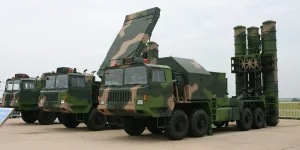
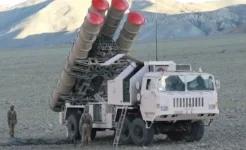
A prominent American national security analyst has delivered a scathing review of the Chinese-made HQ-9B air defence systems used by Pakistan, describing them as a "Frankenstein’s Monster" of mismatched technologies.
The assessment follows reports that the system suffered a catastrophic failure against Indian military assets, specifically the S-400 Triumf and BrahMos missiles, during the recent hostilities.
A Patchwork Platform Exposed
Brandon J. Weichert, the senior national security editor at The National Interest, has characterised the HQ-9B as a disjointed attempt to replicate advanced Russian technology.While Beijing has long marketed the system as an indigenous triumph, analysts believe it is heavily derived from reverse-engineered Russian S-300 technology.
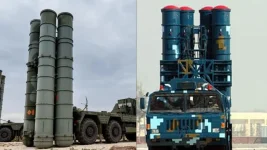
According to Weichert, Chinese engineers attempted to modernise this base by grafting on features inspired by Russia's cutting-edge S-400, alongside unauthorized integrations of American and Israeli components to boost its appeal in the export market.
However, this hybrid approach reportedly resulted in a disjointed system—dubbed a "Frankenstein’s Monster"—that lacked the cohesion and reliability required for high-intensity warfare.
While the platform looked capable on paper, its first major test in active combat exposed severe operational flaws that untried systems often face.
'Abysmal' Performance Against Supersonic Threats
The critique was further amplified by Russian military expert Andrei Martyanov, who discussed the conflict on Weichert’s podcast.Martyanov described the performance of the HQ-9B in Pakistan as "abysmal," noting that it failed to provide a credible shield against incoming threats.
The report highlights that the system struggled to track or intercept targets across the speed spectrum.
It was reportedly unable to stop India's supersonic BrahMos cruise missiles—which travel at speeds of up to Mach 2.8—and surprisingly failed even against slower, subsonic threats like loitering munitions and drones.
This inability to secure the airspace stands in sharp contrast to the performance of India's Russian-supplied S-400 Triumf, a battle-tested system known for its robust tracking and interception capabilities across a 400-kilometre range.
Electronic Warfare and Destruction
A critical factor in the HQ-9B's collapse was its vulnerability to electronic warfare (EW).During the four-day conflict, the system's primary HT-233 engagement radar was reportedly neutralised by Indian jamming countermeasures. Weichert notes that once the radar was blinded, the batteries became "sitting ducks."
The report alleges that the system’s reliance on semi-active radar homing inadvertently broadcasted its location, effectively painting a "giant bull’s eye" on the deployment sites near Lahore and Sialkot.
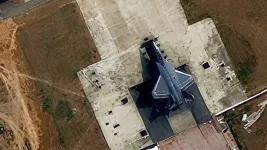
Consequently, Indian forces were able to launch precision strikes using BrahMos missiles, destroying multiple launchers and command units.
Unlike India, which operates over 40 S-400 launchers in a dense, layered network, Pakistan’s limited deployment of approximately 12 to 18 HQ-9B units meant that these losses essentially dismantled their air defence umbrella in the sector.
Fallout and Future Procurement
The operational failure has reportedly triggered a "quiet postmortem" within the Pakistani defence establishment.While Chinese manufacturers have attempted to attribute the losses to poor training by Pakistani crews, independent observers suggest the issue lies with the technology itself.
Confidence in Chinese high-tech weaponry has reportedly plummeted in Islamabad.
Sources suggest that Pakistan is now actively exploring alternatives to plug the gap in its air defence. Interest has shifted towards Turkey’s SİPER Block 1 and Block 2 systems, which are viewed as having superior electronic warfare resistance.
While there is talk of Pakistan acquiring China's newer HQ-19 system, Weichert speculates this may be a diplomatic gesture to maintain ties with Beijing, while the military quietly pivots to non-Chinese suppliers for its core defensive needs.
Strategic Implications
The conflict has reinforced the strategic gap between the two neighbours.Weichert concludes that the breakdown of the Chinese-supplied air defence network created a critical vulnerability that the Indian Air Force and missile commands rapidly exploited.
For the global defence market, the events of Operation Sindoor serve as a stark warning regarding the reliability of Chinese military exports.
Meanwhile, the conflict has validated India's significant investment in the S-400 system and the BrahMos missile programme, proving their effectiveness in a modern, electronically contested battlefield.
Last edited by a moderator: