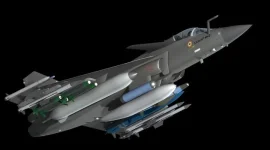
The Indian Air Force (IAF) is grappling with a severe shortfall in its combat aircraft fleet, a challenge that cannot be resolved solely by purchasing new fighter jets.
While the IAF is officially mandated to maintain 42 fighter squadrons to successfully manage potential two-front threats, the current strength has plummeted to an estimated 29 squadrons.
This critical gap is widening as legacy Soviet-era aircraft, primarily the ageing MiG-21s, are steadily retired.
Meanwhile, domestic fighter programmes face their own development timelines: the Tejas Mk1A is still in its early production phase, while next-generation platforms like the Tejas Mk2 and the Advanced Medium Combat Aircraft (AMCA) remain years away from entering active service in significant numbers.
Building a modern fighter fleet is a time-intensive process because aircraft production relies on highly complex supply chains for engines, radar, electronic warfare equipment, and weaponry.
Furthermore, establishing a traditional fighter squadron demands an enormous human-resource commitment. It requires years of rigorous pilot training, specialised ground crews, and extensive maintenance infrastructure.
Consequently, closing the squadron gap through conventional fighter manufacturing is an increasingly impractical strategy for the immediate future.
To address this operational vulnerability, defence strategists are looking toward the rapid deployment of Unmanned Combat Aerial Vehicles (UCAVs).
Rather than serving as direct replacements for human pilots, domestic drone programmes are being developed as vital force multipliers.
By adopting a mass-production approach to combat drones, India can supplement its existing manned aircraft and achieve the required combat mass much faster than relying exclusively on traditional fighter jets.
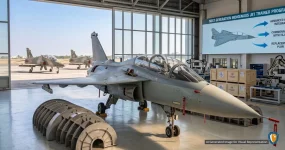
The Hindustan Aeronautics Limited (HAL) CATS (Combat Air Teaming System) Warrior introduces the concept of a "loyal wingman."
Designed to operate alongside manned fighters, this unmanned drone will take on high-risk roles.
Equipped with an estimated 700-kilometre strike range, the CATS Warrior can conduct electronic warfare, enemy air defence suppression, surveillance, and deep-strike missions without placing a human pilot in the line of fire.
Following a successful engine ground run of the prototype in early 2025, the platform is maturing into a system where a single human pilot could eventually coordinate multiple armed drones in heavily contested airspace.
Simultaneously, the Defence Research and Development Organisation's (DRDO) Ghatak represents a highly ambitious leap into autonomous warfare.
Envisioned as a 13-ton stealth UCAV powered by an indigenous jet engine, the Ghatak is designed to independently penetrate heavily defended enemy airspace to destroy high-value targets while keeping human pilots out of harm's way.
In March 2026, the Defence Acquisition Council cleared the procurement of 60 Ghatak units for the military at an estimated cost of ₹39,000 crore, signalling a rapid shift toward advanced drone warfare.
In a major conflict, deploying these stealth drones alters the economics of attrition; military commanders can accept the loss of unmanned systems on dangerous missions while preserving irreplaceable manned fighters.
This manned-unmanned teaming is especially critical given India's unique geographical security challenges.
The IAF must remain prepared to defend both its western and northern borders simultaneously.
Shifting the majority of India's most capable manned fighters to one region naturally leaves the other vulnerable.
By integrating UCAVs, a single manned fighter paired with several autonomous drones can project the sensor range, electronic jamming power, and missile capacity of an entire traditional formation, effectively expanding the military's reach without needing extra pilots.
However, military experts emphasise that investing in UCAVs does not mean halting the acquisition of traditional fighter jets.
Platforms like the Tejas variants, Rafale, upgraded Su-30MKIs, and the upcoming AMCA will remain the irreplaceable core of India's combat aviation.
Unmanned systems cannot fully replicate the split-second decision-making, situational awareness, and adaptability of a human pilot during complex aerial dogfights.
Realising the full potential of this combined force will also require India to rapidly advance secure datalinks, artificial intelligence, sensor fusion, and human-machine integration to ensure these drones can continue to operate even if enemy jammers disrupt their communications.
Ultimately, the IAF's squadron deficit is a reality that will persist for the foreseeable future.
Waiting passively for manned fighter numbers to reach the mandated strength would leave India's airspace exposed during a crucial transition period.
The central argument is not a debate of fighters versus UCAVs, but rather fighters operating alongside UCAVs.
While manned jets will remain the backbone of the military for decades to come, aggressively scaling up programmes like the CATS Warrior and the DRDO Ghatak offers a practical, immediate solution to bolster national defence readiness.