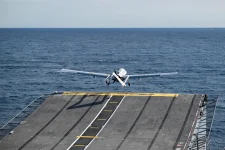
Recently, questions have emerged regarding India's decision to purchase American MQ-9B High Altitude Long Endurance (HALE) drones.
This debate follows significant drone losses experienced by the United States during conflicts involving Iranian and Houthi forces.
Sceptics suggest that instead of allocating extensive defence budgets to foreign equipment, New Delhi should focus on creating a home-grown drone that meets India's unique military needs.
In October 2024, India finalised a $4 billion agreement to buy 31 MQ-9B drones from the US. This fleet comprises 15 SeaGuardian variants for the Navy and 16 SkyGuardian variants divided equally between the Army and Air Force.
Reports indicate that over 30 MQ-9 drones have been destroyed in the last three years, causing concern about how well these massive, slow-moving aircraft can survive in hostile skies.
However, comparing these incidents to India's upcoming MQ-9B fleet can be misleading.
The older MQ-9A drones were often deployed for direct strikes in highly dangerous combat zones. In contrast, India's primary goal for the MQ-9B is continuous intelligence gathering and surveillance.
With an impressive flight endurance of over 35 hours, these new drones will actively monitor India's expansive land borders and maritime territories, offering a major tactical edge without necessarily flying directly into intense enemy fire.
Drones that can stay in the air for days are incredibly valuable because they relieve the pressure on manned aircraft, such as the Navy's P-8I Poseidon fleet.
By using uncrewed systems for routine patrols, expensive crewed planes can be saved for complex missions that strictly require human pilots. This also cuts down on pilot fatigue, aircraft maintenance, and overall operational expenses.
For India, keeping a watchful eye over the vast Indian Ocean, the towering Himalayas, and the western borders is a massive task. Trying to maintain this constant watch exclusively with traditional crewed aircraft would demand an unrealistic amount of planes, personnel, and money.
Nevertheless, recent clashes in the Middle East serve as a strong warning: large surveillance drones are highly vulnerable to modern surface-to-air missiles and cannot be treated as cheap, disposable tools.
When facing advanced air-defence systems, operating these aircraft requires meticulous planning. To survive, they must be supported by electronic warfare systems to jam enemy radars, operate from safe distances, and work within a broader intelligence network.
The takeaway for India is not to abandon the use of HALE drones, but rather to fast-track the creation of its own.
Building an indigenous drone would allow the integration of Indian-made sensors, communication links, electronic warfare suites, and weapons.
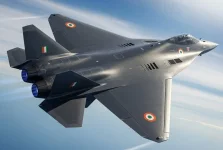
Agencies like the Defence Research and Development Organisation (DRDO) and Hindustan Aeronautics Limited (HAL) are actively pursuing domestic HALE and Medium Altitude Long Endurance (MALE) drone development programmes.
A truly home-grown platform, designed specifically for India's extreme geography and security threats, is the ideal long-term fix.
This would drastically reduce reliance on foreign nations and give the Indian military complete control over the aircraft's software, data security, and future technological upgrades.
Ultimately, India's drone strategy comes down to two questions: Does the country need non-stop aerial surveillance? Given the current security climate, the answer is an absolute yes. Should India rely on imported machinery forever?
The answer is a definitive no. While the American MQ-9B drones perfectly fill an urgent security gap today, the ultimate national goal must be to cultivate a robust Indian drone manufacturing ecosystem.
By observing modern warfare, it is clear that uncrewed surveillance is essential, but flying large drones in hostile areas is risky.
Therefore, the wisest path forward for India is to use the recently acquired US drones as an interim shield, while simultaneously pouring energy and funding into developing a powerful, next-generation Indian HALE drone.