- Views: 2K
- Replies: 9
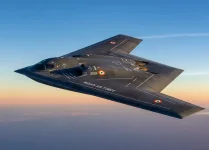
As the international community accelerates toward the next frontier of aerial combat, strategic experts are urging India to establish a dedicated $10 billion research and development (R&D) fund for an indigenous sixth-generation fighter jet.
Proponents argue that immediate financial commitment is essential for India to transition from a nation that follows global trends to one that sets them, ensuring long-term sovereign control over its air defence capabilities.
The Strategic Necessity of Early Investment
Historically, India has faced cycles of technological catch-up, often inducting platforms years after they have become standard for peer competitors.Currently, the Advanced Medium Combat Aircraft (AMCA)—India’s fifth-generation stealth project—is progressing toward a projected first flight in 2028, with serial production aimed for 2035.
However, by the time the AMCA reaches full operational capacity, global powers like the United States and China are expected to have already deployed sixth-generation systems.
The United States has recently designated its Next Generation Air Dominance (NGAD) platform as the F-47, with plans for service entry as early as 2029.
Similarly, China has reportedly conducted flight tests of multiple sixth-generation prototypes, including the Chengdu J-36 and Shenyang J-50.
If India waits for the AMCA to mature before starting its next project, it risks a "capability gap" that could last until 2050.
Breaking the Import Dependency
A proactive $10 billion allocation over the next decade is viewed as a "strategic hedge" against future costs.Experts note that failing to invest in domestic R&D now could force India into massive emergency imports later.
Such acquisitions in the 2040s could exceed $50 billion when accounting for procurement and lifelong maintenance, while also leaving the country dependent on foreign suppliers for critical software updates and wartime support.
| Feature | 5th Generation (AMCA) | 6th Generation (Proposed) |
|---|---|---|
| Primary Focus | Stealth & Sensor Fusion | AI-Driven Systems & Manned-Unmanned Teaming |
| Engine Tech | High-Thrust Turbofans | Adaptive Cycle Engines |
| Weapons | Internal Missile Bays | Directed Energy (Lasers) & Hypersonics |
| Network | Advanced Data Links | Quantum-Resistant Networks |
Building a National Ecosystem
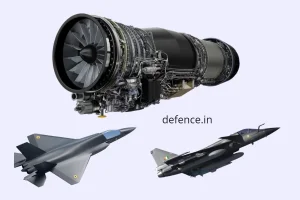
The proposed fund would not go toward immediate assembly but rather toward mastering high-risk, high-reward technologies. These include:- Adaptive Cycle Engines: Propulsion systems that adjust for both high speed and fuel efficiency.
- Manned-Unmanned Teaming (MUM-T): Integrating "loyal wingman" drones to fly alongside piloted jets.
- Directed Energy Weapons: Utilizing laser systems for mid-air intercepts.
- Quantum Avionics: Research is already underway by the DRDO into quantum inertial navigation and atomic clocks to ensure navigation in GPS-denied environments.
This "whole-of-nation" approach aims to sustain a continuous pipeline of engineering talent, preventing the brain drain that often occurs between major aircraft programs.
Global Precedents and Competition
India’s regional rivals and global partners are already operating overlapping programs.While the Global Combat Air Programme (GCAP)—a partnership between the UK, Italy, and Japan—targets an entry date of 2035, the European FCAS program faces internal friction but remains a major technological driver.
By allocating funds now, India can ensure it remains a formidable power in the Indo-Pacific, maintaining a credible deterrent against increasingly advanced aerial threats.