- Views: 1K
- Replies: 1
The Indian Air Force (IAF) is facing a critical juncture in its modernisation efforts as regional security dynamics shift toward advanced stealth capabilities.
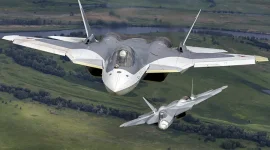
Recent assessments from aviation experts suggest that India may be reconsidering the Russian Su-57 Felon as a potential gap-filler to address a shrinking fleet and the absence of fifth-generation aircraft.
Addressing the Squadron Shortage
The potential return to the Su-57 comes at a time when the IAF is managing two major procurement tracks: the acquisition of 114 Multi-Role Fighter Aircraft (MRFA)—with the French Rafale seen as a frontrunner—and the indigenous development of the Advanced Medium Combat Aircraft (AMCA).According to air power analyst Angad Singh, the renewed interest in the Russian platform is a symptom of the immense pressure the IAF is under to rectify its declining squadron strength and bridge widening technological gaps.
Current open-source data indicates the IAF is operating with approximately 31 fighter squadrons, significantly below the sanctioned strength of 42 squadrons required to tackle a dual-front threat.
The Shift to Stealth Realities
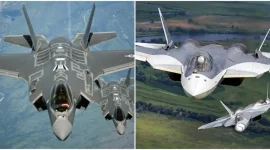
Stealth technology is no longer a future concept but a current operational requirement in Asia.With neighboring adversaries increasingly deploying low-observable aircraft, the debate over whether India needs a fifth-generation fighter has moved from theoretical discussions to an urgent operational necessity.
Experts argue that in modern aerial warfare, the "first look, first shot" advantage is decisive. Conventional fourth-generation fighters face a structural disadvantage when operating against stealth-equipped opponents, making the induction of a fifth-generation platform a matter of when, not if.
Strategic Diversification and Domestic Goals
India is currently pursuing a multi-pronged approach to bolster its air defence capabilities:- Domestic Production: Commitment to 180 Tejas LCA variants, including the Mk1A.
- Indigenous Innovation: Development of the AMCA, India's home-grown stealth project.
- Foreign Acquisition: Evaluating global platforms to meet immediate needs.
Russian officials continue to pitch the Su-57 as a logical progression for India, citing the IAF's extensive history with the Sukhoi Su-30MKI.
The Path Forward: AMCA vs. Imports
The timeline for the indigenous AMCA remains a subject of intense scrutiny. With the first flight projected toward the end of the decade, a "capability gap" exists for the next 10 to 15 years.Analysts suggest that the IAF might benefit more from an incremental approach—getting a basic version of the AMCA into service quickly—rather than waiting for a technologically "perfect" aircraft.
Ultimately, whether through the expansion of the Rafale fleet, a potential deal for the Su-57, or the acceleration of the AMCA, the IAF’s primary goal is to maintain air dominance.
As the regional environment becomes more contested, the window for addressing these hardware deficits is rapidly closing.