- Views: 2K
- Replies: 5
As of January 2026, the long-standing ambition of the United Arab Emirates to acquire the F-35 Lightning II has effectively reached a dead end.
While no formal cancellation order has been issued from Washington, senior officials in Abu Dhabi have made it clear that they do not intend to restart negotiations, irrespective of future political shifts in the White House.
This development leaves the UAE Air Force, known for its pursuit of cutting-edge technology, facing a significant void in its roadmap for fifth-generation air power.
However, this gap presents a timely and distinct opportunity for New Delhi: to invite the UAE to join the Advanced Medium Combat Aircraft (AMCA) programme, thereby establishing a new axis of stealth air power independent of the traditional Western ecosystem.
The Anatomy of the F-35 Deal Collapse
The breakdown of the American deal was not sudden but the result of three irreconcilable strategic fault lines that turned the jet from a military asset into a political liability.Firstly, the United States issued an ultimatum regarding the UAE’s digital infrastructure.
Washington demanded the removal of Huawei 5G networks, citing fears that Chinese intelligence could exploit the infrastructure to harvest sensitive mission data from the F-35s
Abu Dhabi rejected this demand, viewing the Chinese tech giant as a cornerstone of its digital economy and refusing to compromise its broader strategic partnership with Beijing.
Secondly, the US insisted on strict operational restrictions. These end-use monitoring conditions would have dictated where and how the UAE could deploy the aircraft. Emirati leadership viewed such constraints as an unacceptable infringement on their national sovereignty and military independence.
Thirdly, the immutable reality of US law regarding Israel’s "Qualitative Military Edge" (QME) played a decisive role.
This legislation effectively guarantees that any F-35s sold to Arab states would feature downgraded avionics, sensors, or electronic warfare suites compared to those operated by the Israeli Air Force—a second-tier status the UAE was unwilling to accept.
The Search for Alternatives: The Korean Limit
With the American route closed, the UAE is actively assessing other options.Reports suggest that South Korea’s KF-21 Boramae is a leading contender. However, while the KF-21 is a formidable platform, it comes with inherent limitations.
Current variants of the KF-21 are classified as 4.5-generation fighters. They lack internal weapons bays and rely on external carriage, which compromises stealth.
A true fifth-generation variant with full stealth shaping is not expected to be operational before 2035. This leaves the UAE facing a capability gap of nearly a decade without a genuine stealth platform.
The Case for an India-UAE AMCA Partnership
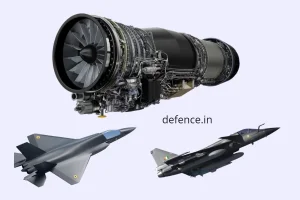
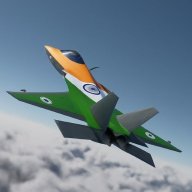
This timeline creates a perfect opening for India’s AMCA. Unlike the interim solutions available elsewhere, the AMCA is being engineered from the ground up as a full-spectrum fifth-generation fighter.It features internal weapons bays, advanced stealth geometry, sensor fusion, supercruise, and next-generation electronic warfare suites. It is designed to secure air dominance for the Indian Air Force well into the 2050s.
A collaboration on this programme would unlock immense value for both nations, particularly following the 'Letter of Intent' for a Strategic Defence Partnership signed during the UAE President’s visit to India earlier this week (January 19, 2026).
For the UAE
Joining the AMCA programme offers a route to high-end stealth capability without the political baggage of the US model.A partnership with India would ensure access to the source code, influence over the design, and industrial participation—levels of control that Washington simply does not offer to foreign clients.
For India
The benefits are financial, industrial, and strategic.Developing a fifth-generation fighter is an extraordinarily capital-intensive endeavour, costing tens of billions of dollars for development, testing, and lifecycle support.
A partnership with the UAE would distribute this financial load and accelerate development timelines.
Furthermore, the UAE brings a sophisticated defence industrial base capable of contributing to advanced materials, avionics, and software—critical components of modern air combat.
Strategic Autonomy: The Core Value
Perhaps the most significant advantage of an AMCA partnership is political. It offers what the F-35 never could: true strategic autonomy.India’s defence exports are not governed by operational vetoes or demands to strip out civilian communications infrastructure. New Delhi does not downgrade export variants to maintain a geopolitical balance in the region.
A joint AMCA project would be founded on the principle of sovereign equality rather than alliance hierarchy.
The Timing is Critical
The timing for such a proposal is ideal.The UAE’s fleet of Rafale F4 jets will begin arriving in significant numbers between 2027 and 2031. Meanwhile, the AMCA is projected to enter service in the early 2030s.
This allows the Rafale to serve as the high-tech workhorse for the UAE while the AMCA matures into its future stealth spearhead—mirroring the force structure planned by the Indian Air Force.
If New Delhi acts decisively, it can position the AMCA as the future of Emirati air power before Washington attempts to repackage the F-35 deal under a new administration.
In an era where advanced weaponry is increasingly gated by political conditions, India has the chance to pioneer a new model: a sovereign, collaborative fifth-generation fighter programme built on strategic trust.