Prior to 2022, the Indo-Russian BrahMos supersonic cruise missile had not secured a single international buyer. Fast forward to today, and the weapon system has evolved into a highly coveted asset on the global arms market.
Following a landmark acquisition by the Philippines, Vietnam has quietly finalized a procurement agreement, while Indonesia is nearing the conclusion of its own deal.
With nations like the United Arab Emirates expressing strong interest and even Russia exploring reverse-procurement, the missile has cemented its reputation as a premier strategic deterrent, heavily frustrating Beijing's regional ambitions.
The turning point in public acknowledgment occurred at the Shangri-La Dialogue in Singapore on May 30, 2026. During the summit, India’s Defence Secretary Rajesh Kumar Singh officially validated long-standing speculations regarding Southeast Asian acquisitions.
He indicated that the agreement with Indonesia is in its closing phases. More significantly, he revealed that a contract with Vietnam has already been executed, albeit without a formal public declaration at this time.
The emerging customer base for the BrahMos highlights a clear geopolitical strategy. The Philippines, Vietnam, and Indonesia all face ongoing maritime sovereignty disputes with China in the contested South China Sea.
To counter the rapid expansion and increasing assertiveness of the Chinese People's Liberation Army Navy (PLAN), these nations are adopting the BrahMos as a formidable "carrier-killer."
Beijing has consistently criticized these arms transfers, viewing them as unwanted interference in its maritime claims, but Southeast Asian capitals are prioritizing their sovereign defence capabilities to secure their exclusive economic zones (EEZs).
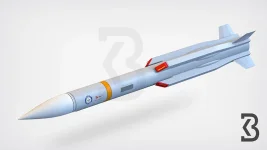
The strategic value of the BrahMos lies in its unmatched technical profile. Powered by a solid propellant booster and a liquid ramjet engine, it sustains speeds of Mach 2.8—nearly three times the speed of sound.
While export variants are restricted to a 290-kilometer range to comply with the Missile Technology Control Regime (MTCR), the weapon's sheer kinetic energy and low-altitude, sea-skimming flight path make it nearly impossible for modern naval defence systems to intercept.
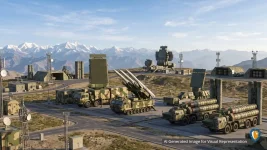
Capable of being deployed from coastal land batteries, naval vessels, submarines, and aircraft like the Su-30MKI, it creates a robust anti-access/area denial (A2/AD) shield for coastal nations.
The recent surge in international demand was heavily catalyzed by the missile's real-world combat performance.
During Operation Sindoor in May 2025, BrahMos missiles successfully bypassed Pakistan’s air defence networks—many of which rely on advanced Chinese radar and surface-to-air missile technology.
By striking designated military infrastructure with pinpoint accuracy, the weapon demonstrated its reliability and lethality in hostile environments.
The world watched this operational success, which rapidly accelerated purchase decisions from foreign militaries.
Despite India's aggressive export push, every international sale navigates a complex diplomatic framework.
BrahMos Aerospace is a joint enterprise between India’s Defence Research and Development Organisation (DRDO), holding a 50.5% stake, and Russia’s NPO Mashinostroyeniya, which owns 49.5%.
Consequently, Moscow holds joint approval power over any third-party exports. This hurdle was cleared for the latest Southeast Asian clients when Russian Defence Minister Andrey Belousov granted formal consent to India's Defence Minister Rajnath Singh during bilateral talks in late 2024.
While export models remain capped by international regulations, India’s own armed forces actively deploy extended-range variants capable of striking targets well beyond 450 kilometers.
Looking ahead, BrahMos Aerospace is implementing strategies to reduce overall production costs by up to 20% within the next two years.
Additionally, the development of the BrahMos-NG (Next Generation)—a lighter, 1.2-tonne variant designed for integration onto a wider variety of platforms, including indigenous fighters like the LCA Tejas—is well underway.
Driven by the success of this flagship missile, the weapon that once had no foreign takers is now the cornerstone of India’s ambitious goal to achieve ₹50,000 crore in annual defence exports by 2029.