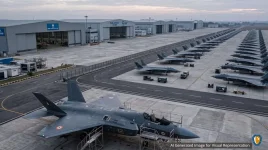
The Indian Air Force (IAF) is standing at a critical crossroads. Currently operating with only about 30 fighter squadrons against a sanctioned strength of 42, the IAF faces a severe numerical crisis.
At the same time, the global battlefield is rapidly shifting towards fifth-generation stealth combat aircraft, leaving conventional 4.5-generation fighters increasingly vulnerable.
This brings up a vital strategic question: Is buying 114 more Rafale fighters the best way to solve the IAF's long-term squadron shortage, or should India accelerate its indigenous Advanced Medium Combat Aircraft (AMCA) programme?
The Rafale Proposal and the Cost of Immediate Action
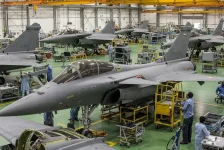
The debate has intensified following France’s formal techno-commercial proposal on August 6, 2026, to supply 114 Rafale fighters under the Multi-Role Fighter Aircraft (MRFA) tender.Valued at roughly ₹3.25 lakh crore ($34–39 billion), the package includes building the vast majority of these jets in India.
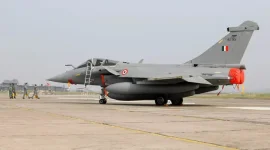
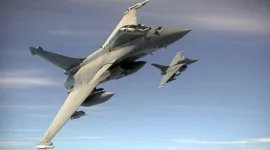
There is no doubt that the Rafale in its F4 configuration is a highly capable 4.5-generation fighter, equipped with advanced sensors, electronic warfare systems, and modern weapons.
Furthermore, a large Indian production line could deliver these aircraft much faster than an unproven indigenous programme, providing immediate high-end combat power.
However, the issue is opportunity cost. Allocating such enormous financial resources to another massive fleet of fourth-generation-plus fighters could directly compete with funding for India's future defence ecosystem—including the AMCA, unmanned combat aerial vehicles (UCAVs), and advanced airborne early-warning platforms.
The AMCA Alternative: A Bridge to the Future
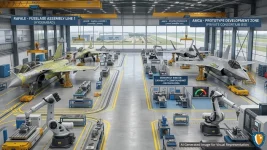
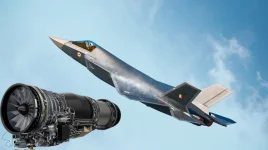
India’s future combat strategy rests on the AMCA, which received government clearance for prototype development at roughly ₹15,000 crore.Current plans call for an initial batch of about 40 AMCA Mk1 fighters powered by the proven GE F414 engine, before transitioning to a more powerful 110–120 kN indigenous engine for the future AMCA Mk2.
Instead of treating the AMCA Mk1 as a small initial batch, defence experts argue that India could accelerate the programme and dramatically expand production to 100-120 aircraft.
Under this strategy, the F414-powered AMCA Mk1 would become India’s bridge into fifth-generation aviation.
Even though the F414 is not a revolutionary fifth-generation engine, the aircraft itself is fundamentally different from the Rafale. The AMCA’s true value lies in its stealthy low-observable design, internal weapons carriage, sensor fusion, and integrated electronic warfare.
By using an already mature engine like the F414, India could get a stealth fighter into production earlier while buying time to develop the higher-thrust engine for later variants.
Significant Risks and Engine Roadblocks
Accelerating the AMCA programme is not without major risks. The AMCA is a far more complex machine than the Rafale.Pushing production before completing exhaustive flight testing, certification, and qualification could introduce serious safety and reliability issues.
Furthermore, the GE F414 supply chain has its own hurdles. Recent reports indicate that commercial negotiations for the engine hit a roadblock in mid-2026, with the US manufacturer reportedly asking for prices nearly three times higher than initial estimates.
Before expanding AMCA Mk1 production, India must ensure that the F414 supply chain is both scalable and financially viable.
Finding the Right Balance
The IAF cannot afford to simply "wait for the AMCA." The squadron shortage is a reality today, and the first AMCA production jets are still years away. However, allowing the 114-Rafale MRFA programme to become the sole answer to the crisis carries its own long-term dangers.The ideal solution may not be a strict choice between the Rafale and the AMCA, but a balanced integration of both.
A smarter strategy could involve acquiring a smaller, limited number of Rafales for immediate high-end capability, heavily ramping up Tejas Mk2 production for mass numbers, and aggressively accelerating the AMCA Mk1 to introduce stealth technology at scale.
India’s fighter shortage is not just a crisis of numbers; it is a crisis of generational transition. Solving the numerical gap with another large 4.5-generation acquisition might temporarily boost squadron strength, but it could leave India facing the exact same technological deficit a decade from now.
Every defence investment moving forward must ensure that the IAF takes a step closer to becoming a true fifth-generation force.