Tata Advanced Systems Limited (TASL) is rapidly expanding its influence within India's aerospace sector.
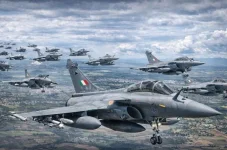
After securing a major agreement with Dassault Aviation in June 2025 to manufacture Rafale fighter jet fuselages in Hyderabad, the company is now reportedly in talks to host the jet's final assembly line.
However, this growing footprint has sparked an important debate within India's defence industry.
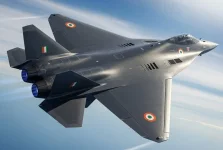
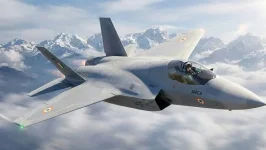
TASL is currently one of three private entities shortlisted for the Rs 15,000 crore contract to build prototypes of the Advanced Medium Combat Aircraft (AMCA), India's indigenous fifth-generation stealth fighter.
The Ministry of Defence now faces a strategic dilemma: should the corporation central to the Rafale programme also control the AMCA project, or is an independent partner necessary to ensure focused development?
The Case for Shared Manufacturing Capabilities
Supporters of awarding both contracts to TASL point to the significant technical overlap between the two aircraft.Constructing the fuselage and handling the final assembly of the Rafale requires the same rigorous quality control, composite material precision, and advanced systems integration needed for the AMCA's stealth airframe.
By managing both the Rafale and the AMCA, a single company could effectively share the costs of expensive manufacturing tools, specialized workforce training, and supply chain networks across two major fighter platforms.
Underscoring its internal capability, TASL is bidding for the AMCA project entirely on its own. In contrast, its competitors have teamed up to share the burden; Larsen & Toubro is bidding alongside Bharat Electronics Limited (BEL), and Bharat Forge has partnered with BEML.
TASL's independent bid indicates strong confidence in its existing infrastructure, which its ongoing Rafale work will only strengthen.
Concerns Over Capacity and Market Dominance
Despite the potential efficiencies, grouping India's two most critical fighter jet programmes under one roof presents three major risks.The first issue is sheer production capacity. TASL's Hyderabad facility is expected to produce up to two complete Rafale fuselage sections per month starting in 2028.
Simultaneously manufacturing five complex AMCA prototypes to meet a targeted first flight in 2029 would demand an extraordinary level of flawless aerospace engineering from a single private division.
The second major concern involves market concentration.
A primary reason the government excluded the state-owned Hindustan Aeronautics Limited (HAL) from the initial AMCA prototype competition was to dismantle its long-held monopoly over Indian fighter production and foster private sector growth.
Awarding the AMCA contract to TASL, while it already leads Rafale manufacturing, risks recreating that exact bottleneck within the private sector.
Finally, there are concerns about the integrity of the bidding process itself.
The AMCA competition was designed by the Aeronautical Development Agency (ADA) to evaluate independent bids strictly on their commercial and technical merits.
Allowing TASL's success in the government-backed Rafale deal to influence the AMCA selection could undermine the fairness of a process intended to reward the strongest standalone proposal.
A Balanced Approach for the Future
Looking at the government's current aerospace strategy, a highly decentralized outcome seems the most likely resolution.The Ministry of Defence has consistently shown a preference for spreading manufacturing capabilities across different geographic regions to build a robust, nationwide supply chain.
This is already visible in the wider Rafale ecosystem, where aerospace work is distributed between facilities like the Dassault Reliance plant in Nagpur and the Tata infrastructure in Hyderabad.
A similar distribution strategy will likely be applied to the AMCA project.
Even if TASL is awarded the prototype contract, the government is expected to require the company to integrate a broader network of external suppliers rather than keeping all manufacturing strictly in-house.
While a scenario where TASL exclusively controls both the Rafale and AMCA programmes remains possible, it is guaranteed to attract intense scrutiny due to the immense national security implications of concentrating India's next-generation air defence capabilities within a single corporate entity.