The Pakistan Air Force (PAF) is currently navigating a highly complex transition to modernise its aerial combat fleet.
While the induction of the advanced JF-17 Block III represents a major technological leap for the country, Pakistan is facing a severe numerical challenge.
With a significant portion of its inventory still dependent on decades-old Mirage III/V and F-7 aircraft, the primary concern is whether the Pakistan Aeronautical Complex (PAC) and its Chinese partners can scale up manufacturing fast enough to replace domestic legacy jets while fulfilling lucrative new export commitments.
The Scale of the Replacement Challenge
The situation goes beyond simply counting total aircraft, as the PAF must balance phasing out old airframes while maintaining operational squadron strength.According to recent public assessments, the PAF operated roughly 21 fighter squadrons in 2025. The fleet is estimated to include around 75 F-16s, 20 J-10CEs, 156 JF-17s (across all variants), 49 Mirage IIIs, 37 Mirage Vs, and 53 F-7PGs.
FlightGlobal’s 2025 World Air Forces directory further highlights the scale of this bottleneck: Pakistan has more than 230 ageing legacy fighters (Mirages and F-7s) that eventually need replacing.
However, the domestic modernisation pipeline is comparatively narrow. In 2025, it was estimated that only 23 JF-17 Block III fighters were actively in PAF service, with another 27 on order.
The Block III Advantage
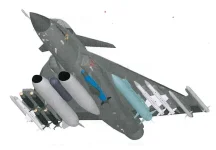
The JF-17 Block III is arguably the most sophisticated iteration of the platform and a critical component of Pakistan's future defence strategy. The aircraft is not just an upgrade; it is a qualitative leap.It comes equipped with a modern KLJ-7A Active Electronically Scanned Array (AESA) radar, which offers superior multi-target tracking and high resistance to electronic jamming.
Furthermore, the PAF has actively integrated modern Chinese weaponry into the Block III.
Recent visuals have shown the fighter armed with China’s PL-15 long-range Beyond-Visual-Range (BVR) air-to-air missiles and PL-10 imaging-infrared missiles.
This creates an interesting force-structure dynamic for Pakistan. While the PAF boasts over 150 JF-17s on paper, its true high-end combat capability is concentrated strictly within the much smaller subset of Block III aircraft.
Ageing Fleets vs. Industrial Capacity
Replacing an entire generation of aircraft requires mass production.Pakistan has historically managed to keep its 1960s-era Mirage III and V fleets airworthy through an impressive domestic overhaul facility at PAC Kamra.
While age alone does not dictate combat readiness—factors like spare availability and fatigue life are just as crucial—technological obsolescence and structural wear eventually become impossible to ignore.
The older F-7PGs, for instance, are increasingly being relegated to operational conversion units as the JF-17 takes over primary fighter roles.
The core of Pakistan's struggle lies in its industrial capacity. Open-source intelligence indicates that PAC Kamra’s annual production capacity historically hovers around 16 to 20 JF-17 aircraft.
This manufacturing rate was originally calibrated to slowly replace domestic legacy fleets, not to simultaneously sustain a massive export drive.
The Export Pressure
The strain on Pakistan’s production line has become highly visible following recent export successes, most notably with Azerbaijan.In 2024 and 2025, Pakistan secured a monumental $4.6 billion defence export agreement to supply Azerbaijan with 40 JF-17 Block III fighters.
When Azerbaijan officially inducted its first batch of five Block III jets during a military parade in late 2025, speculations arose that Pakistan had to strip aircraft from its own active squadrons to meet the delivery timeline.
However, open-source analysis of serial numbers confirmed that the aircraft delivered to Baku were newly built in 2024, rather than transferred from PAF stocks.
This revelation points to the actual dilemma: Pakistan is not cannibalising its air force, but its industrial capacity is stretched to the absolute limit.
PAC Kamra is now tasked with producing 40 highly advanced jets for a foreign buyer while the PAF waits for enough domestic airframes to finally retire its ageing Mirages and F-7s.
Balancing domestic fleet modernisation with the obligations of its largest-ever defence export contract remains the defining challenge for Pakistan's aerospace sector today.