- Views: 2K
- Replies: 4
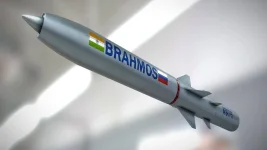
A quarter of a century has passed since the BrahMos supersonic cruise missile first took to the skies, transforming from an ambitious concept into one of the most formidable weapon systems globally.
Successfully tested for the first time on June 12, 2001, from a static launcher in Chandipur, Odisha, this joint Indo-Russian project has cemented its position as a vital pillar of India's conventional defence forces.
The genesis of this programme traces back to an Inter-Governmental Agreement signed on February 12, 1998, which created a partnership between India's Defence Research and Development Organisation (DRDO) and Russia's NPO Mashinostroyenia.
Over the decades, what began as a single-platform project has grown into a highly adaptable system capable of launching from land, air, surface ships, and submarines.
Today, the BrahMos missile serves actively across the Indian Army, Navy, and Air Force, providing unmatched flexibility in multiple combat environments.
Initially, international regulations under the Missile Technology Control Regime (MTCR) restricted the weapon's range to around 290 kilometres.
Following India's formal entry into the MTCR in 2016, engineers were able to unlock the missile's true potential. Recent upgrades have pushed its strike distance to 450 kilometres, while newer variants aim to strike targets beyond 800 kilometres.
Additionally, current developments reveal that an advanced, sleeker variant—the BrahMos Next Generation (NG)—is currently preparing for its first flight tests in 2026, promising greater compatibility with a wider array of combat aircraft.
The weapon's technological journey is marked by distinct generational upgrades, known as Blocks.
The baseline Block I was designed for precise strikes against fixed targets on land and at sea. The subsequent Block II introduced smarter software and target-sorting technologies, allowing the missile to pick out specific threats even in complex, crowded environments.
Block III further advanced the system by tailoring it for mountain warfare, equipping the missile to perform steep dive attacks and tight manoeuvres to hit targets hidden behind challenging geographic barriers.
Integration across various military platforms occurred in a carefully planned sequence. The Indian Navy first adopted ship-launched versions in 2005, and the Indian Army inducted land-based mobile launchers by 2007.
The programme achieved underwater launch capabilities in 2013 and successfully armed the Su-30MKI fighter jets with the air-launched BrahMos-A variant in 2017, which required significant structural adjustments to the aircraft.
A key achievement of the BrahMos journey is the steady increase in locally manufactured components. While early models relied heavily on foreign parts, India has systematically replaced them with domestic alternatives, including homegrown seekers, propulsion systems, and special fuels.
This push for self-reliance is matched by major advancements in navigation, such as the integration of the G3OM chip, which combines multiple satellite systems to achieve a pinpoint accuracy of just one to two metres.
On the global stage, BrahMos has become a flagship product for India's defence export ambitions.
The Philippines was the initial international buyer, and recent developments in 2025 and 2026 show rapid expansion.
Reports confirm that a landmark agreement worth approximately ₹6,000 crore has been signed with Vietnam, while a separate deal with Indonesia, valued at around $450 million, is nearing finalisation.
India has also reportedly offered the Philippines an extended-range version of the system to further strengthen their coastal defence network.
Looking ahead, the momentum behind the BrahMos programme continues to accelerate.
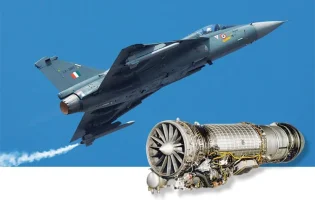
The upcoming BrahMos-NG promises a lighter, stealthier profile suitable for aircraft like the indigenous Tejas.
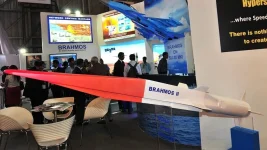
Meanwhile, scientists are pursuing the next frontier with the hypersonic BrahMos-II project, designed to fly at speeds greater than Mach 5, ensuring that this collaborative engineering marvel remains at the cutting edge of military technology for decades to come.