Former Chief of Air Staff, Air Chief Marshal RKS Bhadauria, has cautioned against buying Russia's Su-57 fighter jets as a temporary solution for India's fifth-generation combat needs.
He believes that a small, short-term procurement could easily snowball into a massive fleet, thereby threatening the survival of India's own Advanced Medium Combat Aircraft (AMCA) initiative.
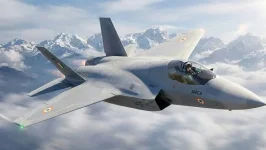
The AMCA project, which received a ₹15,000 crore clearance from the Cabinet Committee on Security in March 2024, is currently India's sole fifth-generation stealth fighter in development.
At the heart of Bhadauria’s concern is a tough choice for the Indian Air Force (IAF): meeting urgent defence needs right now versus securing self-reliance in aerospace technology for the future.
He cautioned that buying just two squadrons of the Russian stealth fighters could quickly expand to four or even eight squadrons.
Such an expansion would mean that this foreign stopgap aircraft would directly compete with the homegrown AMCA for crucial funds, infrastructure, and skilled personnel.
The issue is not about the combat effectiveness of the Su-57, which was recently pitched to India again at the Aero India 2025 exhibition. Instead, the real danger lies in the momentum of military procurement.
Once a foreign fifth-generation jet is integrated into the IAF, buying more of the same becomes highly tempting because the training facilities, maintenance networks, weapons, and pilot expertise are already in place. Consequently, a temporary fix could easily turn into a permanent commitment.
Because of this risk, Bhadauria strongly advocates pouring all available national resources and focus into the AMCA. He insists that a foreign alternative must not replace this vital national mission.
This aligns with his long-standing view that the AMCA is a critical strategic effort, and India must retain complete control over the advanced technologies that will shape its future aerial combat power.
However, Bhadauria is not giving the AMCA project a free pass to progress at a leisurely pace. His warning comes with a dual message: do not drop the indigenous effort for foreign imports, but equally, do not let the AMCA turn into an endlessly delayed venture.
This urgency stems from the IAF's past struggles, such as the delays seen in the Tejas Mk2 project. Repeated setbacks in local manufacturing have continuously pushed back the Air Force's operational readiness, and Bhadauria stresses that the AMCA cannot afford to fall into the same trap.
This sense of urgency is critical because building the AMCA is far more complicated than the Tejas series. It requires mastering advanced technologies like stealth design, internal weapons bays, cutting-edge sensors, electronic warfare capabilities, and a powerful new jet engine.
A setback in just one of these advanced systems could derail the entire production timeline. Current roadmaps target a prototype rollout around 2028 to 2029.
Defence experts have echoed these concerns, noting that the IAF has already seen a dip in its traditional advantage in fighter squadron numbers.
If the AMCA project experiences the kind of major delays seen in past Indian aviation projects, it could leave a significant gap in the country's aerial defence capabilities.
Ultimately, the debate over the Su-57 is more about timing and planning than simply picking between an Indian or a Russian plane. While a small purchase of foreign jets might temporarily fix a capability shortage, Bhadauria fears it must be strictly capped so it does not drain the AMCA’s budget.
The strategic danger grows if the Indian jet faces delays. If the AMCA falls behind schedule, the pressure to buy more Su-57s will rise. This creates a vicious cycle: the foreign fleet expands because the local project is late, and the local project struggles even more for funding because the foreign fleet has grown.
For the former Air Chief, the only way out is strict adherence to deadlines. The AMCA requires clear targets, swift decision-making, and close coordination between the government, the IAF, the Defence Research and Development Organisation (DRDO), the Aeronautical Development Agency (ADA), and private industry.
The goal is not just to build a world-class stealth fighter, but to deliver it on schedule. A successful and timely AMCA will not only arm the IAF with a formidable weapon but also build a robust domestic industry for future aerospace engineering.