Following the events of Operation Sindoor, India has accelerated the development and testing of its advanced air and missile defence shields.
In 2026, the country marked major progress with three critical interceptor systems: the AD-1, AD-2, and Project Kusha. These successful trials highlight New Delhi's commitment to creating a homegrown, multi-tiered defence grid.
This integrated network is designed to protect the nation from a wide array of aerial threats, including hostile fighter jets, incoming cruise missiles, and long-range ballistic missiles.
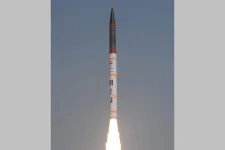
A key milestone achieved this year was the successful flight trial of the AD-1 interceptor.
Developed by the Defence Research and Development Organisation (DRDO), the AD-1 is a two-stage, solid-propelled weapon built to destroy enemy ballistic missiles of the 5,000 km class.
It is capable of engaging targets both within the Earth's atmosphere and at the edge of space in the low exo-atmospheric region.
Equipped with advanced navigation technologies and a highly accurate tracking system, the AD-1 serves as a vital pillar in Phase-II of India’s Ballistic Missile Defence (BMD) architecture.
Expanding upon this foundation, India also carried out vital testing of the AD-2 interceptor, which represents the nation's most sophisticated anti-ballistic missile technology currently in the works.
The AD-2 is specifically engineered to neutralize highly complex threats, such as intercontinental-class ballistic missiles traveling at extreme speeds and much higher altitudes than the AD-1 can reach.
Once fully operational, this high-altitude interceptor will significantly upgrade the country's strategic shield against rapidly advancing regional missile capabilities.
In parallel with the anti-ballistic systems, the DRDO has made rapid progress on Project Kusha, India’s domestic long-range surface-to-air missile programme that is frequently compared to the Russian S-400 system.
Recent trials of the Kusha M1 interceptor reportedly surpassed its expected operational range of 150 kilometres, proving the system's growing maturity.
Project Kusha will eventually feature three different interceptor variants—with maximum ranges reaching up to 350 to 400 kilometres—to offer comprehensive, layered security against drones, stealth fighters, and cruise missiles.
When combined, these distinct weapon programmes will form a seamless and comprehensive air defence umbrella over the country.
While the AD-1 and AD-2 interceptors are primarily dedicated to knocking down high-speed ballistic missiles from the upper atmosphere, Project Kusha will provide wide-area coverage against a massive variety of conventional aerial threats.
This approach ensures that India has overlapping defensive layers, leaving no critical gaps in its airspace.
The rapid succession of these missile tests in the wake of Operation Sindoor clearly indicates India’s strategic pivot toward self-reliance in national security.
With the regional security landscape becoming increasingly unpredictable, recent global conflicts have proven that relying on a single defensive system is no longer sufficient.
By actively fielding a robust, multi-layered air defence network, India is preparing to effectively neutralize simultaneous strikes from multiple classes of advanced airborne weapons.