- Views: 3K
- Replies: 9
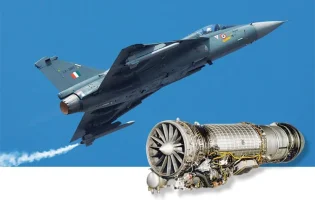
Next year, India’s Light Combat Aircraft (LCA) Tejas Mk1 initiative will celebrate a historic achievement. Sometime between the middle and end of 2027, the 100th aircraft is scheduled to roll off the production line.
This major milestone comes roughly 26 years after the first prototype of the indigenous fighter took flight in 2001, highlighting a long but successful transition from a basic technology demonstrator to an active-duty combat aircraft.
The upcoming 100-jet mark showcases the tremendous progress the Tejas project has made since January 4, 2001, when the first Technology Demonstrator (TD-1) successfully took to the skies.
That initial flight placed India among a select few countries worldwide with the ability to design and operate their own supersonic fighter jets.
Since that day, the platform has advanced through various stages of rigorous flight testing, prototype refinement, and official certification, ultimately earning its place within the Indian Air Force (IAF).
The Journey from Prototype to Production
After building the first two technology demonstrators, engineers moved on to the Prototype Vehicle (PV) phase, creating six aircraft numbered PV-1 to PV-6.These jets were essential for testing the aircraft's physical limits, checking internal systems, integrating weaponry, and securing necessary flight certifications.
The project then shifted to the Limited Series Production (LSP) stage, where eight more jets were built to polish the final design and set up the necessary manufacturing lines. In total, 17 prototype and LSP airframes were constructed during the platform's developmental years.
With initial testing complete, Hindustan Aeronautics Limited (HAL) began mass-producing combat-ready jets for the IAF.
The company first built 16 aircraft under the Initial Operational Clearance (IOC) standard. Afterwards, the assembly line upgraded to the Final Operational Clearance (FOC) standard, producing an additional 16 fighters.
These FOC jets brought improved abilities to the table, such as mid-air refuelling capabilities, better overall flight performance, and the capacity to carry a wider variety of weapons.
Scaling Up the Mk1A
Today, the programme is in its most extensive manufacturing stage, focused on the heavily modernized Tejas Mk1A variant.This new version features major upgrades, including a powerful Active Electronically Scanned Array (AESA) radar, modern digital flight computers, better electronic warfare systems, and easier maintenance protocols.
Despite experiencing some recent delays regarding engine deliveries from the United States, HAL has managed to significantly speed up its manufacturing pace over the last year.
Current reports indicate that approximately 10 out of the 18 planned Tejas Mk1A trainer jets are actively being built.
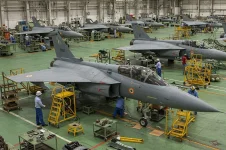
Furthermore, glimpses inside HAL's factories show that nearly 20 single-seat Mk1A fighters are nearing full assembly, with foundational work already started on jets up to the 32nd production unit.
This bustling activity on the factory floor shows that HAL has expanded its capacity to ensure airframes are ready the moment new engines are delivered.
Surging Output and Future Ambitions
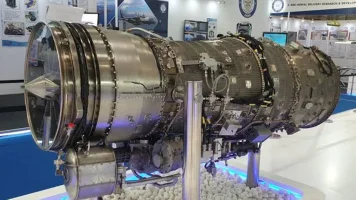
Output is set to surge over the next two financial years, largely due to HAL’s internal expansions and the expected stabilization of GE F404 engine shipments.General Electric has committed to delivering two engines per month, helping HAL target an annual delivery rate of 24 jets by the end of 2026.
Following this, HAL aims to reach a peak production capacity of 30 Tejas aircraft per year by the 2027–2028 timeframe. This would represent the fastest manufacturing rate in the history of the programme.
With three active production lines now fully operational—two in Bengaluru and one in Nashik—the entire Tejas Mk1 family is poised to cross the 100-aircraft threshold in the second half of 2027.
This total count will include all earlier prototypes, limited series jets, IOC/FOC models, trainers, and the latest Mk1A fighters.
Reaching this triple-digit figure will be a massive symbol of maturity for India's aerospace sector, proving that domestic manufacturing can reliably sustain high-volume production for the armed forces.
Ultimately, delivering the 100th Tejas is about much more than just a number. Each phase of the aircraft's 26-year evolution has helped India build a robust, self-reliant defence supply chain that now actively benefits over 600 domestic manufacturing enterprises.
The crucial engineering and testing lessons learned from the Mk1 and Mk1A are already laying the groundwork for India's next-generation platforms, such as the Tejas Mk2, the Twin Engine Deck Based Fighter (TEDBF), and the Advanced Medium Combat Aircraft (AMCA).