The recent flight tests of India’s Long Range Land Attack Cruise Missile (LR-LACM) represent a historic leap for the nation's domestic weapons programme and its goal to emerge as a leading defence exporter.
Engineered primarily by the Defence Research and Development Organisation's (DRDO) Aeronautical Development Establishment (ADE), this new weapon places India squarely in the international market for long-range, subsonic cruise missiles.
This highly competitive space has traditionally been controlled by Chinese, Russian, and Western aerospace firms.
Open-source data indicates the LR-LACM has a formidable strike range of 1,000 to 1,500 kilometres, significantly boosting India's strategic profile.
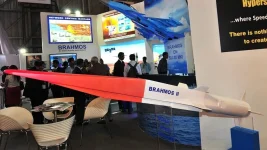
While India's famous BrahMos missile is built for blistering supersonic speeds and rapid precision strikes, the LR-LACM takes a different approach.
Travelling at subsonic speeds of around Mach 0.8, it is designed for extended endurance and stealth. It uses terrain-hugging technology—flying mere metres above the ground—to evade enemy radar networks.
Crucially, the LR-LACM is much cheaper to produce than its supersonic counterparts. This cost-effectiveness allows armed forces to maintain large stockpiles for continuous, precision bombardments, where budget and volume often outweigh the need for sheer speed.
An Expanding Global Market
The international demand for cruise missiles is projected to grow consistently over the next ten years as nations seek to upgrade their precision strike forces.Although futuristic hypersonic missiles capture the public's imagination, traditional subsonic cruise missiles continue to be the primary workhorse for armed forces worldwide. They offer proven reliability, operational adaptability, and a highly attractive price point.
Modern combat increasingly relies on engaging targets from safe distances and dismantling hostile air-defence grids.
Consequently, there is a sustained need for weapons that can navigate complex landscapes at very low altitudes without being detected.
For many developing or middle-income nations, purchasing a large arsenal of budget-friendly cruise missiles provides a far better strategic return on investment than buying a handful of costly supersonic alternatives.
Navigating Export Hurdles
Even with its impressive specifications, the LR-LACM will encounter distinct obstacles in the global arms bazaar.The primary legal hurdle is India’s adherence to the Missile Technology Control Regime (MTCR). This international pact restricts the sale of missiles that can carry heavy payloads over distances exceeding 300 kilometres.
Because the LR-LACM can travel up to 1,500 kilometres and carry a 450-kilogram conventional warhead, New Delhi will likely have to engineer a scaled-down, export-compliant variant to sell it to non-MTCR member states.
Furthermore, the global landscape is heavily contested. India’s new missile will have to compete against deeply entrenched systems like the European Storm Shadow and Taurus, the Russian Kalibr, and various Chinese alternatives. These competitors benefit from decades of operational history and established supply chains.
The Path to Commercial Success
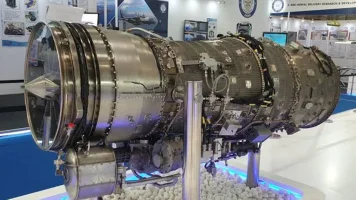
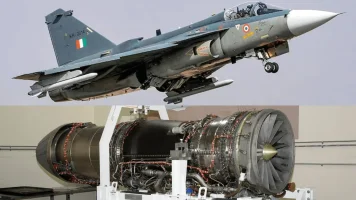
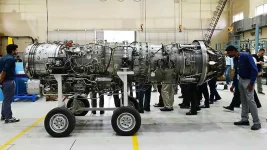
Despite these barriers, the LR-LACM has unique selling points, particularly its affordability and versatile design.The missile is driven by the domestically produced Manik small turbofan engine (STFE), which keeps manufacturing costs down compared to premium supersonic weapons, without sacrificing accuracy.
This financial edge makes it a highly attractive option for foreign militaries wanting to amass significant firepower without straining their defence budgets.
Moreover, the LR-LACM is designed for exceptional launch flexibility. It can be fired from mobile trucks on land, vertical launch systems (VLS) on naval warships, and there are plans to integrate it with fighter jets like the Su-30MKI.
This multi-platform compatibility allows a country to use one missile type across its army, navy, and air force, drastically cutting down on maintenance, training, and logistical expenses.
A Perfect Partner for BrahMos
Instead of viewing the LR-LACM as a rival to the BrahMos, Indian policymakers can market the two systems as a combined tactical package.Contemporary combat requires diverse tools for different objectives. A massive volley of affordable, subsonic LR-LACM missiles can be used to overwhelm anti-aircraft defences or destroy static infrastructure like supply depots and command hubs.
Meanwhile, the ultra-fast BrahMos can be held back for critical, time-sensitive targets that require immediate destruction.
By bundling these two distinct weapons, India can offer allied nations a comprehensive, multi-layered strike capability. Consequently, foreign militaries that already use or are considering the BrahMos are prime candidates for LR-LACM sales.
The Power of Versatility
The weapon’s ability to adapt to various combat platforms will be a major draw for international buyers.Modern navies heavily favour missiles that easily slot into universal vertical launch systems (UVLM), which the LR-LACM supports. This makes naval fleet upgrades much simpler and more efficient.
Likewise, the planned capability to launch the LR-LACM from widespread combat aircraft like the Su-30 series gives current operators a powerful, plug-and-play upgrade without the need to overhaul their existing arsenals.
This broad adaptability will make the missile highly appealing to armed forces across Latin America, Africa, the Middle East, and Asia.
Offering Strategic Independence
India’s unique geopolitical position offers a distinct commercial edge: the promise of strategic autonomy.Many nations are hesitant to buy high-tech weaponry from Chinese or Western suppliers due to the constant threat of political sanctions, stringent software locks, or demanding diplomatic strings attached to the sale.
Conversely, India is building a reputation as a reliable defence partner that offers advanced hardware without restrictive political conditions.
If New Delhi packages the LR-LACM with comprehensive training, technical integration support, and localised maintenance and repair hubs, it will become an irresistible option for countries wishing to maintain sovereign control over their military assets.
The Future of Indian Defence Exports
Ultimately, the LR-LACM gives India a golden opportunity to expand its defence export catalogue far beyond the success of the BrahMos.While the supersonic BrahMos will undoubtedly remain India's premier high-end strike system, the LR-LACM unlocks a significantly broader market.
It perfectly targets the needs of modern militaries demanding cost-effective, adaptable, and relentless precision strike capabilities.