The Indian Army is moving forward with a major enhancement of its air-defence capabilities by planning to acquire nearly 1,000 indigenous Quick Reaction Surface-to-Air Missiles (QRSAM).
Valued at an estimated ₹11,000 to ₹12,000 crore, the massive order is expected to be placed with Bharat Dynamics Limited (BDL). This procurement will significantly boost India's arsenal of locally produced short-to-medium-range interceptors.
If finalised, this large-scale acquisition will provide the military with a robust shield against various airborne threats.
The QRSAM system—also known as Anant Shastra—can effectively neutralise enemy fighter jets, helicopters, and unmanned aerial vehicles (UAVs) before they can strike vital assets.
The QRSAM was jointly designed and developed by the Defence Research and Development Organisation (DRDO), in partnership with BDL and Bharat Electronics Limited (BEL).
Unlike traditional, stationary air-defence batteries, this highly mobile weapon system is built to travel alongside advancing mechanised infantry and armoured tank columns.
Its advanced "search on move" and "track on move" radar capabilities allow the system to halt briefly, fire, and rapidly intercept sudden threats on the battlefield.
Ordering 1,000 interceptors highlights a crucial aspect of modern combat: having enough ammunition is just as vital as having the missile launchers themselves.
A dependable air-defence network must sustain continuous engagements during extended warfare.
By stocking a large reserve of these solid-fuelled missiles, military commanders can ensure uninterrupted protection of frontline troops, even as munitions are rapidly fired and replaced during active operations.
The QRSAM features a cutting-edge design that pairs transportable, heavy-mobility vehicle launchers with advanced active array radars capable of 360-degree surveillance.
With an operational range of roughly 30 kilometres and the ability to strike aerial targets at altitudes up to 10 kilometres, the system can swiftly detect and destroy low- to medium-altitude threats while remaining fully mobile.
Furthermore, this missile system is built to function smoothly within a digitally connected battlefield. In modern warfare, relying on isolated launchers is no longer practical.
Instead, radars, sensors, and firing units are linked through a heavily integrated command-and-control network. This coordinated approach allows for faster reaction times and automated target designation.
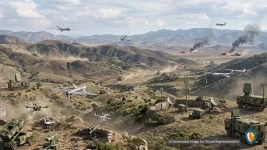
A networked defence is particularly vital to counter small, fast-moving targets. With the increasing use of armed drones, loitering munitions, and precision-guided bombs globally, modern armies require a multi-layered defence architecture capable of destroying threats at varying distances and heights.
Within India's overarching air-defence shield, the QRSAM fills a very specific and essential gap.
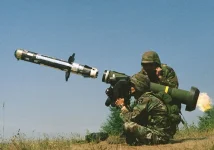
It is not meant to replace long-range interceptors like the S-400, nor does it serve the exact same purpose as shoulder-fired weapons meant for close-range drone defence. Instead, it provides a highly mobile medium-range layer that seamlessly bridges the different systems within the military's wider network.
This massive procurement also highlights the strategic importance of Bharat Dynamics Limited as a leading manufacturer in the nation's defence sector.
As the prime production agency for several key Indian weapon systems, BDL will be responsible for scaling up manufacturing operations once the Army officially signs this contract.
An order of this financial magnitude—exceeding ₹11,000 crore—will greatly benefit India's domestic defence manufacturing ecosystem.
Mass-producing 1,000 complex missiles requires a vast and reliable supply chain for components like single-stage solid rocket motors, active homing seekers, pre-fragmented warheads, and electronic guidance systems.
Such a substantial commitment guarantees the industry the long-term stability needed to upgrade factory capacities and improve economies of scale.
The timing of this planned acquisition is highly relevant. Globally, the nature of aerial combat is shifting rapidly as both hostile nations and militant groups gain access to advanced drone technology.
Recent international conflicts have shown how swarms of unmanned aircraft and guided missiles can easily overwhelm a defender's position if they lack enough ammunition to counter the barrage.
Therefore, maintaining a vast stockpile of ready-to-fire missiles is an absolute necessity for the Indian Army. A weapon system that succeeds in peacetime trials but runs out of ammunition during a real, drawn-out war cannot offer meaningful security.
Securing 1,000 missiles will grant the Army a formidable emergency reserve while enabling the creation of new QRSAM regiments. The exact number of mobile launchers, command vehicles, and radars to be fielded will ultimately be determined by the military’s tactical deployment strategies.
Finally, the sheer mobility of the QRSAM offers a massive tactical advantage in the event of a two-front conflict. Air-defence units must be able to shift quickly from one border sector to another based on where an enemy strikes.
By relying on heavy mobility trucks rather than permanent concrete bases, the QRSAM can actively shield advancing troops, supply lines, and strategic bases no matter where the battle moves.