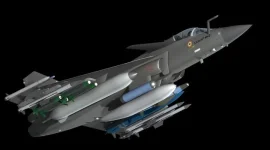
India’s homegrown medium-weight fighter jet project is steadily moving forward into the critical phase of detailed aircraft integration and system validation.
As a clear sign of this progress, the Aeronautical Development Agency (ADA) recently released a specialised tender to conduct automated cable harness testing on the first flying prototype of the aircraft, known as Prototype Vehicle 1 (PV1).
Published on August 12, 2026, under the identifier GEM/2026/B/7909097, the tender set a bidding deadline of August 22.
This specific contract outlines a comprehensive five-month work schedule dedicated exclusively to PV1, aligning perfectly with the ongoing structural assembly and system integration of the inaugural aircraft.
The core requirement of this contract is the automated inspection of the complex web of electrical and avionics wiring fitted throughout the jet.
These extensive wiring harnesses act as the central nervous system of any modern combat jet, linking vital components such as flight-control computers, power grids, communication devices, sensors, and other systems essential for mission success.
Because the Tejas Mk2 is a highly sophisticated machine, inspecting thousands of individual electrical connections by hand would be an incredibly slow process, prone to missing hidden wiring errors or inconsistent faults.
Using automated testing equipment allows engineers to rigorously and quickly verify electrical continuity, connection accuracy, and insulation quality, catching potential hazards well before the aircraft's internal systems are turned on for the first time.
Issuing this tender right now holds major significance, as PV1 is destined to be the Tejas Mk2 programme's first aircraft to take to the skies.
With the fighter jet shifting from basic structural construction to the installation of advanced systems, thoroughly checking the electrical framework is a mandatory step before conducting major ground tests or powering up the aircraft.
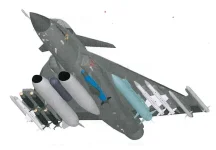
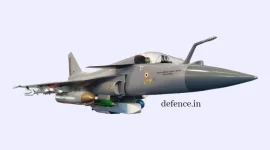
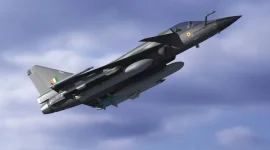
The Tejas Mk2 represents a major leap in size and capability compared to the earlier Tejas Mk1 and Mk1A models.
Classified as a 17.5-tonne, 4.5-generation medium-weight multirole fighter, it features a much larger avionics framework, an expanded internal fuel capacity of over 3,400 kg, and a weapons payload capacity of 6.5 tonnes.
To support this increased weight and performance, the aircraft will be powered by the General Electric F414-INS6 engine, which delivers a robust 98 kN of thrust, offering a significant power upgrade over the F404 engine used in older variants.
This focus on harness testing highlights a crucial but rarely seen aspect of aerospace development.
While the general public and defence analysts often focus on flashy components like jet engines, weapons, and radar, it is the fundamental reliability of the internal wiring that ensures all these high-tech systems can communicate and function seamlessly as a unified combat platform.
Ensuring flawless wiring is especially critical for a first-of-its-kind prototype. If electrical issues are only found after advanced testing begins, the entire project can face severe delays, as technicians would need to dismantle parts of the aircraft to reach wiring buried deep within the fuselage.
Identifying and fixing these errors before the initial power-on drastically cuts down on repair time and keeps the overall manufacturing schedule on track.
The fact that this testing contract spans five months indicates that it is an extensive, in-depth evaluation of the majority of the prototype's electrical layout, rather than just a quick or superficial spot-check.
This development arrives as the overall Tejas Mk2 project gears up for several historic milestones.
Hindustan Aeronautics Limited (HAL) is steadily advancing the physical manufacturing and assembly of the prototypes, while the ADA actively secures agreements for vital subsystems and integration tasks.
According to recent updates from HAL's leadership, the first flight of the Tejas Mk2 is currently targeted for a window between March and July 2027.
On a broader scale, these steps prove that PV1 is successfully evolving from a bare metal airframe into a fully equipped, functional aircraft ready for systems integration.
While single government tenders might seem like standard paperwork, they collectively map out the prototype's steady march toward its first power-on event, ground trials, and eventual flight testing, aiming to fulfill the Indian Air Force's planned acquisition of at least 120 of these advanced jets.
Ultimately, conducting this automated cable testing will give engineers and defence officials complete confidence in the jet's complex electrical and avionics foundation.
This solid assurance is required before they can safely energise the systems and move forward with increasingly demanding pre-flight ground evaluations.