- Views: 1K
- Replies: 2
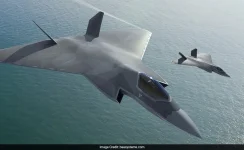
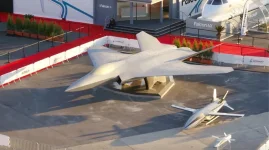
The ambitious Future Combat Air System (FCAS), a joint European endeavour to build a next-generation fighter, has met a definitive end.
Driven by persistent clashes over design leadership, intellectual property rights, and workshare distribution between primary contractors Dassault Aviation and Airbus, France and Germany have opted to scrap the fighter jet segment of the project.
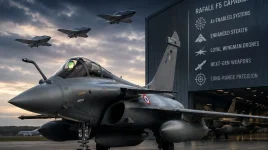
This marks a massive blow to Europe's unified defence manufacturing goals. The €100 billion project was originally planned to deliver a stealthy sixth-generation successor to the current Rafale and Eurofighter Typhoon fleets by 2040.
While the physical fighter will not fly, collaborative work may persist on associated drone platforms and the digital "Combat Cloud" network.
Initially, FCAS was designed not just as a standalone jet, but as a comprehensive "system of systems."
It aimed to seamlessly link piloted jets with unmanned loyal wingmen, artificial intelligence, and cutting-edge sensors through a highly secure network.
European leaders are now attempting to salvage this digital architecture, recognising its crucial role in modern data-driven warfare.
However, for India, tapping into a surviving European digital network holds little appeal without the transfer of core technologies.
The Indian Air Force (IAF) is already building its own secure tactical networks alongside the Advanced Medium Combat Aircraft (AMCA) and indigenous drone projects.
New Delhi’s interest in any European remnants would only be sparked by direct access to underlying technologies, such as advanced AI algorithms, sensor fusion capabilities, and secure communication hardware, rather than just plugging into a foreign digital grid.
With the Franco-German fighter grounded, the Global Combat Air Programme (GCAP) emerges as the undisputed heavyweight in Western sixth-generation aerospace development.
Steered by the United Kingdom, Italy, and Japan—with industrial giants like BAE Systems, Leonardo, and Mitsubishi Heavy Industries at the helm—GCAP targets an operational launch by 2035.
The exit of FCAS streamlines the global landscape, leaving nations seeking high-end aerospace collaboration with GCAP as the primary viable option.
Yet, this monopoly also brings strategic vulnerability to the West; if the GCAP consortium faces political, financial, or manufacturing hurdles in the coming years, there is no backup sixth-generation programme to fall back on.
For its part, India has long engaged with European defence manufacturers to acquire niche technologies, particularly for jet propulsion, radar systems, and advanced composite materials.
The disintegration of the FCAS fighter project leaves numerous European aerospace firms searching for fresh international ventures and revenue streams.
This dynamic grants New Delhi substantial bargaining power. Companies formerly tied to FCAS may now be far more willing to share vital expertise in electronic warfare, software-defined systems, and engine development.
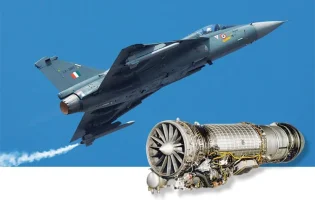
Notably, India is already in active discussions with foreign engine makers, including France's Safran and the UK's Rolls-Royce, to co-develop a 110kN thrust engine for the AMCA Mk2.
Despite these shifting global dynamics, India maintains a firm stance against complete reliance on any foreign sixth-generation programme.
The government remains strictly focused on the indigenous AMCA project, which recently received a ₹15,000 crore development clearance from the Cabinet Committee on Security (CCS).
The AMCA is destined to become the strategic backbone of India’s future air combat strength.
Rather than joining a multinational consortium like GCAP as a broad partner, New Delhi is expected to forge targeted, selective agreements for specific technologies.
This ensures that sovereign control over the AMCA's design, manufacturing, and future upgrades remains firmly in domestic hands.
Ultimately, the downfall of Europe's FCAS highlights the profound risks of combining different national defence priorities into a single mega-project.
For India, the collapse serves as a powerful validation of its current strategy: pursuing self-reliance in cutting-edge aerospace capabilities while carefully sourcing critical missing technologies from an evolving global market.