Representing a significant military development in South Asia, Pakistan has deployed roughly 250 advanced SH-15 self-propelled artillery units—procured from China—close to its eastern frontier with India.
Intelligence reports indicate that these 155mm motorised howitzers have been strategically stationed across key operational areas spanning from northern regions down to the south, highlighting one of Islamabad's largest recent efforts to strengthen its frontline firepower.
Understanding the SH-15 Artillery System
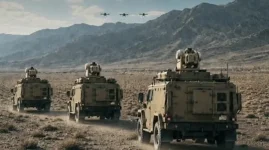
Produced by NORINCO, China's state-backed defence corporation, the SH-15 acts as the export model of the Chinese military's PCL-181.It is a highly mobile, 25-tonne weapon system mounted on a rugged 6x6 truck framework designed for rapid movement across various terrains.
To further bolster its capabilities, open-source records show Pakistan initially ordered 236 of these units in 2019 for approximately $512 million, alongside a Transfer of Technology agreement that allows for local manufacturing at the Heavy Industries Taxila facility.
The primary features of this newly inducted equipment include:
- Enhanced Strike Distance: The gun can hit targets 30 to 40 kilometres away with conventional shells. This reach extends to roughly 50 to 72 kilometres when utilising rocket-assisted or specialised high-explosive long-range ammunition.
- Rapid Relocation: The system features automated firing controls and hydraulic stabilisers, enabling the crew to fire up to six shells in a single minute. This "shoot-and-scoot" capability allows the unit to move away swiftly before enemy counter-battery radars can track its location and return fire.
- Ammunition Adaptability: Designed to utilise standard NATO-compliant 155mm rounds, the artillery platform offers Pakistan greater ease in maintaining its military supply chains.
Border Deployments and India's Response
Defence observers highlight that these wheeled howitzers are primarily clustered in sensitive zones like Gujranwala, Sialkot, and Jalalpur Jattan, located near the Shakargarh bulge. Additional units have been placed in northern Punjab and areas adjacent to the Line of Control.Interestingly, in desert regions adjacent to Rajasthan and Gujarat, the Pakistan Army continues to rely on tracked M109 self-propelled guns, as wheeled vehicles like the SH-15 are considered better suited for plains and hilly terrains.
Military specialists interpret this extensive upgrade as an effort by Pakistan to reinforce its conventional military strength in response to changing security scenarios, particularly following India's recent counter-terrorism operations.
The deployment clearly demonstrates the deepening defence ties between Beijing and Islamabad.
In response to these shifts in border dynamics, India continues to advance its own Field Artillery Rationalisation Plan.
This initiative includes the active deployment of K-9 Vajra, M777, and Dhanush howitzers, alongside the ongoing development of indigenous systems like the Advanced Towed Artillery Gun System (ATAGS) and a new ATAGS-based Mounted Gun System (MGS) to effectively counter emerging border threats.