- Views: 934
- Replies: 1
Following the recent breakdown of the Future Combat Air System (FCAS) programme between France and Germany, European aerospace giant Airbus is now looking toward Sweden's Saab as a primary partner for a next-generation fighter jet.
Saab’s extensive history in designing and manufacturing cutting-edge military aircraft makes it an attractive ally for Airbus's renewed ambitions.
Although these initial talks are heavily concentrated on meeting European defence needs, insiders suggest that India could be considered a long-term collaborator if the project expands into a global multinational effort.
Currently, Airbus—acting on behalf of German and Spanish interests—is carefully evaluating how Saab can fill the technical gaps left by the stalled FCAS initiative.
The Swedish firm brings a rare and highly valued skill set. Having successfully designed multiple generations of independent fighter jets, such as the highly acclaimed Gripen E series, Saab is well-regarded globally for delivering cost-efficient platforms equipped with modern avionics, advanced surveillance like the GlobalEye system, and exceptional operational adaptability.
Within Europe's currently disjointed military aviation sector, Saab offers a capability that Airbus desperately needs: proven, hands-on experience in building, testing, and exporting a contemporary fighter aircraft from start to finish.
While other massive European defence contractors have significant resources, Saab stands out as one of the very few manufacturers capable of single-handedly driving an indigenous combat jet programme under sovereign control.
This potential alliance takes shape against a backdrop of deep divisions in European air defence strategies.
The continent is currently fractured among competing sixth-generation visions, including the UK-Italy-Japan Global Combat Air Programme (GCAP) and France's renewed push for a purely national sovereign fighter after disagreements over workshare and export policies halted the original FCAS programme.
In response to this industrial friction, Airbus is pursuing partnerships that promise smoother collaboration and fewer political roadblocks in developing future combat systems.
A joint venture between Airbus and Saab would move beyond conventional aircraft design, heavily targeting next-generation innovations.
The partnership is expected to explore uncrewed “loyal wingman” drones, manned-unmanned teaming capabilities, artificial intelligence-driven mission networks, and state-of-the-art electronic warfare systems.
Saab’s proven track record in digital engineering and distributed combat operations aligns perfectly with Airbus's goal of creating a highly networked and flexible air power architecture.
In the midst of these European realignments, India has surfaced as a compelling future partner, largely due to its rapidly expanding aerospace sector and massive military modernisation goals.
However, experts note that any official invitation for New Delhi to join the Airbus-Saab consortium would only happen after the European core finalises its own blueprint.
Essential factors such as funding, industrial work distribution, and strict rules for technology sharing must be set in stone before expanding the project globally.
Joining a cutting-edge multinational programme would present New Delhi with an invaluable opportunity to secure top-tier design expertise and advanced technologies.
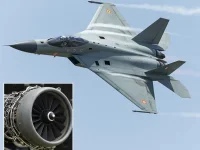
Yet, India’s immediate priority remains the development of its own fifth-generation stealth fighter, the Advanced Medium Combat Aircraft (AMCA).
With the Ministry of Defence recently issuing Requests for Proposal (RFPs) to private sector giants like Tata, L&T, and Bharat Forge for the prototype phase, the AMCA is aggressively targeting a prototype rollout by 2027 and serial production by the mid-2030s.
This domestic stealth platform is poised to become the cornerstone of the Indian Air Force.
Should India eventually join the European effort, existing partners will need to carefully integrate New Delhi into their strategic and industrial frameworks.
Significant hurdles—including the complexities of intellectual property rights, the transfer of sensitive military technology, domestic manufacturing responsibilities, and future export regulations—would require complex negotiations before a unified partnership could take flight.
Regardless of the immediate outcome, the mere consideration of India for a high-level European aerospace project underscores the country's shifting status on the global stage.
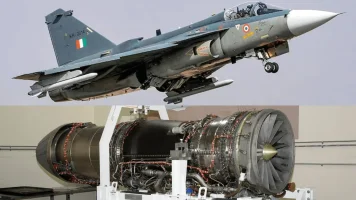
Driven by substantial investments in indigenous defence manufacturing, jet propulsion technology, and drone systems, India is rapidly transforming its image.
Instead of being seen solely as a traditional arms importer, New Delhi is increasingly recognised as a capable co-developer and a vital contributor to the future of international military aviation.