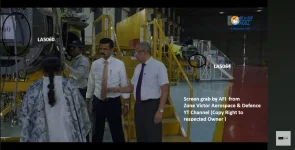
The Defence Research and Development Organisation (DRDO) has achieved a major breakthrough in India’s underwater combat capabilities with its homegrown Phosphoric Acid Fuel Cell (PAFC) Air-Independent Propulsion (AIP) system.
Rather than stopping at this single milestone, Indian defence scientists are now designing a highly advanced, hybrid energy network. This new architecture aims to provide future conventional submarines of the Indian Navy with unmatched staying power, speed, and stealth capabilities.
This integrated approach will be the technological heart of Project 76, India's ambitious initiative to natively build its next-generation diesel-electric attack submarines.
Expected to displace around 3,000 tonnes, these future vessels are being engineered from the ground up to feature state-of-the-art stealth, automation, and propulsion technologies.
Initially, DRDO’s Naval Materials Research Laboratory (NMRL) tailored the PAFC AIP module for the Navy’s existing Kalvari-class submarines.
This system allows conventional submarines to stay submerged for weeks, unlike older diesel-electric models that must frequently surface or snorkel to charge their batteries, which risks exposing their location.
Fuel-cell AIP systems produce electricity through a quiet electrochemical reaction, generating minimal noise and reducing the submarine's thermal signature.
For the larger Project 76 vessels, public reports indicate that this indigenous AIP system will be scaled up from its current 13.5 kilowatts to approximately 20 kilowatts.
This increased electrical output will safely power a larger array of modern sensors, combat management software, and heavy auxiliary equipment, all without sacrificing the submarine's silent profile.
Another game-changing upgrade for the fleet will be the shift to Lithium-Ion Battery (LIB) technology, replacing traditional lead-acid systems. Leading navies worldwide are adopting lithium-ion batteries due to their massive energy density and tactical benefits.
By storing two to three times more energy in the same physical space, lithium-ion batteries will allow Indian submarines to drastically extend their underwater patrols while shedding nearly 40 percent of the battery compartment's overall weight.
This translates to aggressive tactical agility—allowing for rapid, high-speed underwater sprints when evading threats or pursuing targets, while also slashing recharge times so the submarine spends less time vulnerable near the surface.
To ensure these new energy systems can withstand extreme combat conditions, DRDO operates a specialised Land-Based Test Facility (LBTF) in Visakhapatnam.
Engineers use this site to recreate the harsh realities of deep-sea missions, simulating intense vibrations, fluctuating temperatures, humidity, and the crushing pressure of dives reaching depths of up to 300 metres.
Alongside advanced batteries and fuel cells, the development of an indigenous 5-megawatt electric propulsion motor is a crucial step towards complete self-reliance.
Utilizing high-power permanent magnets, these motors offer superior mechanical efficiency and a much quieter acoustic footprint compared to older propulsion engines.
Historically, India has relied on foreign imports to power its conventional submarines. Now, through the mastery of homegrown fuel cells, high-capacity battery integration, and powerful electric motors, DRDO is steadily establishing a fully independent domestic ecosystem for underwater propulsion.
Modern naval warfare no longer treats AIP systems and advanced batteries as competing choices. Instead, the strategy is to fuse them.
India’s upcoming conventional submarines will likely feature intelligent energy management software to dynamically juggle power generation, rapid battery charging, and propulsion based on the immediate needs of the mission.
Ultimately, DRDO is not looking for a single magic bullet. By perfecting a hybrid architecture that seamlessly blends upgraded fuel cells, lithium-ion batteries, and high-efficiency electric motors, the future of India's underwater fleet will rely on a harmonised, deeply integrated energy system designed to dominate the depths.