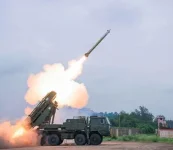
India’s monumental ₹21,700 crore long-range air defence initiative, Project Kusha, has achieved a critical new milestone.
The Defence Research and Development Organisation (DRDO) has released a Request for Proposal (RFP) to procure the raw materials necessary for building test canisters for the M3 interceptor.
This latest tender demonstrates that the development of the programme's longest-reaching weapon is accelerating as the agency gears up for comprehensive physical trials.
This materials request is part of a broader surge in industrial activity surrounding the Kusha project.
Over recent months, DRDO has issued multiple tenders for warhead integration hardware, testing assemblies, and overall weapon system integration.
These coordinated steps make it clear that the project is successfully moving out of the laboratory design phase and entering the active fabrication and assembly stages.
Also recognised as the Extended Range Air Defence System (ERADS), Project Kusha is designed to be the ultimate indigenous shield for the Indian Air Force and, eventually, the Indian Navy.
The architecture is built around three modular interceptors—the M1 (150 km range), M2 (250 km range), and M3 (350–400 km range).
Together, these missiles are engineered to fly at speeds exceeding Mach 5.5 to systematically eliminate stealth aircraft, unmanned drone swarms, cruise missiles, and specific ballistic threats.
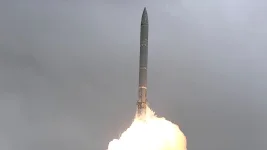
The M3 interceptor serves as the crown jewel of this defensive triad. With an engagement radius reaching up to 400 kilometres, it is purpose-built to hunt down high-value, deep-space targets such as Airborne Warning and Control System (AWACS) aircraft and mid-air refuellers.
This outermost layer of defence will give India a sovereign interception capability that rivals the world’s most advanced global systems, such as the Russian S-400.
While a tender for raw materials may seem like a routine administrative step, it is a strong indicator of the M3’s developmental maturity.
Missile canisters are highly complex pieces of equipment. They operate as environmentally sealed, heavily reinforced transport and launch tubes that must protect the interceptor's delicate internal guidance and propulsion systems from extreme weather over many years.
Before the M3 can enter active military service, these initial test canisters are essential for verifying the weapon's safety and structural limits.
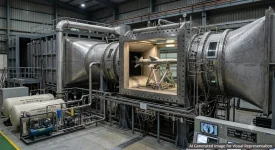
During the upcoming developmental flights, engineers will use these units to test gas management systems, evaluate heat resistance, and ensure the missile ejects safely from its transporter-erector-launcher (TEL) vehicle.
To survive these intense conditions, the materials used must pass the strictest military grade requirements. The DRDO is seeking specialised high-tensile alloy steels, anti-corrosive coatings, and advanced thermal insulation.
These precision materials are vital to guarantee the missile remains perfectly intact during decades of storage and can withstand the violent shockwaves of a hypersonic launch.
By actively procuring these materials now, DRDO is securing the physical hardware required for the M3's upcoming flight tests.
It also underscores a strategic shift toward deeper collaboration with the domestic defence industry.
Rather than building every component in-house, DRDO is distributing the manufacturing of airframes, seeker harnesses, and canisters to public and private sector partners like Bharat Electronics Limited (BEL) and Bharat Dynamics Limited (BDL).
This approach is actively cultivating a self-reliant domestic supply chain capable of handling mass production in the future.
Project Kusha is expected to begin its phased induction between 2028 and 2030, forming the backbone of the nation's future airspace security.
Once active, it will connect directly into the military's Integrated Air Command and Control System (IACCS), working in tandem with current assets like the MR-SAM.
By utilising the M3 interceptor as its longest-reaching spear, this multi-tiered network will allow Indian forces to neutralise enemy threats at incredible distances, heavily fortifying the country's skies for decades to come.