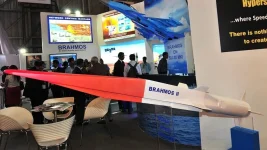
Over the last ten years, India has heavily upgraded its missile inventory, equipping its armed forces with highly capable long-range weapons like the supersonic BrahMos and the upcoming Long-Range Land Attack Cruise Missile (LR-LACM).
While these systems are formidable, recent global conflicts highlight a growing need for continuous, high-volume precision strikes.
This reveals a missing link in India's current capabilities: a highly affordable, mass-produced subsonic cruise missile with a strike range of approximately 500 km that sits right between short-range battlefield weapons and top-tier strategic missiles.
This proposed 500-km missile is not meant to replace premium systems like BrahMos or the LR-LACM. Rather, it is designed to work alongside them, specifically handling missions where affordability, sheer numbers, and adaptability matter far more than absolute speed or intercontinental reach.
The strongest justification for this new tier of weaponry comes down to the sheer financial cost of modern warfare. The BrahMos stands as one of the most effective supersonic cruise missiles globally, offering unmatched speed and accuracy.
However, its complex ramjet engine and highly advanced targeting sensors make it expensive to manufacture. The LR-LACM, similarly, is a high-end strategic asset built to eliminate critical targets deep inside hostile territory.
Using these expensive, top-tier weapons for every single strike in a prolonged war is financially unfeasible.
A battlefield is filled with secondary targets—such as supply depots, bridges, temporary radar sites, and backup command posts—that do not require the overwhelming speed or advanced technology of a BrahMos.
Wasting a multi-million-dollar strategic missile on a low-value target rapidly drains a nation's military budget and quickly depletes limited weapon reserves.
By introducing a simpler, 500-km subsonic cruise missile, the military can successfully destroy these everyday tactical targets at a vastly reduced price. This strategy ensures that India’s expensive strategic weapons are saved for the high-priority missions they were actually built to execute.
Manufacturing bottlenecks are another major reason to pursue this project. Producing high-end cruise missiles requires specialised factories, intricate electronics, and highly regulated supply chains.
Because these complex parts take a long time to build, it is incredibly difficult for a country to suddenly increase missile production in the middle of a war.
A budget-friendly missile built specifically for mass production would completely bypass these manufacturing hurdles. By relying on straightforward designs, modular parts, and the expanding capabilities of India’s private defence industry, production could be spread across several factories rather than being bottlenecked at state-run facilities.
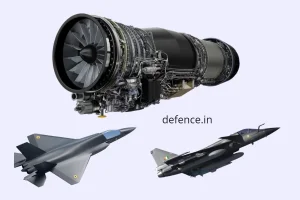
We are already seeing major steps in this direction. For example, in July 2026, Bengaluru-based private firm Paninian India unveiled the Yantur 4.5 kN turbofan engine, designed specifically to power the SVAYATT-L1 long-range land-attack cruise missile.
Furthermore, the Defence Research and Development Organisation (DRDO) has successfully integrated the indigenous Small Turbo Fan Engine (STFE), known as the Manik engine, into its 1,000-km range Indigenous Technology Cruise Missile (ITCM).
Leveraging these homegrown, modular propulsion technologies heavily reinforces India's ability to maintain a steady supply of weapons during wartime.
Tactically, a mass-produced subsonic cruise missile offers a massive advantage: the ability to easily overwhelm an enemy's air defence network. Today's integrated air defence systems (IADS) are highly advanced, but they are limited by the small number and high cost of their interceptor missiles.
When an attacker fires a massive swarm of cheap cruise missiles, the defending military is forced into a lose-lose situation.
Even if the defenders shoot down most of the incoming threats, they are forced to use up their highly expensive surface-to-air missiles to destroy cheap targets. This creates an uneven financial battle where the attacker causes severe economic strain while emptying the defender's magazines.
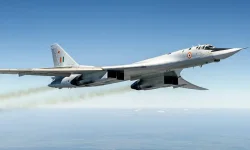
Once the enemy's air defences are overwhelmed and out of ammunition, higher-tier weapons like the BrahMos, the LR-LACM, or stealthy air-launched missiles can safely fly through the newly created gaps to destroy high-value targets without the risk of interception.
In this way, a cheap, mass-produced missile acts as a force multiplier, making the entire military strike network significantly more lethal.
Another critical factor is command adaptability. Because strategic missiles are expensive and scarce, the decision to fire them is usually reserved for the highest levels of military and political leadership.
This means commanders on the ground often cannot access these powerful weapons quickly when battlefield conditions suddenly change.
If a 500-km subsonic cruise missile were available in large numbers, regional theatre commanders would have their own dedicated precision-strike weapons.
They could independently target enemy airbases, supply lines, and troop gatherings without having to wait for approval to use the nation's limited strategic assets. This flexibility would drastically improve the military's reaction time during fast-paced combat.
Pushing for this capability perfectly matches the ongoing evolution of India’s defence manufacturing sector.
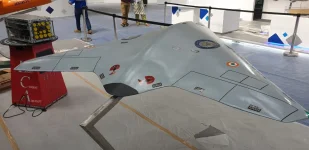
As private enterprises take on larger roles in creating jet engines, targeting sensors, carbon composites, and drone technologies, the government has the perfect opportunity to set up independent, private manufacturing lines.
Expanding the industrial base beyond traditional state-owned companies ensures the supply chain remains stable during a crisis and can rapidly scale up output when required.
Ultimately, the goal is to build a well-rounded and deeply layered missile arsenal.
The BrahMos will always be the top choice for striking heavily protected, time-sensitive targets. The LR-LACM will continue to serve as the premier weapon for destroying critical infrastructure deep behind enemy lines.
A 500-km subsonic cruise missile would seamlessly fill the gap just below them, offering a highly affordable, mass-produced tool to overwhelm tactical battlefield targets.
Recent wars have proven that military victory does not belong exclusively to the side with the most advanced technology; it belongs to the side that can continuously launch precision strikes for months or years on end.
Weapon quantity, low costs, and strong factory output are now just as critical as speed and explosive power.
By adding a cheap, high-volume subsonic cruise missile to its ranks, India would secure the sheer mass and flexibility needed to sustain its forces through a prolonged, high-intensity conflict, while keeping its elite weapons ready for the most decisive blows.