Critics of the Hindustan Aeronautics Limited (HAL) and GE Aerospace co-production agreement for the F414 engine often dismiss it as an incomplete step toward absolute propulsion independence.
However, this perspective fundamentally misreads the trajectory of aerospace evolution.
While it is true that total intellectual property handover—particularly concerning sensitive hot-section core components—is off the table, labelling this agreement as a strategic failure ignores the massive industrial and practical advantages it secures for India in the immediate future.
The Global Norm of Technology Transfer
In the global aerospace industry, premier engine makers like Pratt & Whitney, Safran, Rolls-Royce, and GE fiercely protect their most advanced innovations.Critical assets such as high-pressure turbine blueprints, thermal barrier coatings, and single-crystal turbine blades are considered "crown-jewel" technologies.
Seldom are these secrets shared fully, even among the closest NATO partners. Therefore, the parameters of the HAL-GE partnership align perfectly with standard global practices rather than standing out as an exception.
Deal at a Glance:
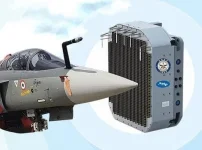
- Engine Variant: GE F414-INS6 turbofan (98 kN thrust class)
- Primary Partners: Hindustan Aeronautics Limited (HAL) & GE Aerospace
- Technology Transfer: Approximately 80% domestic manufacturing capability
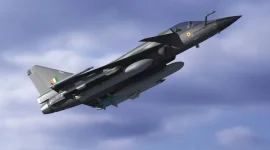
- Target Platforms: LCA Tejas Mk2, Twin-Engine Deck Based Fighter (TEDBF), and Advanced Medium Combat Aircraft (AMCA) Mk1
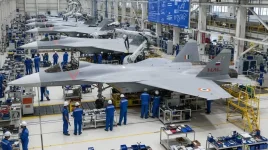
This figure requires proper context. Even if the withheld 20% contains crucial subsystems, acquiring the capability to oversee 80% of the engine's assembly, testing, manufacturing, and integration is a monumental industrial leap.
It guarantees mastery over advanced material handling, stringent quality control, precision machining, and comprehensive lifecycle maintenance—capabilities that serve as the foundational bedrock for building fully indigenous engines tomorrow.
Manufacturing vs. Design Sovereignty
Crucially, this collaboration firmly establishes India's manufacturing independence, a vital precursor to design independence.People often blur the lines between the two. However, authentic design sovereignty is practically impossible without a robust underlying manufacturing infrastructure.
Developing cutting-edge aero-engines relies just as heavily on mastering complex production techniques as it does on theoretical engineering.
Concerns regarding GE retaining control over core engine management and software like the Full Authority Digital Engine Control (FADEC) require a nuanced view.
Today's fighter engines are highly complex digital networks, and software authority is strictly controlled worldwide, even among Western allies.
This limitation does not hinder India’s capacity to seamlessly maintain, operate, and fuse the F414 engine into its aviation ecosystem, especially alongside domestic avionics and mission computers.
Economic Scale and the Bridging Strategy
Furthermore, the sheer volume of this initiative is a massive economic catalyst.With an initial rollout planned for nearly 100 engines—valued at approximately $1 billion—and room for future expansion, this is not a fleeting assembly project.
It establishes a resilient, continuous industrial base. This scale will trigger widespread positive impacts across precision engineering disciplines, metallurgy, supply chains, and domestic micro, small, and medium enterprises (MSMEs).
While skeptics worry this deal chains the nation to prolonged foreign dependency, the reality is quite different.
India continues to aggressively develop parallel homegrown engine projects, including derivatives of the GTRE Kaveri and powerplants for future AMCA iterations.
The F414 deal acts as an essential bridging maneuver. It guarantees that flagship platforms like the Tejas Mk2 and AMCA Mk1 avoid costly delays while domestic engine technologies are perfected.
Strengthening Future Defence Leverage
Comparing this aerospace milestone to merely building a car without owning its engine design is an inaccurate simplification.In the realm of military aviation, securing even partial manufacturing authority is an exceptionally high-value asset that eclipses basic assembly.
The intricacies of compressor integration, thermal management protocols, and blade manufacturing tolerances are deeply complex proficiencies that can be directly applied to future indigenous designs.
Finally, this pact drastically improves India’s bargaining power for future defence ventures.
By cementing a sophisticated domestic manufacturing ecosystem now, India positions itself to demand much deeper technological access in upcoming negotiations, whether dealing with GE Aerospace or other international original equipment manufacturers.