- Views: 3K
- Replies: 8
State-run aerospace giant Hindustan Aeronautics Limited (HAL) is preparing for a massive ₹10,000 crore (approximately $1.1 to $1.2 billion) infrastructure overhaul.
This major financial commitment is designed to significantly expand the company's manufacturing capabilities.
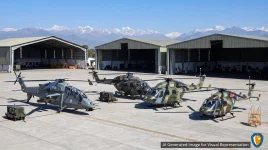
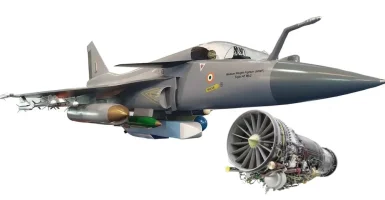
The primary goal is to satisfy the growing needs of the Indian Armed Forces for domestically built aircraft, including the Tejas Light Combat Aircraft (LCA) Mk1A, sophisticated helicopter models, and upcoming aviation projects.
Following a robust financial year in 2025-26, where HAL reported impressive revenues of ₹32,250 crore, this investment marks a decisive step toward large-scale production.
This strategic expansion arrives at a critical juncture for India's domestic defence sector.
HAL is currently managing an unprecedented order book exceeding ₹2 lakh crore. This includes massive contracts for over 180 Tejas Mk1A fighter jets, 156 Prachand Light Combat Helicopters (LCH), and numerous ALH Dhruv units.
However, the company has faced hurdles in transforming these orders into immediate deliveries due to factory limitations and supply chain issues.
Notably, the Tejas production schedule has encountered setbacks linked to the delayed supply of F404 engines from US-based GE Aerospace.
To resolve this, a recent technical pact between GE and HAL was finalised in April 2026 to stabilise engine availability and establish local maintenance facilities.
To overcome these manufacturing bottlenecks, HAL's multi-year capital expenditure plan focuses on constructing fresh assembly lines and upgrading current plants in cities like Bengaluru and Nashik.
The upgrades will also improve testing centres, system integration, and parts supply networks.
For example, HAL recently opened a third Tejas manufacturing line in Nashik and introduced a new Hot Isostatic Press (HIP) facility to rapidly process carbon-carbon brake discs for the Mk1A jets.
With these additions alongside private industry partnerships, HAL aims to boost its Tejas production rate from 16 aircraft to 24 or more per year.
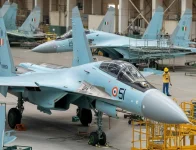
Beyond the Tejas, these broader financial injections will accelerate the assembly of military helicopters and support the revitalisation of older aircraft fleets, including restarting a production line that was closed in 2019 to manufacture 12 new Su-30MKI fighters.
The funds will also lay the essential groundwork for future cutting-edge projects like the Advanced Medium Combat Aircraft (AMCA) and the Indian Multi-Role Helicopter (IMRH).
To achieve this, HAL plans to spend an average of ₹2,800 to ₹3,000 crore annually until the 2028-2029 financial year, with an immediate allocation of roughly ₹3,000 crore specifically set aside for the 2025-2026 timeframe to jumpstart these essential upgrades.
Ultimately, this rapid infrastructure development aims to directly address the critical shortage of fighter squadrons within the Indian Air Force, which currently operates far below its required strength of 42 squadrons.
By delivering the Tejas Mk1A at a faster pace, the IAF can smoothly phase out its aging, legacy aircraft.
Furthermore, the push elevates the proportion of locally sourced components to over 65-75%, drastically cutting down on foreign military imports.
This aligns perfectly with the national goal of 'Atmanirbhar Bharat', strengthening local defence ecosystems, generating jobs, and preparing India to export its light combat jets to the global market.