The sheer scale and strategic ambition behind India’s Ghatak stealth Unmanned Combat Aerial Vehicle (UCAV) are often overlooked in global military discussions.
While international attention frequently highlights smaller tactical drones, the Defence Research and Development Organisation (DRDO) and the Aeronautical Development Agency (ADA) are quietly developing a heavyweight autonomous strike aircraft.
Evolving from the earlier Autonomous Unmanned Research Aircraft (AURA) programme, the Ghatak is designed to rival and exceed the size, striking power, and operational impact of many foreign drone platforms.
A defining characteristic of the Ghatak is its massive physical presence.
Expected to feature a Maximum Take-Off Weight (MTOW) of roughly 13 tonnes, this Indian platform is approximately twice as heavy as Turkey's well-known Anka-3 stealth drone, which operates with a 6.5-tonne MTOW.
This immense size offers substantial tactical advantages, including a much larger fuel capacity for extended flights and an estimated internal payload capacity of 1.5 tonnes.
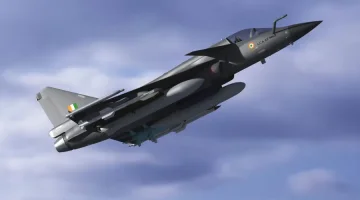
To put this in perspective, the Ghatak will weigh almost as much as India’s manned HAL Tejas Mk1A light combat fighter.
Essentially, India is manufacturing an unmanned aircraft with the structural footprint and combat potential of a traditional fighter jet, entirely free from the physical limits of a human pilot.
To survive in heavily guarded airspace, the Ghatak utilizes a tailless, flying-wing design specifically crafted to avoid radar detection.
Its structure features advanced carbon-composite materials, curved "serpentine" air intakes, and internal bays to hide its weapons.
These stealth characteristics will allow the UCAV to slip deep into hostile territory to neutralize enemy air defences, gather critical intelligence, and execute highly precise bombing missions.
The aerodynamic viability of this complex design has already been validated through the successful flight trials of a smaller prototype known as the Stealth Wing Flying Testbed (SWiFT) at Chitradurga.
Propulsion for this advanced drone will be provided by a specialized, indigenous "Dry Kaveri" turbofan engine, created by the Gas Turbine Research Establishment (GTRE).
Unlike traditional fighter jet engines, this variant operates without an afterburner.
This design choice sacrifices top speed for extreme fuel efficiency, lower heat emissions, and maximum stealth, giving the drone excellent high-subsonic endurance for long-distance patrols.
With the modified Kaveri engine recently passing crucial high-altitude tests, the pathway to building full-sized prototypes is now clear.
When measured against international competitors like the Anka-3, which utilizes a smaller engine and carries around 1.2 tonnes of weaponry, the Ghatak promises greater range, longer hovering times, and better survivability.
Furthermore, the Ghatak is being designed with artificial intelligence to make independent combat decisions.
It will be able to fire indigenous weapons like the Astra air-to-air missile and operate seamlessly alongside human-piloted fighters such as the Tejas, Rafale, and the upcoming Advanced Medium Combat Aircraft (AMCA) in highly coordinated "swarm" networks.
The advancement of this project has gained significant momentum recently.
In March 2026, the Defence Acquisition Council officially cleared the path for the procurement of roughly 60 Ghatak UCAVs, enough to form four dedicated squadrons.
The total value of this initiative is projected to surpass ₹39,000 crore. Full-scale prototypes are anticipated to be revealed in the coming years, with the military planning to officially integrate them into service by the early 2030s.
Ultimately, the Ghatak is much more than a standard military drone; it is a symbol of India's drive toward complete self-reliance in futuristic aerial warfare.
By successfully building a heavy, jet-powered, stealth drone at home, Indian defence agencies are not only securing their own airspace but also creating a highly attractive product for global defence markets seeking cost-effective, advanced autonomous combat systems.
As border tensions remain a persistent reality for India, the ability to send heavily armed, undetectable aircraft into dangerous zones without risking the lives of human pilots will completely change modern military strategy.
Driven by indigenous technology and immense payload capabilities, the Ghatak is set to become one of the most powerful unmanned platforms in the world.