The Indian Navy's maritime strike capabilities are undergoing a major transformation.
Despite fielding a relatively modest fleet of about 40 carrier-based MiG-29K fighter jets, the Navy is aggressively upgrading these aircraft with an advanced, multinational array of precision weapons.
By integrating cutting-edge munitions from Israel, the United States, and domestic Indian manufacturers, the MiG-29K is transitioning from a conventional naval aircraft into a networked, multi-role powerhouse.
This strategic shift ensures the fighter can severely threaten high-profile assets, particularly adversary aircraft carriers.
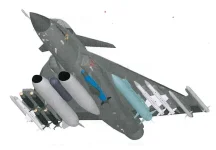
Visual evidence of this comprehensive upgrade highlights a heavily armed MiG-29K carrying a vast assortment of firepower.
The diverse payload includes American-origin Paveway II laser-guided bombs, India's own Astra Mk1 beyond-visual-range air-to-air missiles, and Naval Anti-Ship Missiles (NASM-MR).
Furthermore, it is equipped with R-73 short-range missiles, Israeli Rampage stand-off weapons, and the advanced Talisman electronic warfare system.
Together, these multi-layered armaments guarantee that the aircraft can effectively counter modern, highly complex security challenges.
Central to the jet’s ground-attack proficiency is the deployment of American-designed Paveway II laser-guided munitions.
Highly regarded globally and utilized by numerous allied forces, these smart bombs grant the Indian Navy the ability to execute pinpoint strikes.
Whether engaging fortified bunkers or mobile units, the Paveway II dramatically boosts the aircraft's strike accuracy and destructive power while keeping unintended collateral damage to an absolute minimum.
Adding to this lethal arsenal is the Israeli Rampage, a supersonic air-launched stand-off missile engineered to obliterate heavily protected installations from a distance.
The integration of this high-speed weapon empowers the MiG-29K to destroy vital enemy infrastructure, communication nodes, and even warships without needing to penetrate formidable hostile air defence networks.
This standoff capability is an absolute necessity in contemporary maritime conflicts.
To ensure the fighter's survival in dangerous skies, the MiG-29K utilizes the Israeli-built Talisman electronic warfare pod.
This advanced system equips the aircraft with top-tier defensive measures, offering active radar jamming, electronic deception, and early threat warning.
Consequently, pilots can safely navigate and operate within heavily contested zones dominated by active enemy anti-aircraft systems.
Domestic defence innovations are rapidly becoming the primary pillar of the MiG-29K’s fighting power.
The successful pairing of the fighter with the indigenous Astra Mk1 beyond-visual-range missile—which boasts an impressive operational range of roughly 110 kilometres—provides a robust air-to-air advantage.
This allows Indian pilots to detect, track, and neutralize hostile aircraft long before they ever reach dogfighting proximity.
In the near future, the incorporation of the more advanced Astra MkII will push this combat radius even further.
With a projected range exceeding 160 kilometres, the MkII variant will deliver unmatched tactical flexibility, making it a vital tool for intercepting top-tier enemy jets launched from rival aircraft carriers or coastal airbases.
When focusing on maritime targets, the domestically developed Naval Anti-Ship Missile – Medium Range (NASM-MR) gives the aircraft a specialized, highly accurate tool for neutralizing enemy surface fleets. Looking forward, this anti-ship arsenal is slated to be massively upgraded with the BrahMos-NG.
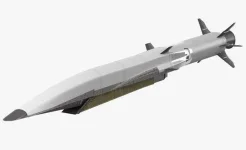
This lighter, next-generation supersonic cruise missile will allow the MiG-29K to execute devastating, high-speed strikes against premium naval targets—such as enemy aircraft carriers—from safe, stand-off distances.
At present, the MiG-29K depends on the legacy Russian R-73 infrared-guided missile for close-quarters aerial combat.
However, the Navy is advancing plans to phase out this older 1980s-era system in favour of the European ASRAAM (Advanced Short Range Air-to-Air Missile).
Travelling at speeds over Mach 3 with an engagement range beyond 25 kilometres, the ASRAAM brings revolutionary imaging infrared seekers and extraordinary off-boresight targeting capabilities.
The shift to the ASRAAM will radically elevate the fighter's dominance in within-visual-range skirmishes. Indian aviators will be equipped to secure locks and engage hostile targets with unprecedented speed and accuracy, even in chaotic, high-pressure dogfights.
The Indian Navy proves that fleet size does not solely dictate combat effectiveness by utilizing smart technological integration as a powerful force multiplier.
By seamlessly blending American smart bombs, Israeli electronic countermeasures, and homegrown Indian missile technology, the relatively small MiG-29K force is evolving into a remarkably deadly and adaptable weapon system.
This comprehensive upgrade strategy guarantees that every individual jet delivers the highest possible tactical impact.
A single MiG-29K can now effortlessly shift between securing the skies, sinking ships, and conducting pinpoint ground attacks in just one mission.
Should a conflict arise involving a Chinese carrier strike group, this versatility empowers the Indian Navy to launch complex, multi-directional assaults that will severely overwhelm and complicate adversary defence planning.
With China rapidly growing its aircraft carrier presence and introducing sophisticated fighters like the J-15 and emerging stealth platforms, India is responding with superior capabilities rather than just raw numbers.
Equipping the MiG-29K with long-reach munitions and modern sensors allows it to plug into a broader, networked battlefield architecture, fighting in seamless coordination with naval satellites, unmanned aerial vehicles, and maritime surveillance planes.
In the modern theatre of war, achieving victory relies heavily on such multifaceted integration.
The capacity to unleash stand-off destruction via the Rampage and the upcoming BrahMos-NG, all while dominating the airspace using the lethal Astra and ASRAAM combination, ensures the MiG-29K remains a formidable and decisive asset for India's naval defence.