- Views: 2K
- Replies: 2
In a significant endorsement of India’s aerial dominance during May’s Operation Sindoor, a leading Russian military analyst has validated the Indian Air Force’s (IAF) record-breaking long-range interception of a Pakistani AWACS aircraft.
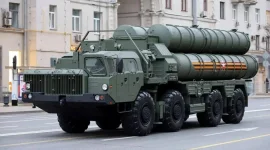
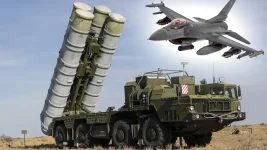
Alexei Mikhailov Petrenko, a Moscow-based defence strategist, stated that the downing of the Saab 2000 Erieye at a distance of 314 kilometres by an S-400 'Triumf' battery is not only credible but consistent with the system's proven performance in the Russia-Ukraine conflict.
The validation comes days after IAF Chief Air Chief Marshal Amar Preet Singh revealed the classified details of the engagement, which occurred on the night of May 9-10, 2025.
Speaking to reporters, Petrenko dismissed Western scepticism regarding the kill, describing the operation as a "textbook execution" of the S-400’s area-denial doctrine.
"Replicating the Ukrainian Success"
Petrenko drew a direct parallel between the IAF’s success and Russian operations in late 2022. "This is not an anomaly; it is a replicable standard," he asserted.He referenced the historic October 2022 engagement where a Russian S-300V4 battery, utilising similar long-range active-seeker technology found in the S-400, downed a Ukrainian Su-27 Flanker at a range of 217 kilometres.
"In Ukraine, we proved that fusing ground-based interceptors with airborne data links allows for engagements well beyond the radar horizon," Petrenko explained.
"The IAF has effectively mirrored this tactic. By networking their Adampur-based S-400 unit with Phalcon AWACS, they extended the 40N6E missile’s eyes, turning deep Pakistani airspace into a verified kill zone."
The Record-Breaking Engagement
The engagement in question dismantled the Pakistan Air Force's (PAF) command-and-control capabilities during the heat of Operation Sindoor.According to Air Chief Marshal Singh’s briefing at Aero India in November, an IAF S-400 battery stationed in Punjab launched a 40N6E missile—capable of speeds up to Mach 14—targeting a PAF Saab 2000 Erieye orbiting over Dinga, Punjab province.
The missile reportedly obliterated the high-value surveillance aircraft at a distance of 314 km, establishing a new world record for a surface-to-air kill. This strike effectively blinded the PAF’s coordination, allowing Indian fighters to establish superiority.
NDTV Investigation Confirms Second Kill
Further cementing the S-400’s lethal reputation, a December 6 investigative report by NDTV’s Vishnu Som brought to light a second ultra-long-range kill.The report confirmed that during the same operational window, the S-400 system engaged a flight of PAF JF-17 Thunder fighters attempting to protect the AWACS.
One JF-17 was intercepted and destroyed 200 kilometres inside Pakistani territory, near the marshalling yards of Sialkot.
Petrenko noted that this specific engagement highlights the 40N6E missile’s unique active radar homing head, which allows it to hunt targets autonomously during the terminal phase of flight, even when the target is attempting evasive manoeuvres behind enemy lines.
Strategic Implications
The four-day Operation Sindoor, launched in retaliation for the Pahalgam terror attack, resulted in catastrophic losses for the Pakistan Air Force.In addition to the S-400’s tally of six aircraft—including F-16s and the JF-17—a separate BrahMos strike reportedly destroyed a second Erieye unit on the ground at Bholari airbase.
Defence economists estimate the total losses to Pakistan at over $500 million, alongside a 22% reduction in their airborne early warning fleet. This degradation has severely compromised Pakistan's "air superiority" doctrine against India.
"Wielding the Hammer"
Petrenko reserved his highest praise for the Indian crews manning the systems. He highlighted their discipline in utilising "shoot-and-scoot" tactics and maintaining low radar emissions to evade Pakistani anti-radiation missiles like the HQ-9 and LY-80."These were not lucky shots; they were surgical executions under contested skies," Petrenko concluded. "The synergy between the Russian-built hardware and Indian tactical planning has elevated the system beyond its paper specifications. We may build the hammer, but the Indian Air Force wields it like gods."