- Views: 4K
- Replies: 18
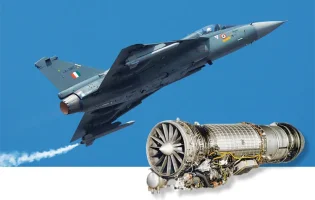
A recent probe into the February 7 runway excursion involving a Hindustan Aeronautics Limited (HAL) Tejas fighter jet has pointed to a software error in the aircraft's onboard computer as the primary cause.
This revelation comes after the Indian Air Force (IAF) conducted comprehensive inspections across its entire fleet of these indigenous light combat aircraft to pinpoint the exact reason behind the emergency.
During the incident at a forward airbase near India's western border, the aircraft lost control while attempting to take off and skidded into an adjacent mud ditch. Fortunately, the pilot escaped with only minor injuries.
In response to the event, the IAF grounded the fleet and ordered rigorous technical evaluations to ensure no underlying mechanical or structural faults were compromising flight safety.
Investigators have ruled out any metallurgical or mechanical breakdown, confirming that a glitch in the onboard computer's software architecture was entirely responsible for the mishap.
To prevent future occurrences, immediate corrective steps have been taken. A newly updated software package, co-developed by the IAF and HAL, is currently undergoing rigorous flight testing before a wider rollout.
The mandatory fleet-wide inspections evaluated several vital components, including the integrity of the undercarriage metals, the electromagnetic braking systems, and the overall digital framework.
Defence officials and HAL representatives have maintained that the February 7 event should not be classified as a crash, but rather as a minor technical anomaly on the ground during the initial departure phase.
An official Court of Inquiry is still examining the sequence of events as per standard military safety protocols. Simultaneously, HAL and the IAF are working in tandem to finalise the digital upgrade.
Once the new software patch is fully validated, it will be installed across all active Tejas fighters to ensure maximum operational reliability.
This runway excursion represents the third major safety incident for the Tejas platform since its formal induction in 2016.
The first loss occurred in March 2024 when a jet crashed near Jaisalmer after a firepower demonstration, though the pilot ejected safely.
Tragically, the second accident during an aerobatic manoeuvre at the Dubai Airshow in November 2025 resulted in the death of Wing Commander Namansh Syal.
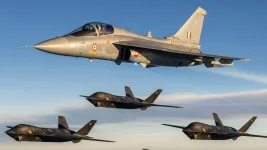
The IAF currently operates a fleet of roughly 38 initial-order Tejas fighters, following the loss of two jets in previous crashes.
The extent of the airframe damage to the jet involved in the February 7 incident is still under evaluation to determine if it can be repaired. Meanwhile, the rest of the cleared fleet continues regular flight operations as the investigation progresses.
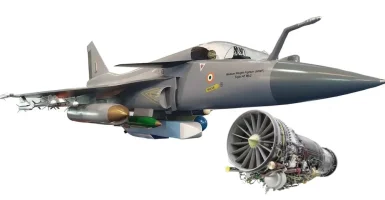
Looking ahead, the IAF is heavily relying on the arrival of the upgraded Tejas Mk1A variant to modernise its combat squadrons, having placed substantial orders for over 180 units.
However, this critical defence procurement is currently facing a delay of roughly two years. Recent reports indicate that severe supply chain bottlenecks—specifically the delayed delivery of GE F404 engines from the United States—have significantly hampered HAL's production and handover timelines.