- Views: 2K
- Replies: 6
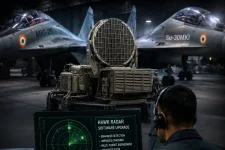
India's domestic military electronics sector has taken a significant leap forward. Chennai-headquartered defence firm Data Patterns recently introduced a prototype of its advanced Hawk-I 900 Active Electronically Scanned Array (AESA) radar.
Built with modern Gallium Nitride (GaN) technology, this highly capable radar packs around 876 Transmit/Receive Modules (TRMs).
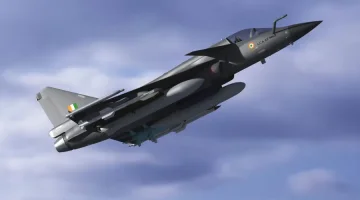
It has been carefully engineered to fit within the space constraints of light and medium combat aircraft, making it an ideal match for the Indian Air Force's MiG-29 fighter jets and the indigenous LCA Tejas Mk1 and Mk1A.
Currently, the MiG-29 fleet depends on older Russian Zhuk-ME radars, which have recently faced scrutiny over reliability issues in hot and humid maritime conditions.
As the Indian military looks to extend the service life of these jets well into the late 2030s, the Hawk-I 900 presents a ready-made, locally produced replacement.
This new system promises to vastly improve a pilot's battlefield awareness, allow the aircraft to track and engage multiple targets simultaneously, and provide much stronger protection against enemy jamming.
When combined with other homegrown electronic warfare systems, this radar could revitalise the MiG-29 for modern combat, overcoming its older structural and engine limitations.
Furthermore, the Hawk-I 900 offers a strong private-sector alternative to state-run radar projects like the DRDO Uttam for the LCA Tejas fleet.
This new lightweight radar is based on the technology used in the much larger Hawk-I 2700, a powerful system featuring between 2400 and 2700 TRMs and an impressive detection range of up to 350 kilometres.
The larger variant is currently being offered as a major upgrade for India's heavyweight Su-30MKI fighters.
The successful development of both the 900 and 2700 models highlights the growing capability of Indian private industry to create scalable radar solutions for all classes of military aircraft.
This progress represents a major milestone in India's goal of achieving self-reliance in cutting-edge military hardware.
The timing of this innovation is critical, given recent reports indicating that legacy Russian radar systems suffer high failure rates and overheating issues, particularly on naval jets like the MiG-29K.
By adopting the Hawk-I 900, India could bypass these operational hurdles, significantly reducing its reliance on foreign spare parts.
A successful rollout would not only keep India's MiG-29s flying longer but could also attract interest from other nations looking to upgrade their own ageing Soviet-era fighter fleets.
While the older MiG-29 airframes will still face challenges related to general wear and tear over time, equipping them with state-of-the-art vision systems provides a massive tactical advantage.
The Hawk-I 900 serves as a crucial bridge, keeping India's current fourth-generation fighter squadrons relevant and deadly while the country waits for its future fifth-generation stealth fighters to enter service.
Key Capabilities of the Hawk-I 900
- Advanced GaN Technology: Built using Gallium Nitride materials, the radar runs cooler, uses power more efficiently, and sees further than older radar types.
- Wide Viewing Angle: The radar is mounted on a mechanical swashplate controller, allowing the antenna to physically tilt. Combined with electronic steering, this gives the pilot a massive field of view, covering up to 100 degrees on either side.
- Multi-Role Functionality: Designed for both air combat and ground strikes, it can track over 20 distinct targets at once. It operates in the X-band frequency and uses special techniques to avoid detection by enemy sensors while resisting jamming attempts.
- Enhanced Detection Range: Pilots will be able to spot enemy fighter jets from more than 150 to 200 kilometres away, giving them a vital head start in any aerial encounter.