- Views: 969
- Replies: 2
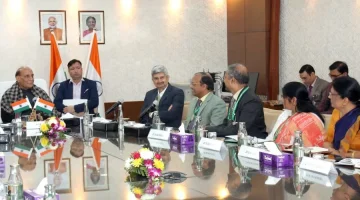
A crucial high-level meeting recently took place between Defence Minister Rajnath Singh and Chief of the Air Staff, Air Chief Marshal A.P. Singh.
The core agenda focused on outlining the future of India's fifth-generation combat aircraft capabilities.
During the deliberations, the leaders evaluated strategies to balance the immediate combat readiness of the Indian Air Force (IAF) with the nation's long-term goal of manufacturing its own advanced fighter jets.
The IAF is currently navigating a significant hurdle: a depleting number of fighter squadrons.
With the active fleet currently hovering around 30 to 31 squadrons against an authorized strength of 42, the top brass is exploring options to potentially acquire a foreign fifth-generation fighter.
This prospective purchase would act as a critical stopgap measure to maintain regional air superiority while ensuring the indigenous Advanced Medium Combat Aircraft (AMCA) project proceeds without disruption.
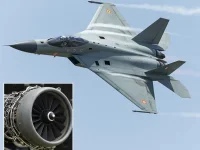
According to reports, Russia's Sukhoi Su-57 (NATO reporting name: Felon) emerged as a prominent subject during these talks.
Moscow has persistently pitched the twin-engine stealth fighter to New Delhi as a ready solution for its next-generation requirements.
This marks a renewed push by Russia following India's withdrawal from the joint Fifth Generation Fighter Aircraft (FGFA) programme back in 2018, which was originally based on the Su-57 platform.
Current information suggests that Russia's latest proposal is highly comprehensive.
It goes beyond a simple off-the-shelf purchase, reportedly offering substantial technology transfers and deep involvement for India's domestic defence industry.
If accepted, this arrangement would represent one of the most extensive technology-sharing pacts offered by Moscow in modern military aviation history.
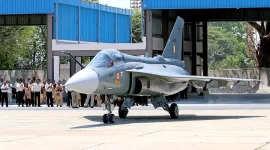
Despite the allure of foreign platforms, the indigenous AMCA remains the absolute cornerstone of India's strategic aerospace planning.
Recently approved by the Cabinet Committee on Security with a massive funding clearance of over ₹15,000 crore, the AMCA is slated to be India's premier domestically built stealth fighter.
The Aeronautical Development Agency (ADA) and Hindustan Aeronautics Limited (HAL) are rapidly pushing the project forward, with the first prototype expected to roll out around 2028-2029.
The primary dilemma for defence policymakers is ensuring that any foreign purchase complements rather than suffocates the AMCA initiative.
Defence experts note that if a foreign jet like the Su-57 is acquired, it would strictly serve as an interim solution to bridge the operational gap until the AMCA formally enters service, which is projected for the mid-2030s.
Eventually, the indigenous fighter is meant to completely take over as the backbone of the aerial fleet, fulfilling the government's mandate for self-reliance in the defence sector.
These high-level discussions also highlight the rapidly evolving complexities of aerial warfare.
Next-generation fighters must thrive in heavily networked battlefields, utilizing artificial intelligence, advanced sensor fusion, and seamless electronic warfare capabilities.
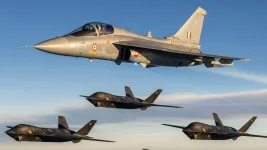
The AMCA is being engineered specifically for these modern scenarios. It is being designed to operate seamlessly alongside unmanned "loyal wingman" platforms, such as India's under-development Combat Air Teaming System (CATS) Warrior drones, ensuring the IAF remains fully equipped for the autonomous and networked combat environments of tomorrow.