- Views: 1K
- Replies: 1
The Chinese People’s Liberation Army Air Force (PLAAF) is rapidly modernising its aerial combat capabilities, placing a heavy emphasis on advanced fifth-generation stealth aircraft like the heavy-weight J-20 and the newly introduced medium-weight J-35A.
Consequently, domestic demand for the older, fourth-generation J-10 fighter series has begun to decline.
This strategic shift is prompting the state-owned manufacturer, AVIC Chengdu Aircraft Corporation, to look outward, heavily marketing the export variant—the J-10CE—to foreign buyers to keep its production lines viable.
While the PLAAF absorbed a substantial number of J-10C fighters between 2018 and 2023, its current acquisition strategy has pivoted.
Instead of buying new units of the J-10, Beijing is channeling its defence budget into stealth technology while simultaneously upgrading its older J-10A and J-10B fleets.
These legacy jets are being enhanced to match the J-10C standard, receiving modern software updates, advanced electronic warfare suites, and seamless integration with the KJ-500 Airborne Early Warning and Control (AEW&C) systems.
This approach allows China to create a highly networked, "system-of-systems" air defence framework without manufacturing new fourth-generation airframes for itself.
Despite the drop in domestic orders, assembly lines for the J-10C and its export twin, the J-10CE, remain active. Beijing is increasingly attempting to leverage these aircraft for "aviation diplomacy"—using military hardware sales to cement strategic geopolitical partnerships.
Reflecting this push, Li Jun, Chief Designer at the Chengdu Aircraft Design and Research Institute, projected in May 2026 that the J-10CE will remain relevant in the international arms market for another two to three decades.
However, despite aggressive marketing and international showcases, Beijing has struggled to find willing buyers outside of its traditional sphere of influence.
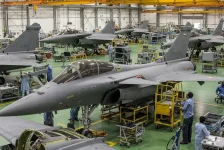
To date, the Pakistan Air Force (PAF) remains the lone international customer, having inducted around 20 J-10CEs. From an Indian perspective, Islamabad's procurement was a direct and reactive measure to the Indian Air Force's (IAF) game-changing acquisition of the Dassault Rafale.
While Chinese state media frequently promotes narratives claiming the J-10CE is superior to the Rafale, these assertions lack independent verification, and the aircraft's actual combat and deterrence capabilities remain untested in real-world conflicts.
Although nations such as Egypt, Bangladesh, Indonesia, Uzbekistan, and Iraq have been linked in reports to potential J-10CE purchases, none have finalised a major contract.
Open-source intelligence suggests several reasons for this hesitation. The global fighter market is fiercely competitive.
Potential buyers often weigh the J-10CE against established Western alternatives, upgraded F-16s, or even emerging platforms like India's LCA Tejas, which New Delhi has actively pitched to nations like Egypt.
Furthermore, international customers remain cautious about the long-term reliability of Chinese indigenous engines, such as the WS-10, and the platform's lack of a proven combat record compared to its Western or European counterparts.
Ultimately, while the manufacturing of the older J-10A and J-10B variants ceased years ago, the J-10CE program is continuing. Yet, the PLAAF’s clear pivot towards next-generation stealth fighters signals where China's true defence priorities lie.
Until Beijing can conclusively prove the J-10CE's operational value and reliability to nations beyond Pakistan, its ambitions for widespread aviation diplomacy may continue to face significant headwinds.