- Views: 5K
- Replies: 26
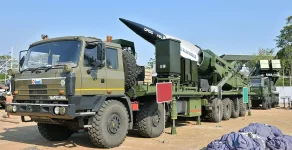
The Defence Research and Development Organisation (DRDO) has confirmed a significant capability leap in India’s indigenous air combat arsenal. The Astra Mk2 beyond-visual-range air-to-air missile (BVRAAM) now boasts a validated strike range of 240 kilometres.
This development was announced by Perina Devi, a senior official at DRDO’s Defence Research and Development Laboratory (DRDL), during an interaction with India TV.
This confirmation marks a critical milestone for the programme. Previous estimates had placed the missile's range in the vicinity of 160 to 200 kilometres. The revised figure of 240 kilometres categorises the Astra Mk2 as a premier long-range interceptor, placing it in an elite league of global weaponry.
Advanced Propulsion Technology
The core of this performance enhancement is the missile's dual-pulse solid rocket motor.Unlike traditional single-pulse motors that burn all their propellant in one go, a dual-pulse engine allows for energy management during flight.
It can sustain speed over a longer duration or save a 'pulse' of energy for the final moments of engagement. This ensures that the missile retains high manoeuvrability and a high "kill probability" even against agile fighter jets at extreme ranges.
With this propulsion system, the Astra Mk2 is now broadly comparable to the American AIM-120D AMRAAM and approaches the engagement envelope of the European Meteor missile.
It significantly outperforms the earlier Astra Mk1, which is currently in service with a range of approximately 110 kilometres.
Indigenous Success and Strategic Autonomy
DRDO has highlighted that the Astra Mk2 features nearly 90 per cent indigenous content.This high level of self-reliance reduces India's dependence on foreign original equipment manufacturers (OEMs) for critical sub-systems such as seekers and actuators.
The missile’s design includes a flexible pylon configuration that supports both "cold" and "hot" launch mechanisms.
This versatility simplifies the integration process across the Indian Air Force's (IAF) diverse fleet of Russian, French, and indigenous fighter aircraft.
Integration and Induction Timeline
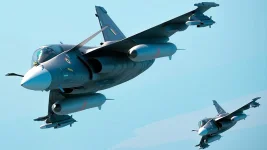
According to Perina Devi, the integration of the Astra Mk2 on the frontline Su-30MKI air superiority fighter is already complete. The focus will now shift to the indigenous Tejas Mk1A Light Combat Aircraft, with integration work scheduled to commence shortly.Most significantly, the transition from development to active service is imminent. The induction of the Astra Mk2 into the Indian Air Force is expected to begin by the end of this year.
This timeline suggests that Indian pilots will soon have access to a weapon system capable of challenging adversaries well before they can respond.
Strategic Implications
The extended range of 240 kilometres fundamentally alters the IAF’s aerial engagement doctrine.It provides Indian fighters with a decisive "stand-off" capability, allowing them to threaten high-value enemy assets—such as Airborne Warning and Control Systems (AWACS) and mid-air refuellers—from safe distances.
In the regional context, this development is seen as a direct counter to long-range missiles like the Chinese PL-15.
By closing the technological gap with global missile powers, the Astra Mk2 ensures that India maintains air dominance in the contested skys of the future.