- Views: 2K
- Replies: 1
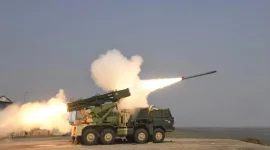
India’s premier Defence Research and Development Organisation (DRDO) is transitioning the acclaimed Pinaka rocket system from a ground-based artillery powerhouse into a sophisticated air-to-surface weapon.
This strategic evolution aims to provide the Indian Air Force (IAF) with a high-precision, extended-range strike option launched directly from fighter jets.
Engineering for Aerial Superiority
While the new aerial variant will leverage the proven guidance and navigation systems of the Army’s land-based Pinaka, it is not a direct port of the existing hardware.To ensure seamless integration with modern fighter aircraft, the rocket is being redesigned with a more compact frame, expected to measure approximately 4.8 metres in length.
This reduction in size ensures that the weapon does not interfere with the aircraft's aerodynamic performance or exceed the structural limits of its weapon stations.
Engineers are also customising the propulsion system to account for the unique physics of an air launch.
Unlike ground-launched rockets that must overcome heavy gravity from a standstill, the air-launched version benefits from the initial altitude and velocity of the carrier aircraft.
By optimising the rocket nozzles for thinner atmospheric pressures at high altitudes, the DRDO aims to maximise thrust efficiency and flight stability.
The Glide-and-Correct Mechanism
A defining feature of this new system is its ability to enter a high-altitude glide phase.Once the rocket motor completes its burn, the projectile will maintain supersonic or hypersonic speeds, using aerodynamic surfaces to glide rather than following a standard ballistic arc.
Key technical highlights include:
- Precision Guidance: Small nose-mounted fins will utilise GPS and inertial navigation data to perform mid-course corrections.
- Extended Reach: By combining the kinetic energy of the jet with a controlled glide, the rocket can strike targets at much greater distances than its truck-mounted counterparts.
- Stand-off Capability: This increased range allows IAF pilots to engage surface threats while remaining outside the reach of enemy air defence systems.
Filling a Strategic Gap
The air-launched Pinaka occupies a vital niche in India’s ordnance inventory.It offers a cost-effective middle ground between inexpensive unguided rockets and high-end cruise missiles.
Its high speed and unpredictable flight profile make it significantly harder for enemy systems to intercept, providing an effective tool for dismantling logistics hubs, troop concentrations, and radar installations.
Strengthening Indigenous Innovation
This project underscores a shift toward modular defence technology in India.By adapting the existing Pinaka framework for multiple domains, the DRDO is reducing development costs and timelines while ensuring the IAF receives a weapon specifically tailored for aerial combat.
The Pinaka system, originally named after the divine bow of Lord Shiva, has been a staple of Indian multi-barrel rocket launcher (MBRL) technology since the late 1980s.
Its transition to the skies represents a significant milestone in India's "Atmanirbhar Bharat" (Self-Reliant India) initiative, showcasing the nation's growing expertise in advanced propulsion and precision-guided munitions.