The Indian Air Force (IAF) is heavily shifting its approach to pilot training to prepare for a new era of fifth-generation aerial warfare.
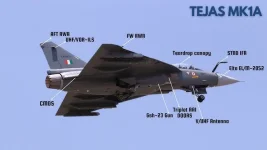
To achieve this, the IAF is looking to increase its order of Tejas twin-seat trainer jets under the second phase of the Light Combat Aircraft (LCA) Mk1A procurement.
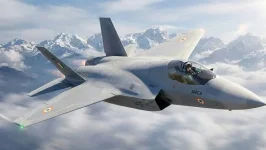
Central to this shift is a brand-new training framework known as the LOHAR (Lead-in Fighter Trainer Optimized High-Altitude Readiness) syllabus, which is designed to transition pilots from conventional flying to the highly digitised, sensor-heavy environments of upcoming platforms like the Advanced Medium Combat Aircraft (AMCA).
Historically, trainer jets were primarily seen as stepping stones for basic and advanced flight training. However, the twin-seat Tejas Mk1B is breaking that mould, stepping beyond the role of the older Hawk advanced jet trainers.
These new indigenous trainers are now viewed as advanced tactical hubs. Here, trainee pilots will master complex networked environments, secure data links, and electronic warfare strategies well before they take the controls of single-seat frontline fighter jets.
Initially, the Ministry of Defence and the IAF had outlined a requirement for 29 twin-seat trainers within the larger 97-aircraft Tejas Mk1A deal—a mega-contract valued at roughly ₹62,000 crore that was cleared by the Cabinet Committee on Security to help replace the retiring MiG-21 fleet and boost indigenous production by Hindustan Aeronautics Limited (HAL).
Now, driven by the rapid digitisation of modern aerial combat, defence planners are considering expanding the trainer fleet further in the subsequent procurement phases.
This transition marks one of the most drastic structural changes to the IAF’s fighter training philosophy in several decades.
In the past, training primarily revolved around basic flight mechanics, visual dogfighting, and dropping unguided weapons. In stark contrast, the LOHAR curriculum is anchored in what military strategists call "Information Management Dominance."
The goal is no longer just teaching a pilot how to fly a fast jet, but ensuring they can process data, survive, and strike effectively in skies crowded with electronic jamming and networked sensors.
The initial phase of the LOHAR program focuses on mastering the unique aerodynamics of delta-wing jets like the Tejas. Unlike the traditional Hawk trainers, the Tejas features relaxed static stability and highly sensitive, agile flight controls.
Using the dual-seat trainer, student pilots learn to execute extreme angles of attack, manage the aircraft’s kinetic energy, and recover from severe stalls.
These complex manoeuvres are a critical foundation for pilots who will eventually fly the upcoming Tejas MkII and the stealthy AMCA, both of which will boast highly demanding flight characteristics.
The most transformative aspect of the LOHAR syllabus, however, takes place in Phase Two, where the focus pivots from physical flying to digital battlespace management and sensor fusion.
According to defence sources, this phase completely redefines the pilot-aircraft relationship.
Gone are the days of staring at analogue dials and manually tuning radar screens. Instead, pilots are trained to instantly read and prioritise fused streams of tactical data beamed in from multiple sensors, both inside and outside the aircraft.
A critical part of this training involves the use of secure SDL-II tactical data links. Student pilots learn the art of "silent mode" flying, where they turn off their own radar to avoid enemy detection.
Even with their radars off, they receive pinpoint targeting data securely beamed from simulated Netra MkII Airborne Early Warning and Control (AWACS) aircraft or allied Tejas fighters.
This specific drill is essential for teaching future stealth tactics, allowing pilots to maintain a complete picture of the battlefield without emitting signals that could give away their location.
Furthermore, the advanced Uttam Active Electronically Scanned Array (AESA) radar installed in the trainers is thoroughly utilised.
Using a Virtual Training System (VTS) that generates artificial threats, pilots practice tracking multiple targets simultaneously and engaging low-flying or stealthy adversaries.
The lesson here is about managing the overwhelming flow of combat information, rather than just pushing buttons on a radar panel.
Electronic warfare (EW) is another cornerstone of the LOHAR initiative.
For the first time, trainee pilots are thrown into simulated environments packed with severe electronic interference early in their careers. During Phase Three, the instructor in the rear seat can simulate enemy radar locks, signal jamming, and digital deception.
In response, the student in the front seat must manage the aircraft's indigenous Swayam Raksha Kavach electronic warfare suite, deploying countermeasures and self-protection jamming tactics under the pressure of simulated combat.
The curriculum also includes complex Digital Radio Frequency Memory (DRFM) exercises. Trainees are taught how to spot fake radar blips and electronic decoys, and they learn techniques to "burn through" enemy jamming using precise sensor management.
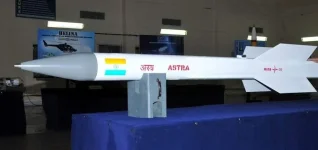
As the training progresses to Phase Four, the focus shifts to Beyond Visual Range (BVR) engagements and the use of long-range weapons like the indigenous Astra Mk1 and the Derby missiles.
Here, pilots learn the mathematics and tactics behind "No-Escape Zones"—the optimal range where an enemy cannot evade a missile.
They practice these calculations across various weather conditions and electronic jamming scenarios. Before a trainee is permitted to fly a single-seat Tejas Mk1A alone, they must successfully complete a minimum of 50 virtual BVR combat engagements.
Looking toward the future, the syllabus also pioneers Human-Machine Teaming.
Integrated with the VTS, pilots in the Tejas trainers are already learning how to command unmanned "Loyal Wingman" drones, such as the HAL CATS Warrior program currently under development.
This forward-looking step ensures that when the sixth-generation AMCA finally arrives, IAF pilots will be fully prepared to fly alongside autonomous combat drones.
The name "LOHAR," which translates to "Blacksmith" in Hindi, is deeply symbolic for the IAF. It reflects the intense, high-pressure process of forging and strengthening the next generation of fighter pilots for the wars of tomorrow.
As of May 2026, the first cohort of 12 pilots has successfully wrapped up the LOHAR-Alpha module at the Tactical and Combat Development Establishment (TACDE), officially kicking off the IAF's modernised training era.
Ultimately, the shift from the traditional Hawk-based system to the Tejas-powered LOHAR curriculum is monumental.
While older training pipelines focused heavily on basic safety, visual bombing, and radio etiquette with almost zero emphasis on radar or network-centric warfare, the new syllabus ensures Indian pilots are digitally lethal before they even reach a frontline squadron.