- Views: 5K
- Replies: 12
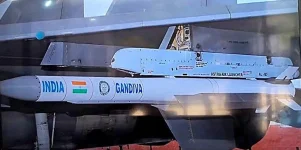
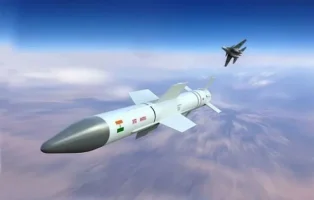
India is rapidly advancing its aerial warfare capabilities as the Defence Research and Development Organisation (DRDO) accelerates the timeline for the Astra Mk3, a next-generation air-to-air missile.
Also known as the 'Gandiva'—named after the legendary bow of Arjuna—this weapon system is being fast-tracked for production clearance, with the agency targeting operational induction by 2029.
Imminent Trials to Validate Propulsion
According to defence sources, the development programme has entered a critical phase. While initial developmental trials have already begun, a fresh series of intensive test campaigns is imminent.These upcoming trials are designed to rigorously validate the indigenous Solid Fuel Ducted Ramjet (SFDR) propulsion system, which is the heart of the missile's superior performance.
Unlike conventional rocket motors that carry both fuel and oxidiser—making them heavier and limiting their burn time—the SFDR technology uses an air-breathing ramjet engine.
This system intakes oxygen from the atmosphere during flight to burn its fuel. This design allows the missile to carry more fuel and sustain high supersonic speeds (estimated at Mach 4.5) for a much longer duration than standard missiles.
A 350 km Reach to Counter Strategic Threats
The Astra Mk3 is being engineered as a Very Long Range Air-to-Air Missile (VLRAAM) with a striking range of up to 350 km.This capability is specifically designed to target and neutralise high-value "force multipliers" such as Airborne Warning and Control Systems (AWACS), aerial refuelling tankers, and surveillance aircraft.
By engaging these targets from extreme distances, the Indian Air Force (IAF) will be able to disrupt enemy operations and blinding their coordination networks without exposing its own fighter jets to enemy air defence systems.
Superior "No-Escape Zone"
A crucial advantage of the Astra Mk3 is its significantly expanded "No-Escape Zone" (NEZ). The NEZ is the specific area within the missile's range where an enemy aircraft cannot evade the incoming weapon, regardless of the manoeuvres or countermeasures they employ.Sources indicate that the Astra Mk3’s NEZ is expected to exceed that of the Meteor missile, which is currently operated by the IAF on its Rafale jets.
While standard rocket motors burn out quickly—forcing the missile to coast towards its target with decreasing energy—the Astra Mk3’s ramjet engine provides continuous thrust throughout the engagement.
This ensures the missile retains high energy and manoeuvrability even during the final phase of interception, making it extremely difficult for targets to escape.
Path to 2029 Induction
The current testing focus is on refining the complex interplay between the ramjet engine's airflow stability, fuel regulation, and the missile's guidance avionics.The missile is expected to feature an advanced AESA (Active Electronically Scanned Array) seeker, likely utilizing Gallium Nitride technology, to resist electronic jamming.
If the upcoming trial schedule proceeds without significant delays, the DRDO is confident of achieving production clearance around 2029.
The successful induction of the Astra Mk3 would mark a decisive shift in India’s defence posture, placing the country among a select group of nations capable of developing indigenous, ramjet-powered, long-range air combat missiles.