DRDO Fast-Tracks Astra Mk3 Development with Imminent Ramjet Trials, Targeting Operational Induction by Year 2029

DRDO Fast-Tracks Astra Mk3 Development with Imminent Ramjet Trials, Targeting Operational Induction by Year 2029


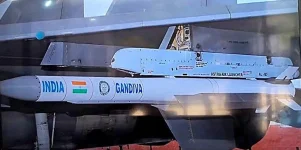
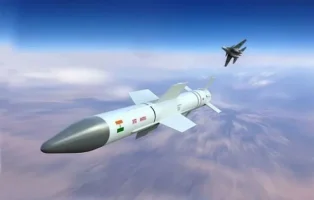
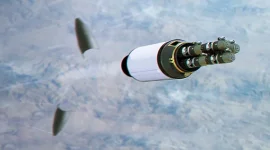
India is rapidly advancing its aerial warfare capabilities as the Defence Research and Development Organisation (DRDO) accelerates the timeline for the Astra Mk3, a next-generation air-to-air missile.

Also known as the 'Gandiva'—named after the legendary bow of Arjuna—this weapon system is being fast-tracked for production clearance, with the agency targeting operational induction by 2029.

Imminent Trials to Validate Propulsion​

According to defence sources, the development programme has entered a critical phase. While initial developmental trials have already begun, a fresh series of intensive test campaigns is imminent.

These upcoming trials are designed to rigorously validate the indigenous Solid Fuel Ducted Ramjet (SFDR) propulsion system, which is the heart of the missile's superior performance.

Unlike conventional rocket motors that carry both fuel and oxidiser—making them heavier and limiting their burn time—the SFDR technology uses an air-breathing ramjet engine.

This system intakes oxygen from the atmosphere during flight to burn its fuel. This design allows the missile to carry more fuel and sustain high supersonic speeds (estimated at Mach 4.5) for a much longer duration than standard missiles.

A 350 km Reach to Counter Strategic Threats​

The Astra Mk3 is being engineered as a Very Long Range Air-to-Air Missile (VLRAAM) with a striking range of up to 350 km.

This capability is specifically designed to target and neutralise high-value "force multipliers" such as Airborne Warning and Control Systems (AWACS), aerial refuelling tankers, and surveillance aircraft.

By engaging these targets from extreme distances, the Indian Air Force (IAF) will be able to disrupt enemy operations and blinding their coordination networks without exposing its own fighter jets to enemy air defence systems.

Superior "No-Escape Zone"​

A crucial advantage of the Astra Mk3 is its significantly expanded "No-Escape Zone" (NEZ). The NEZ is the specific area within the missile's range where an enemy aircraft cannot evade the incoming weapon, regardless of the manoeuvres or countermeasures they employ.

Sources indicate that the Astra Mk3’s NEZ is expected to exceed that of the Meteor missile, which is currently operated by the IAF on its Rafale jets.

While standard rocket motors burn out quickly—forcing the missile to coast towards its target with decreasing energy—the Astra Mk3’s ramjet engine provides continuous thrust throughout the engagement.

This ensures the missile retains high energy and manoeuvrability even during the final phase of interception, making it extremely difficult for targets to escape.

Path to 2029 Induction​

The current testing focus is on refining the complex interplay between the ramjet engine's airflow stability, fuel regulation, and the missile's guidance avionics.

The missile is expected to feature an advanced AESA (Active Electronically Scanned Array) seeker, likely utilizing Gallium Nitride technology, to resist electronic jamming.

If the upcoming trial schedule proceeds without significant delays, the DRDO is confident of achieving production clearance around 2029.

The successful induction of the Astra Mk3 would mark a decisive shift in India’s defence posture, placing the country among a select group of nations capable of developing indigenous, ramjet-powered, long-range air combat missiles.
 
The missile might be good but we still need a good radar coverage through AWACS and better radars on fighters to actually utilise the full range. Let's hope the new AWACS fleet is delivered on schedule.
 
the solid fuel ramjet technology of Astra 3 should be miniaturised for 155 mm artillery shells to double their range and improve accuracy by 10 times...
 
Dumb question maybe, but I doubt it. Is the Astra 2 operational?

Has Astra Mk‑2 been integrated on any jet?

No source in the search results confirms that Astra Mk‑2 has been fully integrated on any fighter yet.
The articles describe production beginning, tenders for dual‑pulse motors, and IAF procurement, but none state that integration has been completed on Su‑30MKI, Tejas Mk‑1A, or any other platform.
• The Indian Defence News report notes production and trials timelines but does not mention completed integration.
• The Defence News article about range extension and procurement also only mentions future deployment on Su‑30MKI and Tejas, not current integration.
Conclusion:
➡️ Astra Mk‑2 is not yet integrated on any operational IAF jet as per available public sources.

How many Astra Mk‑2 missiles have been delivered to the IAF?

None of the retrieved sources confirm any deliveries to the IAF.
What the sources do confirm:
• IAF is procuring 15 missiles initially for trials and evaluation.
• A much larger order of ~700 missiles is planned/approved for future induction.
• Production is beginning, with BDL expected to start manufacturing after testing phases.
But no article states that any missiles have been delivered to frontline squadrons.
Conclusion:
➡️ There is no evidence in the search results that Astra Mk‑2 has been delivered to the IAF yet.

This is the real state of the Astra program. Forget about the Astra 3.
 
Dumb question maybe, but I doubt it. Is the Astra 2 operational?

Has Astra Mk‑2 been integrated on any jet?

No source in the search results confirms that Astra Mk‑2 has been fully integrated on any fighter yet.
The articles describe production beginning, tenders for dual‑pulse motors, and IAF procurement, but none state that integration has been completed on Su‑30MKI, Tejas Mk‑1A, or any other platform.
• The Indian Defence News report notes production and trials timelines but does not mention completed integration.
• The Defence News article about range extension and procurement also only mentions future deployment on Su‑30MKI and Tejas, not current integration.
Conclusion:
➡️ Astra Mk‑2 is not yet integrated on any operational IAF jet as per available public sources.

How many Astra Mk‑2 missiles have been delivered to the IAF?

None of the retrieved sources confirm any deliveries to the IAF.
What the sources do confirm:
• IAF is procuring 15 missiles initially for trials and evaluation.
• A much larger order of ~700 missiles is planned/approved for future induction.
• Production is beginning, with BDL expected to start manufacturing after testing phases.
But no article states that any missiles have been delivered to frontline squadrons.
Conclusion:
➡️ There is no evidence in the search results that Astra Mk‑2 has been delivered to the IAF yet.

This is the real state of the Astra program. Forget about the Astra 3.
Where does it say that Mk2 has been inducted?
 
That's my point. Why are we talking about Mk3 when we don't even have Mk2?
Simple. If we wait for Mk2 induction and operationalisation and only then start work on Mk3, we have a 15 year gap. By then aerial warfare and threats have evolved well beyond the laid down specs. Nothing wrong in having two parallel programs, one somewhat ahead of the others.

Regarding your question on the Mk2. Hint : no one commits to production unless, confidence has been reached and all hurdles are cleared.

In the case of the Mk1 an announcement was required to inform about the coming of age. That isn't necessary any more.
 
Development of the Astra Mk-2 started in 2014.


Following the maiden test of the Astra Mk-1 air-to-air missile on May 4, 2014, DRDO announced that it was already working on a Mk-2 variant of the Astra missile with a greater range.

Astra was initially conceived as a 44 km-range missile with “high single-shot kill probability,” while its Mk-2 version was projected to strike adversary aircraft over 100 km away.

However, both missiles are reported to have longer ranges in media reports.​

ince 2020, several reports have indicated that the Astra Mk-2 would soon be flight-tested.


he Times of India reported in November 2020 that DRDO planned to begin testing the Mk-2 version of Astra, with a range of 160 km, in the first half of 2021.

In February 2021, ANI reported, quoting government officials, that trials of Astra Mk-2 would start in the second half of 2021 and that the missile would be fully developed by 2022.

The Times of India reported on May 7, 2022, that the Astra Mk-2 missile would be tested in May 2022.​

According to a detailed proposal under consideration by the Ministry of Defence, the IAF could procure around 700 Astra Mk2 missiles to arm its LCA Tejas and Su-30 MKI jets, further boosting its indigenous precision-strike capability amid evolving regional threats
 
Simple. If we wait for Mk2 induction and operationalisation and only then start work on Mk3, we have a 15 year gap. By then aerial warfare and threats have evolved well beyond the laid down specs. Nothing wrong in having two parallel programs, one somewhat ahead of the others.

Regarding your question on the Mk2. Hint : no one commits to production unless, confidence has been reached and all hurdles are cleared.

In the case of the Mk1 an announcement was required to inform about the coming of age. That isn't necessary any more.
Development of the Astra Mk-2 started in 2014.

Thats 12 years ago man. Why are people making excuses. This is pure incompetence.

Following the maiden test of the Astra Mk-1 air-to-air missile on May 4, 2014, DRDO announced that it was already working on a Mk-2 variant of the Astra missile with a greater range.

Astra was initially conceived as a 44 km-range missile with “high single-shot kill probability,” while its Mk-2 version was projected to strike adversary aircraft over 100 km away.

However, both missiles are reported to have longer ranges in media reports.

ince 2020, several reports have indicated that the Astra Mk-2 would soon be flight-tested.


he Times of India reported in November 2020 that DRDO planned to begin testing the Mk-2 version of Astra, with a range of 160 km, in the first half of 2021.

In February 2021, ANI reported, quoting government officials, that trials of Astra Mk-2 would start in the second half of 2021 and that the missile would be fully developed by 2022.

The Times of India reported on May 7, 2022, that the Astra Mk-2 missile would be tested in May 2022.

According to a detailed proposal under consideration by the Ministry of Defence, the IAF could procure around 700 Astra Mk2 missiles to arm its LCA Tejas and Su-30 MKI jets, further boosting its indigenous precision-strike capability amid evolving regional threats
 
Development of the Astra Mk-2 started in 2014.

Thats 12 years ago man. Why are people making excuses. This is pure incompetence.

Following the maiden test of the Astra Mk-1 air-to-air missile on May 4, 2014, DRDO announced that it was already working on a Mk-2 variant of the Astra missile with a greater range.

Astra was initially conceived as a 44 km-range missile with “high single-shot kill probability,” while its Mk-2 version was projected to strike adversary aircraft over 100 km away.

However, both missiles are reported to have longer ranges in media reports.

ince 2020, several reports have indicated that the Astra Mk-2 would soon be flight-tested.


he Times of India reported in November 2020 that DRDO planned to begin testing the Mk-2 version of Astra, with a range of 160 km, in the first half of 2021.

In February 2021, ANI reported, quoting government officials, that trials of Astra Mk-2 would start in the second half of 2021 and that the missile would be fully developed by 2022.

The Times of India reported on May 7, 2022, that the Astra Mk-2 missile would be tested in May 2022.

According to a detailed proposal under consideration by the Ministry of Defence, the IAF could procure around 700 Astra Mk2 missiles to arm its LCA Tejas and Su-30 MKI jets, further boosting its indigenous precision-strike capability amid evolving regional threats
There is huge difference in the design of a 50-100 km range missile and a 150-200 km range weapon. The airframe, motor, electronics, control laws, seeker, everything needs to be designed afresh. Just check this out. While there are so many different missile manufacturers around the world, many with decades of experience. How many actually have a proper 200 kms range missile in service??

It is your choice to describe people as incompetent. I would not. Every first effort takes a long time. Subsequent efforts are shorter IF the design requirements remain similar. However, if they change, it is a fresh learning curve again.

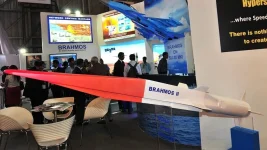
As an example, the Brahmos is a high supersonic missile. So a hypersonic missile is just an increment of a couple of Mach. So why not put a bigger and more powerful motor?? Sadly it does not work like that. The laws of aerodynamics, thermodynamics and behavior of avionics under those conditions all change, not to talk about material sciences.
 
There is huge difference in the design of a 50-100 km range missile and a 150-200 km range weapon. The airframe, motor, electronics, control laws, seeker, everything needs to be designed afresh. Just check this out. While there are so many different missile manufacturers around the world, many with decades of experience. How many actually have a proper 200 kms range missile in service??

It is your choice to describe people as incompetent. I would not. Every first effort takes a long time. Subsequent efforts are shorter IF the design requirements remain similar. However, if they change, it is a fresh learning curve again.

As an example, the Brahmos is a high supersonic missile. So a hypersonic missile is just an increment of a couple of Mach. So why not put a bigger and more powerful motor?? Sadly it does not work like that. The laws of aerodynamics, thermodynamics and behavior of avionics under those conditions all change, not to talk about material sciences.
If we take 12 years to produce a missile that already had a guiding system. The goal was to increase the distance. Definity, a technical challenge. 12 years is not acceptable.
 
If we take 12 years to produce a missile that already had a guiding system. The goal was to increase the distance. Definity, a technical challenge. 12 years is not acceptable.
The guidance system has to be different. Any case, what is acceptable or not to you does not matter. There are challenges to be overcome and they would take their own time. It will come when it does.
 

Forum statistics

Threads
5,941
Messages
61,388
Members
4,695
Latest member
Upariah
Back
Top