- Views: 2K
- Replies: 2
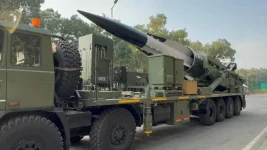
India is set to majorly upgrade its artillery power as the Defence Research and Development Organisation (DRDO) begins work on new versions of the Pinaka Long Range Guided Rocket (LRGR).
These upcoming variants are expected to reach distances of 300 km and 450 km, providing the Indian Army with a powerful tool for deep-strike missions.
Strategic Leap in Artillery Reach
The project marks a transition for the Pinaka system from a short-range support weapon to a long-distance precision instrument.Following the successful validation of the 120 km variant in late 2025, DRDO is now focusing on extending this reach significantly.
Ankathi Raju, Director of the Armament Research and Development Establishment (ARDE), confirmed that the 300 km model is currently in the design phase.
This system is anticipated to begin initial trials within three years, with the goal of entering active service within five years.
Simultaneously, a 450 km version is being developed using the same core technology to become one of the longest-reaching guided rockets globally.
Bridging the Gap: Rockets vs. Missiles
The 450 km Pinaka is designed to occupy a specific niche in India’s defence hierarchy.It will act as a high-volume, cost-effective alternative to tactical ballistic missiles like the Pralay.
| Feature | Pinaka LRGR (Future) | Pralay Missile |
|---|---|---|
| Primary Role | High-volume precision saturation | Strategic deep-strike |
| Max Range | Up to 450 km | 150 km to 500 km |
| Platform | Multi-barrel mobile launcher | Canisterised mobile launcher |
| Operational Goal | Time-sensitive saturation | Hardened target destruction |
By utilizing existing launcher technology, the Army can deploy these rockets in rapid succession to overwhelm enemy logistics hubs, airbases, and communication centres deep behind hostile lines.
Foundation of the New Rocket Force
These advanced weapons are being tailored for India’s proposed Integrated Rocket Force (IRF).This specialized command will unify long-range rockets and missiles under a single structure to streamline decision-making during high-intensity conflicts.
Current progress indicates a layered strike strategy:
- 40–90 km: Conventional Pinaka rockets for frontline support.
- 120 km: Guided Pinaka for precision tactical strikes.
- 300–450 km: LRGR variants for deep operational reach.
- 500 km+: Ballistic missiles like Pralay and Agni for strategic targets.
Global Standing and Exports
The Pinaka system has already gained international recognition, with Armenia becoming the first export customer to receive the guided variants in early 2026.Domestic production is being supported by private sector partners like Solar Industries and Larsen & Toubro, ensuring a robust supply chain as the Indian Army aims to operate up to 22 Pinaka regiments by 2032.
With the 120 km version already cleared for procurement, the upcoming 300 km and 450 km variants will ensure that India maintains a self-reliant and formidable standoff capability on both its northern and western frontiers.