- Views: 2K
- Replies: 1
In a period marked by rapid diplomatic and industrial activity, India is significantly accelerating its ambition to establish itself as a global hub for aerospace manufacturing.
Following a historic agreement between Hindustan Aeronautics Limited (HAL) and Russia, the Brazilian aerospace giant Embraer has advanced its discussions to set up local production lines for both its military and commercial aircraft in India.
This move is seen as a strategic response to New Delhi’s recent pact with Moscow, ensuring the country diversifies its aviation partnerships to mitigate geopolitical risks.
The catalyst for this renewed urgency was the landmark memorandum of understanding (MoU) signed in Moscow on 27 October 2025 between HAL and Russia’s United Aircraft Corporation (UAC).
This agreement represents a major shift, extending the two nations’ long-standing defence relationship—which has produced military stalwarts like the MiG series and the Su-30MKI—into the civil aviation sector for the first time.
The HAL-UAC Agreement: A "Russified" Regional Jet
The focal point of the Indo-Russian collaboration is the SJ-100, a twin-engine regional jet capable of seating 87 to 98 passengers with a maximum range of 3,530 kilometres.This aircraft is positioned as a critical asset for India’s UDAN (Ude Desh ka Aam Nagarik) regional connectivity scheme, designed to link smaller tier-2 and tier-3 cities.
Under the terms of the deal, HAL has secured the rights to manufacture the aircraft for domestic carriers.
Crucially, the SJ-100 chosen for this venture is a fully "Russified" variant, distinct from earlier Superjet models that relied heavily on Western technology.
To navigate severe international sanctions, this new iteration replaces approximately 40 imported systems—including avionics and landing gear—with indigenous Russian alternatives.
It is powered by the Russian-made PD-8 high-bypass turbofan engines, replacing the French-Russian SaM146 engines used in previous models, thereby immunising the supply chain against Western restrictions.
With the first import-substituted SJ-100 having conducted its flight tests in September 2025, production in India is projected to scale up by 2026.
This initiative promises to generate thousands of high-skilled jobs and enhance HAL's technical capabilities in civil transport manufacturing.
Embraer’s Counter-Offer: Western Standards and Multi-Mission Capability
Despite the progress of the Russia-India alliance, Embraer is aggressively positioning itself as a reliable, sanction-free alternative within India’s aviation ecosystem.This intent was highlighted by Civil Aviation Minister Ram Mohan Naidu Kinjarapu in Hyderabad on 26 November 2025.
He explicitly noted Embraer’s proposals alongside the Russian programme, stating, "We are seeing Embraer trying to come into India in aircraft manufacturing… We want to manufacture a full-fledged regional transport aircraft in the country itself."
Embraer has been laying the groundwork for this expansion for some time.
In February 2024, the company signed a strategic MoU with Mahindra Defence Systems to jointly bid for the Indian Air Force’s (IAF) Medium Transport Aircraft (MTA) programme.
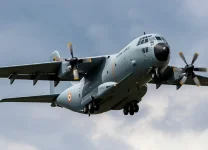
Their contender is the C-390 Millennium, a versatile military transport aircraft that directly competes with the legacy An-32 fleet.
According to open-source specifications, the C-390 is a twin-jet tactical airlifter capable of carrying a 26-tonne payload.
It boasts a top speed of Mach 0.80 (470 knots) and offers multi-mission flexibility, including aerial refuelling (as the KC-390 variant), medical evacuation, and firefighting.
By May 2025, Embraer solidified its commitment by establishing a new subsidiary, Embraer India Aviation Services, to deepen its footprint across defence, commercial aviation, and maintenance sectors.
Commercial Ambitions: The E-Jet E2 Proposal
Beyond defence, Embraer is eyeing India’s booming commercial market.The company has indicated a willingness to establish a final assembly line (FAL) for its E-Jet E2 family—direct competitors to the SJ-100—provided there is sufficient demand.
Reports suggest that Kolhapur-based airline Star Air is considering a substantial order of up to 200 units as early as next year.
Such a deal would mirror the Airbus C-295 model in Gujarat, where a private Indian consortium manufactures the aircraft.
The E-Jet E2 brings the advantage of established Western supply chains and a proven global track record, with over 200 units already in service worldwide.
Currently, nearly 50 Embraer aircraft fly in Indian skies, ranging from the E175 regional jets used by Star Air to the Netra Airborne Early Warning and Control (AEW&C) aircraft operated by the IAF, providing a solid foundation for further localisation.
Strategic Analysis: Hedging Bets
Analysts view India’s dual-track approach—engaging both Russia and Brazil—as a masterstroke of strategic diversification.The HAL-UAC deal offers immediate access to manufacturing technology for a 100-seater jet, bolstering HAL’s civil portfolio.
However, the "Russified" nature of the SJ-100 raises questions about global compatibility and long-term aftermarket support given the isolation of the Russian aerospace sector.
In contrast, Embraer offers a pathway free from sanctions, compatible with global aviation standards, and backed by Mahindra’s growing industrial clout.
"The HAL-UAC tie-up signals intent, but adoption will be tough in a segment dominated by Embraer and Airbus," observed Jagannarayan Padmanabhan of Crisil Intelligence.
The potential order from Star Air could prove decisive, potentially tipping the scales in favour of Embraer and unlocking a new chapter of private-sector aerospace manufacturing in India.