Former Director General of Artillery, Lieutenant General P. R. Shankar (Retired), has initiated a critical discussion regarding the future of aerial combat.
He questions the necessity of sending manned fighter jets into hostile airspace when modern precision missiles can achieve the exact same objectives with minimal risk.
Using the tactical outcomes of the brief but intense May 2025 India-Pakistan conflict, codenamed Operation Sindoor, as a primary example, Lt Gen Shankar is advocating for a major shift in how the Indian armed forces target stationary assets deep within enemy borders.
Analyzing the early stages of the four-day operation, the retired general highlights that manned fighters were initially deployed to destroy specific, pre-planned targets.
However, these air missions only successfully eliminated two objectives on the first day, leaving the remaining targets to be neutralized by the army's ground-based rocket and artillery forces.
This reliance on manned aircraft was not without consequences, as the Chief of Defence Staff confirmed that the Indian military incurred losses during these sorties.
Lt Gen Shankar argues that if the ultimate goals were heavily fortified locations like the Sargodha airbase or facilities in Rahim Yar Khan, the military should have utilized indigenous standoff systems—like the supersonic BrahMos—from the very beginning.
His reasoning is firmly grounded in practical combat outcomes.
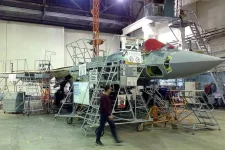
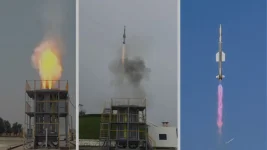
The destructive impact of a BrahMos missile, which travels at nearly Mach 3 and carries a formidable payload, is identical regardless of whether it is dropped from a Sukhoi-30MKI fighter jet at high altitudes or launched from a mobile truck safely positioned within Indian territory.
The delivery method is secondary to the successful destruction of the target.
Because static military infrastructure, such as enemy airbases and bunkers, cannot evade or relocate during a strike, they are perfect targets for long-range cruise missiles.
These weapons can hit precise coordinates from hundreds of kilometres away, entirely removing the need for costly fighter jets and their pilots to navigate dense, highly contested air defence networks.
This viewpoint aligns with a broader global military trend that is moving away from traditional, platform-heavy tactics toward safer, standoff precision strike capabilities.
Firing a missile from an aircraft flying 200 kilometres inside friendly airspace, Lt Gen Shankar notes, provides no distinct tactical edge over a ground-based launch if the target is stationary.
This logic also extends to other advanced weapons in the Indian arsenal, such as the air-launched SCALP stealth cruise missiles integrated into the IAF's Dassault Rafale jets.
In modern warfare, the successful destruction of the enemy asset is the true measure of victory, far outweighing the traditional and dramatic optics of fighter jets physically crossing international borders.
While proponents of traditional air power often emphasize the adaptability and real-time surveillance capabilities of manned flights, Lt Gen Shankar dismisses these arguments when assessing the specific realities of Operation Sindoor.
He points out that some of the most significant damage inflicted on adversary assets was achieved through advanced missile networks, including surface-to-air systems like the S-400, rather than fighter planes.
Furthermore, he suggests that exaggerated enemy claims of downing multiple Indian aircraft are primarily tools for psychological warfare, lacking verified battlefield proof.
Ultimately, he asserts that risking pilots for tasks that automated cruise missiles can handle is an outdated and dangerous strategy in an era where technology dictates the rules of engagement.
As the Indian military evaluates and refines its operational doctrines in the aftermath of Operation Sindoor, these insights offer a crucial perspective on the future of combat.
Systems like the BrahMos, whether fired from the ground or the air, embody the next logical step in warfare: maximizing lethality while minimizing the risk to human life and expensive military hardware.
In a modern combat environment increasingly characterized by drones, long-range vectors, and automated technologies, the focus must shift.
The strategic establishment must recognize that there is no longer a valid reason to choose a highly dangerous delivery method when a safer, highly accurate, and equally destructive standoff alternative is readily available.