In a major boost to India's aerial combat readiness, the Indian Air Force (IAF) and the Defence Research and Development Organisation (DRDO) are undertaking a critical feasibility study to equip the Mirage 2000 "Vajra" fighter jets with the advanced Astra Mk2 Beyond-Visual-Range Air-to-Air Missile (BVRAAM).
This high-priority initiative seeks to upgrade the Mirage 2000 from a standard interceptor into a long-distance aerial sniper, empowering it to strike enemy aircraft from significantly farther away than currently possible.
The cornerstone of this modernization is the Astra Mk2, a weapon that brings a massive technological leap over the older Astra Mk1.
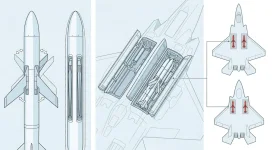
The key difference is its propulsion system: a sophisticated dual-pulse solid rocket motor. This mechanism fires the first pulse to quickly launch and propel the missile into high altitudes, where it coasts to save energy.
As it approaches the target, the second pulse ignites, giving the weapon a final burst of speed. This end-game energy ensures the missile can make sharp, aggressive turns to intercept fast and highly maneuverable enemy jets at extreme distances.
Recent defense reports also indicate that the missile features an indigenous Active Electronically Scanned Array (AESA) seeker with electronic counter-countermeasures (ECCM), making it highly resistant to enemy jamming tactics.
Recent DRDO trials and evaluations in early 2026 have confirmed that the Astra Mk2 boasts a strike range extending between 200 and 240 kilometers under ideal high-altitude conditions.
This is a massive improvement over the 110-kilometer reach of the current Astra Mk1. Such a drastic increase in range entirely reshapes the tactical dynamics of air-to-air combat for any aircraft armed with this new indigenous weapon.
Integrating this missile onto the Mirage 2000 represents a fundamental shift in how the aircraft will be utilized in combat. Historically, the Vajra fleet relied on MICA missiles, which engage targets within a 60 to 80-kilometer radius, and is only recently adopting the Astra Mk1 for medium-range fights.
By adding the Astra Mk2, the Mirage 2000 will be able to project lethal force deep into enemy airspace while remaining safely within friendly skies. It will operate as a true standoff weapon system, utilizing target data shared across military networks.
A central goal of this upgrade is to eliminate the critical "first look, first shot" edge currently possessed by rival nations in the region.
For example, Pakistan’s SD-10 missiles have a maximum range of roughly 100 kilometers. A Mirage 2000 carrying the Astra Mk2 could confidently lock onto and destroy an adversary long before the enemy jet could even attempt to fire back.
Furthermore, the Astra Mk2 serves as India’s direct counter to China's PL-15 missile, which also strikes well beyond the 200-kilometer mark.
Reaching parity with these global threats means Indian pilots can take the offensive immediately, rather than spending crucial time defensively dodging enemy fire to close the distance.
Expanding the firing range does more than just hit distant targets; it dramatically multiplies the amount of sky a single aircraft can control.
By stretching its reach from 110 kilometers to over 200 kilometers, one Mirage 2000 can now secure and dominate more than triple the airspace it could previously monitor.
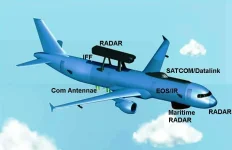
This turns the fighter into an essential asset for area denial, especially when it receives target coordinates from Airborne Early Warning and Control (AEW&C) systems like the Netra or shares data with advanced platforms like the Rafale.
In this new role, the Mirage 2000 will function as a heavy-hitting, rear-echelon interceptor. It will be capable of firing long-distance shots from the safety of well-defended airspace, guided entirely by sensors from other aircraft or ground stations via two-way data links.
This strategy greatly increases the survivability of the jets and allows the IAF to organize its fleet more efficiently, assigning specialized roles to different aircraft within a highly connected, modern battlefield.
The ongoing feasibility study is systematically evaluating the technical hurdles of this upgrade, including matching the aircraft's avionics with the missile, syncing radar systems, establishing data link synchronization for mid-course updates, and finalizing safe weapon release protocols.
If the initial phases proceed as planned, physical flight trials could begin around 2027. This would set the stage for the formal induction of the Astra Mk2-armed Mirage 2000s before the end of the decade, a move that is expected to happen alongside the missile's planned integrations on the Su-30MKI and Tejas Mk1A fleets.