The Indian Air Force (IAF) is embarking on a monumental ₹1 lakh crore (approx. $11 billion) airlift modernization initiative, following recent Defence Procurement Board clearances to acquire 60 Medium Transport Aircraft (MTA).
This massive tender aims to phase out the legacy Soviet-era An-32 planes, while also bridging the capability gap left by the aging Il-76 heavy lifters.
More than a simple hardware purchase, this programme represents a calculated effort to transform India's military aviation sector through domestic production, localized maintenance, and enhanced high-altitude performance.
The Contenders and Industry Partnerships
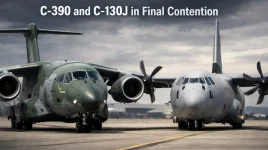
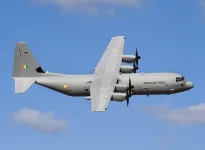
The race for this lucrative contract is largely a three-way battle featuring Lockheed Martin's C-130J Super Hercules, Embraer's C-390 Millennium, and Airbus's A400M Atlas.The IAF requires a payload capacity between 18 and 30 tonnes. Embraer's jet-powered C-390 (26-tonne capacity) and Lockheed's turboprop C-130J (20-tonne capacity) fit closely within this spectrum, while the A400M offers a larger, 30+ tonne capacity that combines tactical and strategic roles.
To secure the bid, global aerospace giants have forged strategic alliances with Indian conglomerates: Embraer has teamed up with Mahindra Defence, while Lockheed Martin is leveraging its long-standing partnership with Tata Advanced Systems Limited (TASL).
Himalayan Operations and STOL Requirements
An absolute prerequisite for the winning aircraft is the proven ability to navigate the punishing environments of Advanced Landing Grounds (ALGs) situated in the Himalayas, such as the Daulat Beg Oldie airstrip.Operating in these regions involves significant aerodynamic challenges due to thin air, necessitating powerful engines, advanced avionics, and exceptional short takeoff and landing (STOL) capabilities.
The C-130J has a well-documented history of successful operations in these extreme "hot and high" scenarios, meaning rival platforms like the C-390 and A400M will have to thoroughly demonstrate their capacity to perform on unpaved and elevated runways under similar stress.
Structuring the "Buy and Make" Deal
This procurement is heavily structured to champion the nation's push for defence indigenization.Following the government's "Buy and Make" route, the IAF plans to receive exactly 12 aircraft (20 percent) in fly-away condition straight from the original equipment manufacturer (OEM). The remaining 48 planes (80 percent) will be manufactured entirely on Indian soil.
This framework is a cornerstone of the "Make in India" vision, aimed at establishing a robust, self-reliant aerospace manufacturing foundation within the country.
Mandating 60% Indigenous Content
To ensure genuine technology absorption, the tender is expected to strictly enforce a minimum of 60 percent indigenous content.This mandate requires foreign manufacturers to seamlessly incorporate Indian-made systems into their final aircraft.
Key local integrations will likely feature mission computers, flight management architectures, and advanced electronic warfare (EW) suites engineered by the Defence Research and Development Organisation (DRDO) and Bharat Electronics Limited (BEL).
Additionally, the aircraft must utilise communication networks built upon standard Indian software-defined radios, making adaptable and open-architecture designs a major deciding factor in the final selection.
A New Era of Localized Maintenance
Another transformative element of the MTA deal is the implementation of Performance-Based Logistics (PBL).Moving away from older, fragmented maintenance practices, PBL focuses on guaranteed fleet availability and readiness.
The chosen foreign OEM will be obligated to build a comprehensive Maintenance, Repair, and Overhaul (MRO) facility inside India.
This localized support ecosystem will drastically cut down the reliance on foreign supply chains for spare parts, thereby optimizing lifecycle costs and keeping the IAF's transport fleet mission-ready at all times.
Redefining India's Airlift Doctrine
Ultimately, the acquisition of 60 modern MTAs extends far beyond finding a successor to the An-32.It is a fundamental upgrade to the IAF's tactical and medium-lift framework, designed to meet the demands of a modern, fast-paced battlefield.
By prioritizing rapid troop deployment, efficient disaster relief, and reliable logistical chains across treacherous topographies, the next-generation airlift fleet will become the backbone of India's airborne mobility strategy for decades to come.