- Views: 1K
- Replies: 2
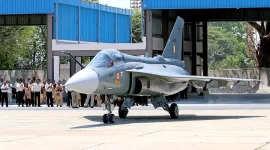
Hindustan Aeronautics Limited (HAL) has successfully completed the manufacturing and preliminary flight testing of the first batch of 20 Tejas Mk1A fighter jets.
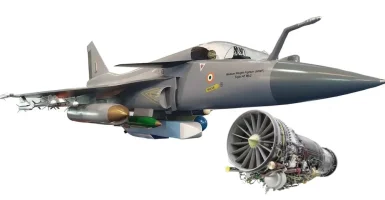
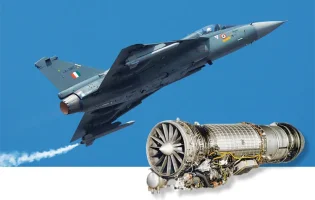
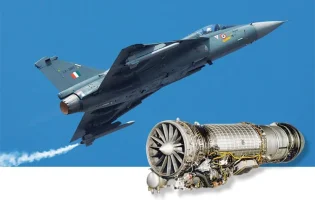
The final handover of these advanced aircraft to the Indian Air Force (IAF) now rests primarily on the delivery of GE F404-IN20 engines from the United States.
In a recent interaction with the Zone Victor Aerospace & Defence YouTube channel, HAL Chairman and Managing Director Dr. D. K. Sunil provided a vital update on the programme.
He confirmed that the initial 20 aircraft are fully built and have finished their first phase of original equipment manufacturer (OEM) flight trials.
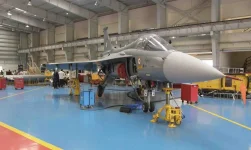
These completed airframes are currently in safe storage, waiting to be fitted with the production-standard F404 engines from General Electric.
This update highlights a significant shift: the main hurdle in the Tejas Mk1A programme is no longer aircraft manufacturing, but engine supply.
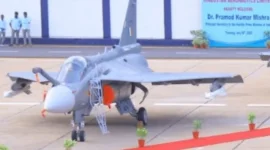
HAL has kept its assembly lines running at full speed in both Bengaluru and Nashik to ensure airframes are ready to go the moment engines arrive.
Recently, a third production line was inaugurated at the Nashik facility to boost HAL's manufacturing capacity, with the ultimate goal of producing 24 to 30 jets annually.
To avoid halting the assembly line while waiting for the new engines, HAL has employed a clever workaround.
Reports indicate the company is using backup Category-B (CAT-B) F404 engines to carry out developmental and production flight trials.
These temporary engines allow HAL to complete crucial systems validations, airworthiness checks, and OEM acceptance flights without delay.
Once the production engines are delivered by GE, they will simply be swapped in for operational service.
This proactive strategy has enabled HAL to build a steady inventory of almost-finished jets.
Work is already well underway on the 32nd production aircraft (LA-5064), and records show that by mid-2026, roughly 30 airframes had been largely assembled and tested.
This proves that India's domestic manufacturing pace remains strong despite the global supply chain bottlenecks.
Because the initial OEM flight tests are already out of the way for the first 20 jets, a massive chunk of the pre-delivery work is complete.
Once GE supplies the required engines—which recently saw a positive step with the seventh engine clearing quality checks in July 2026—HAL can quickly finalise the integration.
After a few remaining customer acceptance flights, the jets can be handed over to the IAF in rapid succession.
The delays in the Tejas Mk1A programme have largely stemmed from global supply chain issues at GE Aerospace.
Although engine deliveries have restarted, they remain slower than the originally contracted timeline, creating a mismatch between HAL's fast-paced manufacturing and the arrival of the propulsion systems.
HAL’s decision to keep building airframes is a strategic move to protect its domestic supplier ecosystem from disruptions.
Major tasks like structural assembly, radar integration, wiring, and avionics installation are being finished independently of the engines.
This keeps the jets at a high state of readiness, which is critical for national defence; the IAF urgently needs these fighters to rebuild its declining squadron strength, having placed total orders for 180 Tejas Mk1A aircraft.